Startup Budget Breakdown
Private Chef Startup Costs 2026: The Real Numbers (First Year Breakdown)
30 July 2026 · 14 min read
Skip the expensive mistakes. My book includes a complete financial planning spreadsheet, startup budget template, and cost-cutting strategies that saved me €2,000 in the first year.
Buy on Amazon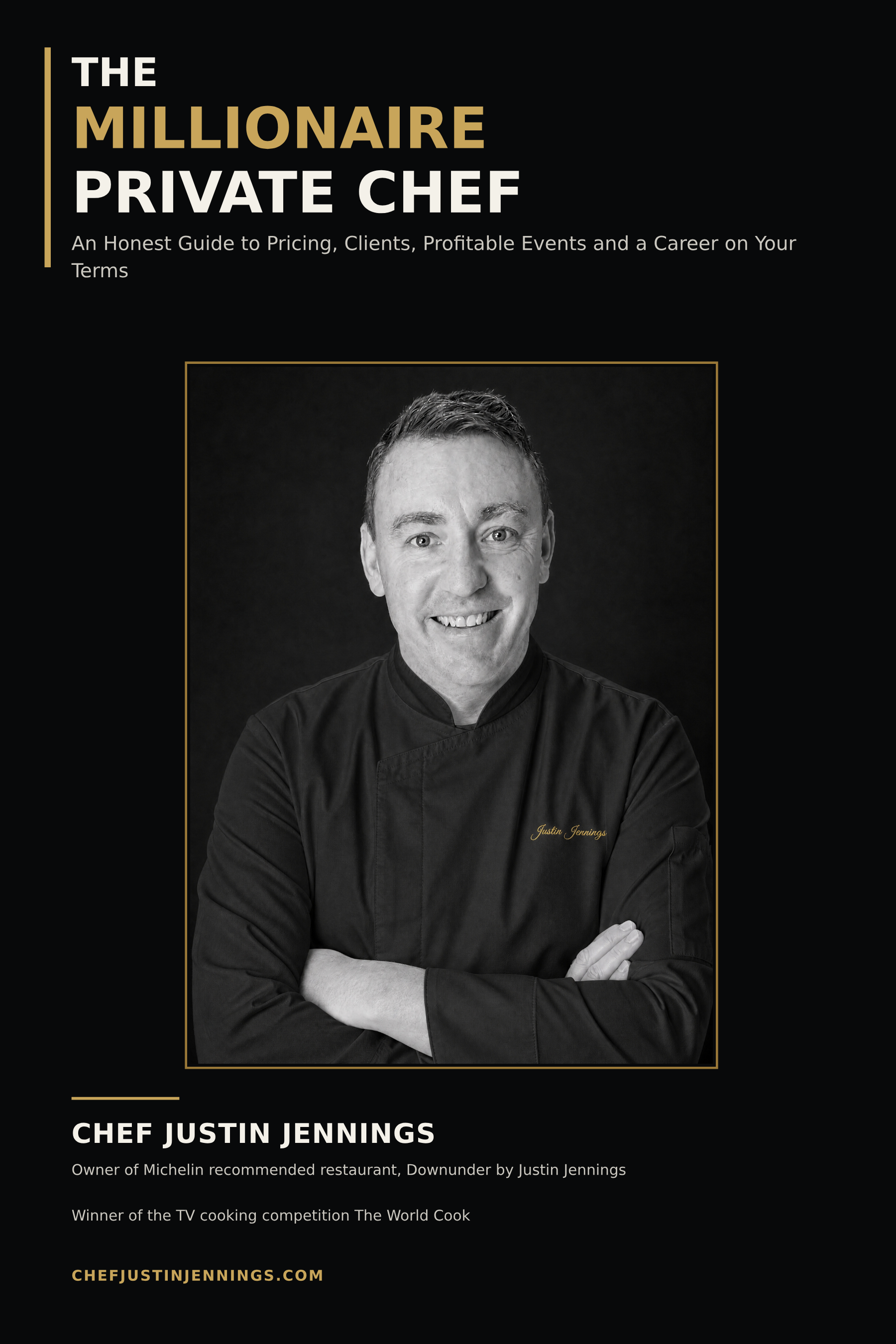
When I decided to leave my restaurant job and start as a private chef, the first question I had wasn't "Can I cook well enough?" it was "How much is this going to cost me?"
I'd seen too many chefs with incredible skills fail because they ran out of money before they found clients. I'd also seen chefs waste thousands on equipment they never used or marketing that didn't work.
So I did what any good chef does: I planned meticulously, tracked every euro, and learned what actually mattered. Five years later, I've helped dozens of chefs launch private chef businesses, and the question is always the same: "How much do I really need to start?"
The honest answer: You can start lean at €1,500-€2,000 if you're scrappy. A comfortable launch costs €3,000-€5,000. And if you're coming from a restaurant job with no equipment, expect to invest €4,000-€6,000 to do it properly.
This guide breaks down every cost obvious and hidden so you know exactly what you need and where you can cut corners without sabotaging your success.
The Complete Startup Cost Breakdown
Here's every expense you'll face in year one, organized by category. I've included both the "minimum viable" budget (bare-bones to get started) and the "comfortable launch" budget (enough to market properly and avoid cheap equipment that fails).
| Category | Minimum Budget | Comfortable Budget |
|---|---|---|
| Professional Knives & Tools | €600-€800 | €1,200-€1,800 |
| Portable Equipment | €200-€300 | €400-€600 |
| Business Registration & Permits | €100-€200 | €200-€400 |
| Liability Insurance (Year 1) | €300-€400 | €500-€600 |
| Food Safety Certification | €50-€100 | €100-€200 |
| Website & Hosting (Year 1) | €100-€300 | €500-€800 |
| Marketing & Advertising | €300-€500 | €800-€1,500 |
| Professional Photography | €0 (DIY) | €400-€800 |
| Business Cards & Materials | €50-€100 | €150-€300 |
| Ingredient Float / Buffer | €200-€300 | €400-€600 |
| Uniforms & Chef Wear | €100-€150 | €200-€350 |
| TOTAL | €2,000-€3,150 | €5,050-€7,950 |
My actual spend: I started with €3,200 in 2019. That covered decent knives (€900), insurance (€450), basic website (€300), business registration (€180), food safety course (€85), marketing (€600), and a small ingredient buffer (€300). I broke even after 6 events and was profitable by month 3.
Category-by-Category Deep Dive
1. Professional Knives & Cooking Tools (€600-€1,800)
This is your most important investment. Cheap knives are dangerous in unfamiliar kitchens, and clients notice when you're using subpar tools.
Essential knives:
- Chef's knife (20-24cm): €150-€400 (Wüsthof, Victorinox, or Global)
- Paring knife: €40-€80
- Serrated bread knife: €40-€80
- Boning/fillet knife: €50-€100 (if you work with fish/meat regularly)
- Knife roll or case: €50-€120
Essential tools:
- Digital thermometer: €20-€40 (Thermapen is worth it)
- Microplane grater: €15-€25
- Peeler, tongs, fish tweezers, offset spatula: €40-€80 total
- Whisk, ladle, slotted spoon set: €30-€60
- Portable cutting boards (2-3): €30-€50
Where to save: Buy a mid-range chef's knife (€150-€250 range like Victorinox Fibrox Pro), not a €500 Japanese blade. Upgrade once you're established. Avoid knife sets they include tools you'll never use.
Where not to save: Your main chef's knife and thermometer. A dull or poorly balanced knife slows you down and increases injury risk. A bad thermometer can cause food safety issues.
2. Portable Equipment (€200-€600)
You'll mostly use clients' kitchens, but you need some backup gear for unpredictable situations.
- Small sauce pans (2): €60-€120
- Portable non-stick pan: €30-€60
- Mixing bowls (stainless steel set): €20-€40
- Immersion blender: €40-€80 (clients often don't have one)
- Portable cooler/thermal bags: €40-€80
- Storage containers (for transporting prepped ingredients): €30-€60
- Apron and side towels: €20-€40
What you DON'T need: A full set of pots and pans. Portable ovens. Induction burners (unless you're doing outdoor events). Most homes have functional kitchens you're not recreating your own.
3. Business Registration & Permits (€100-€400)
Legal requirements vary by country and region, but expect to pay for:
- Sole trader registration: €50-€150 (in most EU countries)
- Business name registration (if applicable): €20-€80
- Local business permits: €30-€150
- Food handling permit/license: included in certification course or €20-€50 separate
Pro tip: Start as a sole trader, not a limited company. It's simpler, cheaper, and sufficient for your first 1-2 years. You can incorporate later once you're earning consistently.
4. Liability Insurance (€300-€600/year) Non-Negotiable
This is the one cost you cannot skip. Without insurance, one incident (food poisoning claim, broken dish, kitchen fire) can bankrupt you.
What you need:
- General liability insurance: €300-€500/year (covers property damage, bodily injury, foodborne illness)
- Professional liability (errors & omissions): €100-€200/year (optional but recommended)
- Product liability: often included in general liability
Coverage amounts: Get at least €1 million in coverage. €2 million is better. Many high-end clients and event venues require proof of €2M+ coverage before booking.
Where to get it: Hiscox, AXA, Allianz all offer small business policies. Some countries have chef-specific insurers (like ChefInsure in the UK).
5. Food Safety Certification (€50-€200)
Most jurisdictions require a food handler's certificate or equivalent. This is usually a one-day course (in-person or online) with a simple exam.
- ServSafe (USA): $15-$50 (€14-€45)
- Level 2 Food Hygiene (UK): £20-£50 (€23-€58)
- HACCP training (EU): €50-€150
Budget €100 and you'll be covered. This renews every 3-5 years depending on your region.
6. Website & Online Presence (€100-€800)
You need a website. Not a Facebook page. Not just Instagram. An actual website where clients can see your menus, read reviews, and contact you.
Minimum budget approach (€100-€300):
- Domain name: €10-€15/year
- Website builder (Wix, Squarespace, WordPress.com): €10-€25/month
- Template or simple design: €0-€50
Comfortable budget (€500-€800):
- Custom domain + premium hosting: €50-€100/year
- Professional template or light custom design: €200-€400
- Basic SEO setup and Google My Business optimization: €100-€200
- Booking/inquiry form integration: €50-€100
What your website MUST include: Sample menus, photo gallery, pricing (at least starting rates), testimonials, contact form, and a clear "Book Now" call-to-action. That's it. Don't overcomplicate.
7. Marketing & Advertising (€300-€1,500)
This is where most new chefs underinvest, then wonder why they have no clients.
Free marketing (time investment only):
- Instagram and Facebook pages (post 3-5 times/week)
- Google My Business listing
- Word-of-mouth and personal network outreach
- Local Facebook groups and community boards
Paid marketing (€300-€1,500 in year 1):
- Facebook/Instagram ads: €200-€500 (small test campaigns)
- Google Ads (local search): €300-€600 (if budget allows)
- Listing fees on private chef platforms (Take a Chef, ChefMaison): €0-€300/year
- Printed flyers or postcards for local distribution: €100-€200
My recommendation: Start with €500 total. Spend €300 on social media ads targeting your local area (dinner party hosts, event planners), €100 on business cards and flyers, and €100 on platform listings. Track which channel brings your first 5 clients, then double down on that.
8. Professional Photography (€0-€800)
Photos sell private chef services. Clients want to see your food, your setup, your professionalism.
DIY option (€0): Use a modern smartphone, natural lighting, and simple food styling. Post consistently on Instagram to build a portfolio. This works if you have a good eye for composition.
Professional option (€400-€800): Hire a food photographer for a 2-3 hour shoot. You prep 4-6 dishes, they shoot them beautifully. You'll get 30-50 high-quality images to use on your website, social media, and marketing materials for the next 1-2 years.
What I did: DIY for the first 3 months, then hired a photographer once I had €1,200 saved from my first few events. Best investment I made those photos closed more bookings than any ad campaign.
9. Business Cards & Printed Materials (€50-€300)
Old school, but still effective. Especially when you're networking at farmers markets, food events, or handing them to satisfied clients for referrals.
- Business cards (500): €30-€80
- Postcards or flyers (250-500): €50-€150
- Branded stickers or thank-you cards: €30-€100
Print 500 business cards minimum. You'll be surprised how quickly you hand them out.
10. Ingredient Float / Buffer (€200-€600)
This is the cash you need upfront to buy groceries for your first few events before clients pay you.
Most private chefs require a 50% deposit upfront, which helps with this. But if you land your first event and need €300 for groceries, you need that €300 liquid and ready.
How much to budget: €300-€400 covers groceries for 1-2 small events (6-10 guests). Once you're getting deposits, this becomes less critical.
11. Chef Uniforms & Appearance (€100-€350)
You're cooking in clients' homes. Professionalism matters.
- Chef jacket (2-3): €40-€100
- Chef pants or apron: €30-€60
- Non-slip kitchen shoes: €40-€80
- Hat or cap (if that's your style): €10-€30
- Watch (waterproof, easy to clean): €20-€80
Style note: Black chef jacket and apron = modern, sleek, professional. Traditional white also works. Avoid stained or wrinkled uniforms it kills trust instantly.
Hidden Costs Nobody Warns You About
These are the expenses that sneak up on new private chefs in months 3-6:
Vehicle & Transport Costs (€200-€400/month)
You'll be driving to client homes, markets, specialty ingredient shops. If you don't already have reliable transport, factor this in.
- Fuel: €100-€200/month depending on event frequency
- Parking fees at client locations: €20-€60/month
- Tolls (if applicable): €10-€40/month
- Vehicle maintenance (oil, tires, wear-and-tear): €50-€100/month
Many of these are tax-deductible business expenses, but you still need the cash flow to cover them.
Software & Subscriptions (€20-€80/month)
- Accounting software (Wave, FreshBooks, Xero): €0-€30/month
- Scheduling/booking tool (Calendly, Acuity): €0-€15/month
- Email marketing (if using Mailchimp, ConvertKit): €0-€20/month
- Cloud storage for photos/files: €5-€15/month
Start with free plans, upgrade as revenue grows. But budget €30-€50/month by month 6.
Continuing Education & Renewals (€100-€300/year)
- Food safety recertification every 3-5 years: €50-€150
- Advanced cooking courses or workshops: €100-€500/year
- Industry books, subscriptions, recipe development: €50-€150/year
Replacement Equipment & Repairs (€200-€500/year)
Knives need sharpening (€5-€10 per knife, every 3-6 months). Thermometers break. Non-stick pans wear out. Budget €200-€300 annually for replacements and repairs.
Accounting & Tax Prep (€300-€800/year)
Unless you're comfortable with tax law, hire an accountant. They'll ensure you claim all deductions and avoid penalties. Budget €300-€500 for annual tax filing, or €50-€80/month for ongoing bookkeeping support.
Stop Guessing. Start Planning.
My book includes a complete startup budget spreadsheet with every line item, a month-by-month cash flow planner, and the exact financial benchmarks you need to hit in year one. Skip the expensive trial-and-error phase.
How to Start on a Tight Budget (Under €1,500)
If you don't have €3,000-€5,000 saved, you can still start but you'll need to be strategic and scrappy.
The Ultra-Lean Startup Plan (€1,200-€1,800)
Equipment: Use knives you already own (assuming they're professional-grade). Borrow or buy used equipment on Facebook Marketplace or chef forums. Budget €300-€500.
Insurance: Non-negotiable. Budget €300-€400 minimum for basic liability coverage.
Business registration: Sole trader only. €50-€150 depending on location.
Website: Use a free Wix or WordPress.com site for the first 3 months. €0 upfront, upgrade once you have revenue. Or buy a domain (€10) and use a one-page landing page template.
Marketing: 100% free. Instagram, Facebook, word-of-mouth, local networking, posting in food/chef groups. Budget €0-€100 for business cards only.
Photography: DIY with your phone. Budget €0.
Uniforms: One clean black chef jacket and apron. €50-€80.
Ingredient float: €200-€300. Require 50% deposit upfront from clients to reduce this.
Total ultra-lean budget: €1,200-€1,800.
The Reinvestment Strategy
Start lean, then reinvest your first 5-10 event profits back into the business:
- Event #1-2: Reinvest 80% of profit (upgrade knives, buy insurance, business registration)
- Event #3-5: Reinvest 50% (build website, professional photos, marketing budget)
- Event #6-10: Reinvest 30% (expand equipment, better transport solutions, more ads)
- Event #11+: Keep 70-80% profit, reinvest 20-30% into growth
This strategy lets you start with minimal cash but requires discipline you can't pocket all your earnings in the first few months.
First-Year Financial Projections
Here's what to expect financially in your first 12 months:
| Phase | Timeline | Key Milestones |
|---|---|---|
| Startup Phase | Month 0 | Invest €2,000-€5,000 in setup |
| First Clients | Month 1-2 | Book 2-4 events, €1,200-€3,200 revenue |
| Break-Even | Month 3-4 | 6-10 events total, recover startup costs |
| Consistent Bookings | Month 4-6 | 2-3 events/week, €3,000-€5,000/month profit |
| Established Business | Month 7-12 | 3-5 events/week, €5,000-€8,000/month profit |
My first year (2019-2020):
- Startup investment: €3,200
- First event booked: Week 3 (€680 revenue, €480 profit)
- Break-even: Event #6 (Month 3)
- Replaced restaurant salary: Month 6 (€4,200/month profit)
- Year 1 total revenue: €62,000
- Year 1 net profit: €43,000 (after all expenses, before tax)
Your results will vary depending on your location, pricing, and hustle but this gives you a realistic benchmark.
Smart Ways to Fund Your Startup
Option 1: Save While Still Employed (Best Option)
Keep your restaurant job for 3-6 months while saving €500-€800/month. In 4-6 months, you'll have €2,000-€4,000 to invest. Meanwhile, test private chef work on weekends or days off.
Option 2: Start Part-Time (Low-Risk)
Invest €1,500-€2,000, keep your day job, and do 1-2 private chef events per week on weekends. Reinvest all profits for the first 3 months to build equipment and marketing. Transition to full-time once you're consistently booking 3-4 events/week.
Option 3: Personal Loan or Credit (Use Cautiously)
If you have good credit, a €2,000-€3,000 personal loan or credit card can cover startup costs. Only do this if you're confident you can book clients within 4-6 weeks. Pay it off within 3-6 months to avoid heavy interest.
Warning: Don't borrow more than you can afford to lose. Private chef businesses can take 2-4 months to gain traction.
Option 4: Pre-Sell Your First Events
Before you officially launch, reach out to friends, family, colleagues, and offer a "beta launch discount" €60-€70/person instead of your normal €85-€95. Book 3-5 events, collect 50% deposits upfront, and use that cash to buy equipment and cover startup costs.
This is how I funded my first €900 in equipment. I pre-sold 4 events at €600-€700 each, collected €1,200 in deposits, bought my knives and insurance, and delivered the events profitably.
Common Startup Cost Mistakes to Avoid
Mistake #1: Overbuying Equipment
You don't need a sous vide immersion circulator, a 12-piece knife set, and a portable induction burner on day one. Buy what you'll use in your first 10 events. Upgrade as you identify gaps.
Mistake #2: Skipping Insurance
This will bite you. One food poisoning claim (even if it's not your fault) can cost €10,000-€50,000 in legal fees and settlements. €500/year for insurance is cheap protection.
Mistake #3: Spending Too Much on a Website
A €2,000 custom website won't get you more clients than a €300 template site if your photos and messaging are weak. Start simple, upgrade later.
Mistake #4: Underinvesting in Marketing
The opposite mistake: spending €4,000 on equipment and €0 on marketing. You can cook with average knives. You can't build a business without clients. Budget at least 20% of startup costs for marketing.
Mistake #5: Not Tracking Expenses
Every receipt matters. Track everything from day one ingredient costs, mileage, equipment purchases, marketing spend. You'll need this for taxes, and it helps you understand true profitability.
Final Startup Cost Checklist
Before you launch, make sure you have:
- ✓ Professional knives and essential tools (€600-€1,500)
- ✓ Liability insurance (€300-€600/year) with proof of coverage
- ✓ Business registration and food safety certification (€150-€300)
- ✓ Basic website with contact form and sample menus (€100-€500)
- ✓ 20-30 high-quality photos of your food (DIY or professional)
- ✓ Marketing plan and initial budget (€300-€1,000)
- ✓ Business cards and client-facing materials (€50-€150)
- ✓ Chef uniform and professional appearance sorted (€100-€200)
- ✓ €200-€400 ingredient float for first few events
- ✓ Reliable transport and budget for fuel/parking
- ✓ 3-6 months of personal living expenses saved (or part-time income secured)
Total realistic budget: €2,500-€5,000 to launch properly, or €1,500-€2,000 if you start ultra-lean and reinvest early profits.
The Bottom Line
Starting a private chef business is one of the most affordable food businesses you can launch. No rent. No staff. No expensive build-out. Just skills, equipment, and hustle.
If you have €2,500-€3,500 saved and you're willing to be scrappy for the first 3 months, you can absolutely make this work. If you have €5,000-€6,000, you can launch comfortably with professional marketing and equipment that will last years.
The bigger question isn't "Can I afford to start?" it's "Can I afford to keep working 55-hour weeks in a restaurant for the next 5 years when I could be earning more, working less, and building my own business?"
Most chefs I know who made the leap wish they'd done it sooner. The startup costs are real, but they're recoverable within 3-6 months if you execute well.
And if you want the full roadmap pricing templates, client contracts, marketing strategies, and financial planning tools that compress years of trial-and-error into a simple blueprint grab my book. It'll save you far more than the €2,000 most chefs waste on wrong equipment and ineffective ads.
Ready to Launch Your Private Chef Business?
Get the complete startup blueprint with financial planning tools, pricing strategies, and everything you need to build a profitable private chef business in 2026.
✓ Startup Budget Spreadsheet (Excel + Google Sheets)
✓ Equipment Buying Guide & Checklists
✓ Pricing Calculator & Profit Margin Tools
✓ First-Year Financial Projections Template
✓ Tax Deduction Checklist for Chefs
Paperback, 120 pages. Available on Amazon.
Frequently Asked Questions
How much does it cost to start a private chef business in 2026?
Starting a private chef business in 2026 typically costs €2,000-€5,000. The minimum viable budget is around €2,000 including: professional knives and tools (€800-€1,200), liability insurance (€300-€600/year), business registration and permits (€100-€400), basic website (€200-€500), and initial marketing (€300-€800). You can start leaner at €1,000-€1,500 if you already own quality knives and use free website tools, but expect to reinvest earnings in the first 3-6 months to upgrade equipment and marketing.
What are the biggest startup costs for private chefs?
The three biggest startup costs for private chefs are: (1) Professional knives and cooking equipment €800-€1,500, (2) Liability insurance €300-€600 per year (non-negotiable), and (3) Marketing and website €500-€1,200 for initial setup. Many new chefs underestimate marketing costs, but a professional website and initial ads are essential for booking your first clients. Equipment can be upgraded gradually, but insurance and marketing are critical from day one.
Do you need a commercial kitchen to be a private chef?
No, most private chefs do not need a commercial kitchen. You cook in clients' homes using their facilities. Some local health regulations require a commercial kitchen for certain prep work or storage, but most jurisdictions allow private chefs to work exclusively in client homes without a separate facility. This is one of the biggest cost advantages of private chef work compared to catering or restaurant businesses. Always check your local health department rules, but plan on €0 for kitchen rental in most cases.
What insurance do private chefs need and how much does it cost?
Private chefs need general liability insurance covering bodily injury, property damage, and foodborne illness claims. In 2026, this costs €300-€600 per year for €1-2 million in coverage. Professional liability (errors & omissions) insurance adds another €150-€300/year. Product liability coverage (specific to food preparation) is often included in general liability policies. Many clients and event venues will require proof of insurance before booking, so get coverage before your first paid event. Budget €500/year minimum for complete coverage.
Can you start a private chef business with no money?
Starting with zero capital is very difficult, but you can minimize costs to under €1,000 by: using knives and equipment you already own, starting as a sole trader with minimal registration fees (€50-€150), building a free website with platforms like Wix or WordPress, marketing exclusively through free social media and word-of-mouth, and negotiating payment upfront from your first clients to cover immediate costs. However, you'll still need insurance (€300-€600/year, non-negotiable) and basic business permits. Most successful chefs start with €1,500-€2,500 saved to cover essentials and avoid cash flow stress.
How much should I budget for marketing in the first year?
Budget €1,000-€2,500 for marketing in your first year as a private chef. This includes: website setup and hosting (€200-€600), professional photography (€300-€800 for a portfolio shoot), social media ads (€300-€600 initial budget), business cards and printed materials (€100-€200), and platform listing fees if using Take a Chef or similar (€0-€300). Most of your early clients come from free channels like Instagram, word-of-mouth, and local networking, so you can start with €500-€800 if budget is tight and scale up as you earn.
What are the hidden costs nobody tells you about?
Hidden costs that surprise new private chefs include: vehicle costs (fuel, parking, tolls averaging €200-€400/month), ingredient float for upfront grocery shopping (€200-€500 to start), specialized equipment replacement (knives, thermometers wear out faster than expected), packaging and transport containers (€100-€200), business software and subscriptions (scheduling, invoicing, accounting tools at €20-€50/month), continuing education and food safety renewals (€100-€300/year), and accounting/bookkeeping fees (€300-€800/year for tax filing). Budget an extra 15-20% above your initial startup estimate for these unexpected expenses.
How long until you break even on startup costs?
Most private chefs break even on startup costs within 3-6 months or 8-15 paid events. If you invest €3,000 to start and charge €95/person with an average event size of 8 guests (€760 per event), you're earning roughly €550-€600 profit per event after food costs. That means breaking even at event #5-6. If you're working part-time, this might take 3-4 months. Full-time chefs hustling for clients often break even within 6-8 weeks. The key is booking consistently from day one through aggressive networking and marketing.
Should I start part-time or go full-time immediately?
Start part-time unless you have 6-12 months of living expenses saved. Part-time private chef work (1-2 events per week, evenings/weekends) lets you keep your restaurant job and steady income while building your client base and reputation. Most chefs need 3-6 months to build enough bookings to match restaurant income. Starting part-time also reduces startup costs since you're not relying 100% on private chef income from day one. Transition to full-time once you're consistently booking 3-4 events per week and have a pipeline of repeat clients.
Can I finance startup costs with a business loan?
Business loans for private chef startups are difficult to obtain because the business is service-based with no physical assets or collateral. Traditional banks rarely approve loans under €10,000 for brand-new businesses. Better options include: personal savings, using a low-interest personal loan or credit card for initial costs (risky, only if you're confident in quick revenue), equipment financing for expensive items like knives or portable ovens, or starting ultra-lean and reinvesting profits from your first 5-10 events to build up equipment and marketing. Most successful chefs self-fund with €1,500-€3,000 saved over 3-6 months before launching.
Related Reading
How to Start a Private Chef Business in 2026
Complete step-by-step startup guide with legal setup, pricing, and client acquisition strategies.
Private Chef Pricing Guide 2026
What to charge per person, pricing psychology, and real-world examples from €75-€250 events.
Private Chef Insurance: What You Actually Need
Liability insurance breakdown: coverage types, costs, where to buy, and what clients require.
Getting Your First Private Chef Client
5 proven methods to book your first clients without spending money on ads.