Client Acquisition Strategy
Getting Your First Private Chef Client: 5 Proven Methods
18 August 2026 · 10 min read
Want 21 more client acquisition strategies plus templates for proposals, pricing, and follow-ups? Get the complete blueprint in my book.
Buy on Amazon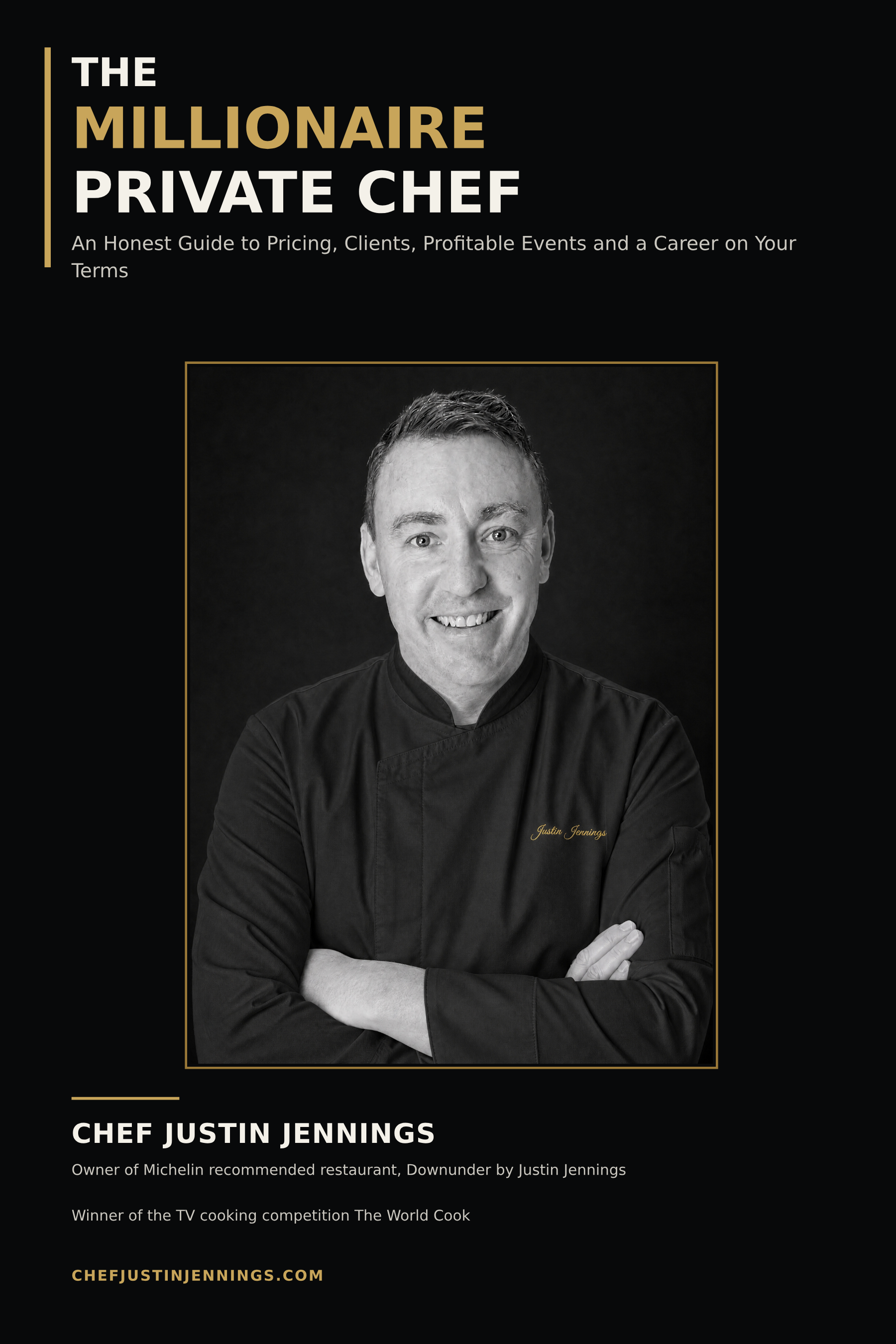
I'll never forget staring at my laptop the week after I quit my restaurant job, wondering how the hell I was going to find my first private chef client.
I had the skills. Twelve years of professional kitchen experience. A head chef title. But zero clients, zero website, and zero idea how to sell myself outside the restaurant hierarchy.
That first client came two weeks later through an Instagram DM. A friend-of-a-friend saw my first post a badly lit photo of a mushroom risotto and asked if I did private dinners. €600 for eight people. I said yes before I even knew what to charge.
Five years later, I'm fully booked three months out. But those first clients? They came from five specific methods that still work better than anything else. If you're staring at your own laptop wondering where to start, this is your playbook.
Method 1: Leverage Your Existing Network
This is where most new private chefs should start and where most actually don't, because it feels uncomfortable or "too salesy."
Get over it. Your existing network is gold. These are people who already know you, trust your cooking, and want to support you. They're your fastest path to client #1.
Who to reach out to:
- Restaurant regulars: If you worked front-of-house interaction at all, those repeat customers who loved your food are prime targets. Send them a personal message.
- Supplier relationships: The people who sold you meat, fish, produce they know dozens of chefs and food people. Tell them you've gone private. Ask for intros.
- Former colleagues: Other chefs, especially those who've left restaurants. They get inquiries they can't take. Position yourself as their referral option.
- Friends and family: Not for free work, but as your first paying clients. Charge them €75/person (slight discount), get testimonials, and ask for referrals.
- Your social circle: People you went to school with, gym buddies, neighbours anyone who knows you. Post once on your personal Facebook: "I just launched a private chef business. If you know anyone throwing a dinner party, send them my way."
What worked for me: I made a list of 30 people restaurant suppliers, former colleagues, chef friends and sent each a personal message (not a mass email). Five responded with potential leads. Two turned into bookings within the first month.
The message was simple: "Hey [name], I've left restaurant work and started doing private chef events. If you hear of anyone looking for a chef for a dinner party or special event, I'd appreciate the intro. Here's my Instagram: [link]".
Why this works: Warm leads convert 10× faster than cold marketing. People hire chefs they trust. Your network already trusts you. Use that.
Method 2: Social Media Strategy (Instagram First)
Instagram is the single most effective marketing channel for private chefs in 2026. Not Facebook. Not TikTok (yet). Instagram.
Why? Because people who hire private chefs are actively searching hashtags like #privatechefLisbon or #privatechef before they book. Your profile is your portfolio, your proof, and your pitch all in one place.
How to set up your Instagram for client acquisition:
- Profile name: "[Your Name] | Private Chef [City]" (e.g., "Justin Jennings | Private Chef Lisbon"). This makes you searchable.
- Bio: Who you serve, what you do, how to book. Example: "Private Chef | Australian-Asian Fusion | Lisbon | Tasting menus from €95pp | DM to book".
- Highlights: Create saved story highlights for "Menus," "Reviews," "Events," "Contact."
- Link in bio: Direct link to a contact form, WhatsApp, or email. Make booking frictionless.
What to post (and when):
Post 3-4 times per week minimum. Consistency matters more than perfection.
- Plated dishes: The hero shot. Natural light, clean background. Caption with the dish name and brief description. These are your portfolio pieces.
- Behind-the-scenes: Prep work, ingredient close-ups, you cooking. Builds trust and personality.
- Client testimonials: Screenshot a great review or message. Post it with "What my clients say" in the caption.
- Availability posts: "I have two weekend dates open in September. DM to book." Creates urgency.
Hashtag strategy:
Use 15-20 hashtags per post. Mix popular and niche tags:
- Location-based: #privatechefLisbon #lisbonfood #lisboneats
- Service-based: #privatechef #personalchef #privatecatering #dinnerparty
- Food style: #finedining #tastingmenu #asianfusion
- Event types: #weddingcatering #corporateevents #birthdaydinner
Growth tactics that actually work:
- Tag your location on every post (e.g., "Lisbon, Portugal") this surfaces you in local searches.
- Follow and engage with local food accounts, event planners, and villa rental agencies. Like and comment on their posts. They'll notice.
- DM people who engage with your content. Not a sales pitch just "Thanks for liking my post! Do you ever host dinners?" Casual conversation converts.
- Repost Stories from food bloggers, local restaurants, wine shops. Tag them. They'll often reciprocate.
My first 10 clients: All came from Instagram or referrals from Instagram followers. One client found me through #privatechefLisbon, booked a €1,200 event, then referred three friends. That's the compounding effect of consistent posting.
Want My Full Social Media Playbook?
Get my complete Instagram strategy, post templates, caption formulas, and the exact DM scripts I used to convert followers into €1,000+ bookings.
Buy on AmazonTrusted by 500+ private chefs worldwide
Method 3: Partner with Event Planners, Villa Managers, and Yacht Brokers
This is the strategy most new private chefs sleep on, and it's a mistake. Strategic partnerships can generate 5-10 clients per year with almost zero ongoing effort once they're set up.
The concept is simple: find businesses that serve your target market but don't compete with you. Position yourself as their go-to chef for referrals. Make it a win-win.
Best partnership targets:
- Luxury villa rental agencies: High-end vacation rental companies constantly field requests from guests asking for in-villa dining. They need reliable chefs to recommend.
- Event planners: Wedding planners, corporate event coordinators, party planners they all need chefs for catering. Many prefer working with a small roster of trusted chefs rather than dealing with large catering companies.
- Yacht brokers and marina clubs: People chartering yachts often want private chefs. Yacht brokers will gladly refer you if you can deliver.
- Concierge services: Luxury hotels and private concierge companies offer "experiences" to wealthy clients. Private chef dinners are a perfect fit.
- Wine importers and sommeliers: Co-host wine pairing dinners. They bring the wine and clients, you bring the food. Split the revenue or cross-promote.
How to approach them:
Don't send a cold email saying "I'm a private chef, send me clients." That's asking for free marketing. Instead, offer value.
The pitch structure:
- Intro: "I'm a private chef in [city] specializing in [cuisine style] for [target market]."
- Value prop: "I imagine your clients sometimes ask about in-villa dining or private catering. I'd love to be your go-to chef for those requests."
- Win-win: "Happy to offer a referral fee (10-15% of booking), or we can do reciprocal referrals if that works better for you."
- Social proof: "I've worked with [credential], here's my Instagram [link], and I have full liability insurance."
- Call to action: "Can I send you a sample menu and my rates?"
Real example: I partnered with a luxury villa rental agency in Cascais. They get 2-3 inquiries per month from guests wanting a private chef. I pay them 10% of each booking. That partnership has generated €15,000+ in revenue over two years with zero ongoing marketing effort from me.
Pro tip: Once you book through a partnership, overdeliver. Send the client and the partner a thank-you note. Ask for a testimonial. Make them look good for referring you. This turns one referral into ten.
Method 4: Targeted Local Marketing (Expat Communities, Embassies, Corporate)
If you're in a city with a significant expat population, international schools, or embassies, this is a goldmine. These groups host events constantly, have disposable income, and are already primed to hire external services because they don't have established local networks.
Where to find these clients:
- Expat Facebook groups: Join groups like "Expats in [city]" or "Internations [city]." Post an introduction offering private chef services for dinner parties, corporate events, or weekly meal prep. Engage in the group regularly so people recognize your name.
- International schools: Parents' associations at international schools organize fundraisers, auctions, and social events. Reach out to the PTA and offer to donate a "private chef dinner for 8" as an auction item. This gets you in front of 200+ affluent families for free.
- Embassies and diplomatic communities: Embassies host events regularly and often hire external catering. Getting on their preferred vendor list is a steady income stream. I've cooked for the Australian Embassy in Lisbon a dozen times always €1,000+ events.
- Corporate offices: Companies host client dinners, board meetings, and team events. Find the office managers or executive assistants (they're the ones booking this stuff) and send a brief intro email with a sample menu and pricing.
What worked for me:
I joined three expat Facebook groups in Lisbon and posted a simple introduction: "Hey everyone, I'm Justin, an Australian chef who just started doing private chef dinners here in Lisbon. If you're hosting a dinner party or special event and want restaurant-quality food in your home, I'd love to cook for you. Here's my Instagram: [link]."
That post generated four inquiries in the first week. Two turned into bookings. Cost: €0.
I also reached out to the Australian Embassy (leveraging my Australian background) and offered to cater their next event. They didn't hire me immediately, but six months later they called for a last-minute corporate dinner. I delivered. Now they call me first.
Method 5: Word-of-Mouth Systems (Referral Incentives)
Word-of-mouth is the most powerful client acquisition channel for private chefs but it doesn't happen automatically. You have to engineer it.
People will refer you if: (1) You delivered an amazing experience, and (2) You make it easy and rewarding to refer you.
How to build a referral system:
- Ask for referrals explicitly: At the end of every event, say: "If you know anyone else who'd enjoy a dinner like this, I'd love an introduction." Hand them a business card or send a follow-up email with your contact details.
- Incentivize referrals: Offer 10-15% off their next booking for every successful referral. Example: "Thanks for the great evening! If you refer a friend who books, you'll get 15% off your next dinner." Make it tangible.
- Make sharing easy: After the event, send a follow-up email with: "Thanks for having me! If you'd like to share my details, here's my website link and Instagram. I'd be grateful for any referrals."
- Create shareable moments: Beautiful plating, unique presentations, or a signature dish people want to post on Instagram. When they post and tag you, their followers see it. That's free marketing.
Referral tracking:
When someone books, always ask "How did you hear about me?" Track this in a simple spreadsheet. After 3-6 months, you'll see patterns: "Instagram, referral from Sarah, referral from embassy event." Double down on what's working.
My referral rate: About 40% of my bookings now come from referrals. That didn't happen by accident it's because I systematically ask, incentivize, and follow up after every event.
Putting It All Together: Your First 30 Days
Here's your action plan if you're starting from zero:
Week 1: Network activation
- Make a list of 30 people in your existing network (friends, family, suppliers, colleagues).
- Send personalized messages to 10 people per day announcing your private chef business.
- Set up Instagram: profile name, bio, highlight categories.
- Post your first 3-5 photos (even if they're practice dishes).
Week 2: Social media momentum
- Post on Instagram 4-5 times this week (plated dishes, behind-the-scenes).
- Join 3-5 local Facebook groups (expat communities, food groups, local events).
- Engage daily: like, comment, follow relevant accounts.
- DM 5 people who engage with your posts start conversations.
Week 3: Partnership outreach
- Research 10 potential partners (villa agencies, event planners, concierge services).
- Send 5 partnership pitch emails (use the template structure above).
- Follow up with anyone who responds offer to meet for coffee or send sample menus.
- Continue posting on Instagram 3-4 times this week.
Week 4: Refine and book
- By now you should have at least 1-2 inquiries. Respond fast, send proposals, close the booking.
- If you haven't had inquiries yet, post an "availability" post on Instagram and Facebook: "I have availability for private chef dinners in [dates]. DM to book."
- Offer your first event at a slight discount (€75-€85pp) to build portfolio and testimonials.
- After your first event, ask for a testimonial and referrals immediately.
If you execute this plan consistently, you will book your first client within 30 days. I'd bet money on it.
Ready to Build a Six-Figure Private Chef Business?
This post covered 5 methods. My book gives you 21 client acquisition strategies, plus the complete business blueprint: pricing templates, sample contracts, menu planning systems, and the exact processes I used to go from zero to fully booked in 6 months.
Buy on AmazonFrequently Asked Questions
Where do private chefs find high-paying clients?
High-paying private chef clients are typically found through targeted channels: expat communities and international schools, luxury villa rental agencies and concierge services, corporate event planners and executive assistants, yacht brokers and marina clubs, and referrals from existing high-end clients. The Australian and British embassies in Lisbon have been consistent sources of €1,000+ events for me. Focus on places where affluent people gather rather than broad advertising.
What is the best marketing channel for private chefs?
Instagram is the best marketing channel for private chefs in 2026. It's visual, free, and clients actively search hashtags like #privatechefLisbon when looking to book. Post 3-4 times per week showcasing plated dishes, behind-the-scenes prep, and client testimonials. Use local hashtags, tag locations, and engage with food accounts in your city. My first 10 clients all came from Instagram or direct referrals from Instagram followers.
How long does it take to get your first private chef client?
Most private chefs get their first paid client within 2-4 weeks if they actively market. Start by reaching out to your existing network friends, family, former colleagues, restaurant regulars. Offer your first 1-2 events at a slight discount (€75/person instead of €95) to build reviews and portfolio. Post on social media daily during your first month. Your first client will almost always come from someone who already knows and trusts you.
Should private chefs use platforms like Take a Chef or ChefMaison?
Platforms like Take a Chef, ChefMaison, or yhangry can help you get your first few clients, but they typically take 15-30% commission and you're competing with dozens of other chefs. Use them as a temporary client source while building your own direct booking channels. Once you have 10-15 clients and good reviews, focus on direct marketing where you keep 100% of the fee. Most successful private chefs phase out platforms within 6-12 months.
Do private chefs need Instagram or Facebook to get clients?
You don't technically need social media, but it makes client acquisition 10× easier. Instagram is essential for food businesses in 2026 clients expect to see your work before booking. Facebook is useful for local community groups and event pages. LinkedIn works well for corporate catering. You can succeed without social media by relying heavily on referrals and partnerships, but you'll grow slower. Even a basic Instagram posting 2-3 times per week will generate inquiries.
How important is a website for a private chef?
A website is not essential when starting out, but it becomes important once you get traction. In your first 3 months, Instagram and word-of-mouth are enough. After that, a simple one-page website (name, services, sample menus, pricing, contact form) gives you credibility and captures people who Google 'private chef [your city]'. You don't need anything fancy a €200 template site on Wix or Squarespace is fine. Your website converts people who are already interested; social media finds new people.
What should a private chef's portfolio include?
Your private chef portfolio should include: 15-20 high-quality photos of plated dishes (smartphone photos are fine if well-lit), 2-3 photos of you cooking (builds trust), 5+ written testimonials from clients or employers, a brief bio highlighting experience and credentials (MICHELIN, TV appearances, years of experience), and sample menus showing range and style. Don't wait for perfection cook a few practice meals, photograph them beautifully, and ask friends to write honest testimonials. Update your portfolio every 2-3 months as you book real events.
How do private chefs get testimonials and reviews?
Ask for testimonials immediately after successful events while clients are still excited. Send a follow-up email within 24 hours: 'Thank you for having me! If you enjoyed the evening, I'd love a quick testimonial for my website.' Make it easy provide a link to a Google Form or just ask them to reply by email. Offer a small incentive like 10% off their next booking. Feature testimonials prominently on your Instagram, website, and proposals. Video testimonials are gold but written ones work fine. Aim for 10+ testimonials in your first 6 months.
Can you cold email to get private chef clients?
Cold email can work for B2B clients (corporate event planners, villa rental agencies, concierge services) but rarely works for individual consumers. People don't hire private chefs from cold emails they hire based on referrals and portfolios they've seen. Instead, focus on warm outreach: DM people on Instagram who follow local food accounts, engage with posts from your target market, comment on local community Facebook groups, and message friends-of-friends who might need a chef. Personal connection beats cold outreach every time in private chef work.
What partnerships help private chefs get clients?
The most valuable partnerships for private chefs are: luxury villa rental agencies (they recommend chefs to guests), event planners (corporate and wedding), wine importers and sommeliers (co-host tasting events), yacht brokers and marina clubs (high-budget clients), concierge services and luxury hotels (referrals for in-villa dining), and local food suppliers (cross-promotion). Approach with a win-win offer: revenue share, reciprocal referrals, or co-marketing. One good partnership can generate 5-10 clients per year on autopilot.