Complete Startup Guide
How to Start a Private Chef Business in 2026 (Complete Guide)
21 May 2026 · 12 min read
Want the complete blueprint? Get my book with pricing templates, contracts, and the exact steps I used to build a six-figure private chef business.
Buy on Amazon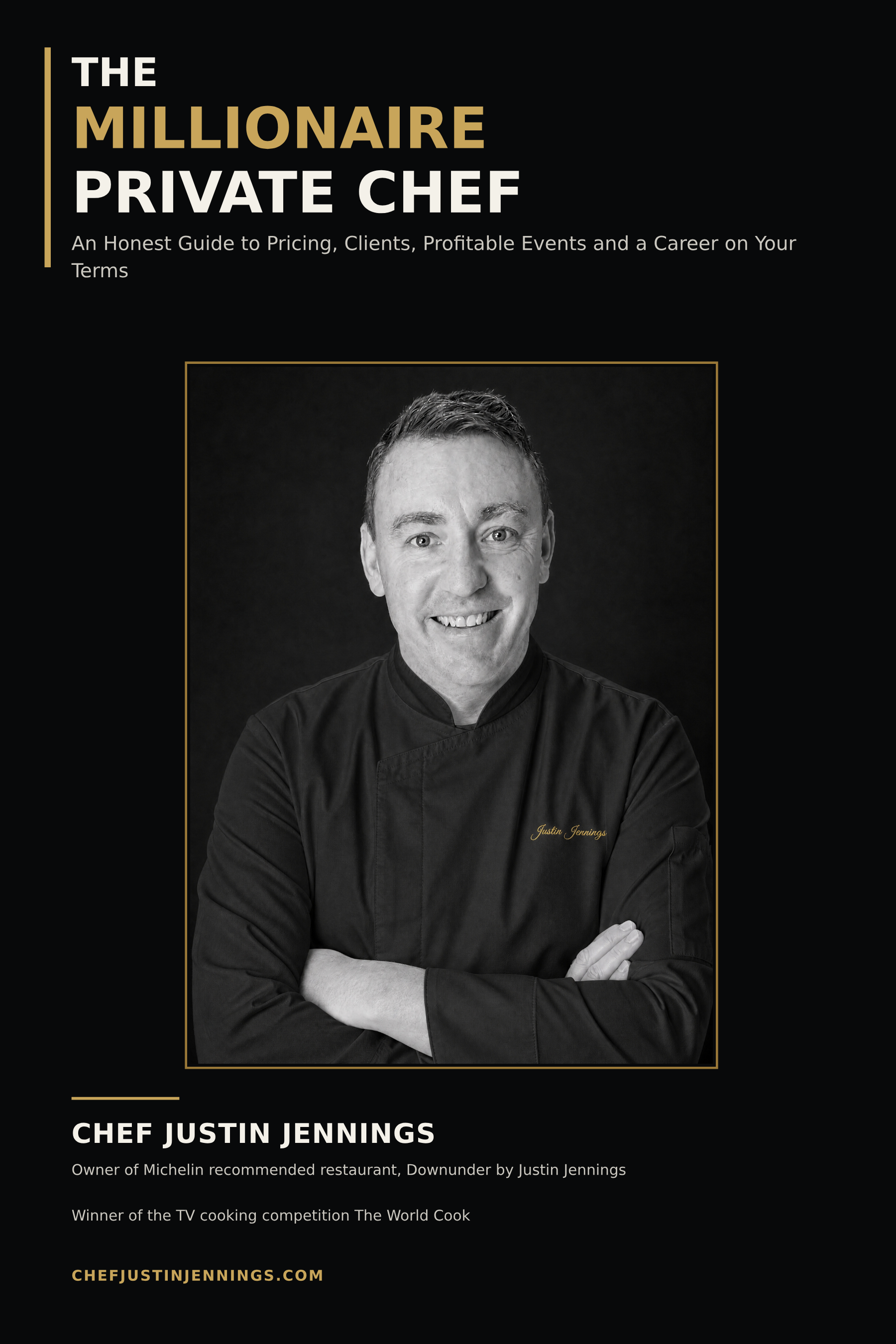
Starting a private chef business changed my life. After 12 years of restaurant work 55-hour weeks, missed birthdays, and a salary that never matched the sacrifice I made the switch. Within six months, I was earning more than my head chef salary while working half the hours.
Since then, I've cooked for diplomats, celebrities, and hundreds of regular people who just wanted a great dinner party. I've also watched other chefs try to make the same transition and fail usually because they skipped the business fundamentals or didn't treat it like a real business from day one.
This guide is everything I wish I'd known when I started. No fluff, no theoretical advice. Just the exact steps to build a private chef business that actually makes money in 2026.
What Is a Private Chef Business?
First, let's get clear on terms. A private chef cooks custom meals for clients in private settings usually their homes, vacation rentals, or event venues. Unlike restaurants, there's no fixed menu, no front-of-house staff, and no rent. You bring your skills directly to the client.
Private chef vs. personal chef: Private chefs typically work events (dinners, parties, corporate gatherings) on a per-event basis. Personal chefs cook regular meals for one family on a recurring schedule. You can do both, but private chef work offers higher earnings per hour and more variety.
What clients are buying: They're not just paying for food. They're buying an experience no shopping, no cooking, no cleanup, restaurant-quality food in their own space. The value proposition is convenience + quality, and people will pay well for it.
Step-by-Step Startup Guide
Step 1: Assess Your Readiness
Before spending a cent, be honest about where you are:
- Cooking skills: Can you execute a 5-course dinner for 8 people without recipes, with confidence, in an unfamiliar kitchen?
- Professional experience: Restaurant experience helps enormously. If you don't have at least 2-3 years in a professional kitchen, consider working one more year before going solo.
- People skills: You'll be in clients' homes. You need to be professional, adaptable, and able to handle weird requests with a smile.
- Business mindset: You are not just a chef anymore. You're a business owner. That means taxes, marketing, admin, and handling rejection.
If you're strong on cooking but weak on business, that's fine. This guide covers the business side.
Step 2: Handle the Legal Basics
Don't skip this. Operating illegally will catch up with you, usually right when things start going well.
Business structure: In most places, you can start as a sole trader (self-employed). Simple, low-cost, easy tax filing. As you grow, you might incorporate for liability protection, but that's not necessary for your first year.
Required permits:
- Food handler's certificate or food safety certification (usually €50-€150, one-day course)
- Business registration with your local tax authority
- Any local permits for preparing food commercially (varies by region)
Insurance (non-negotiable): General liability insurance covering property damage and foodborne illness. Budget €300-€600/year. Some clients will ask for proof of insurance before booking you.
Step 3: Get Equipped
Good news: you don't need a commercial kitchen. That's the beauty of private chef work. You cook in clients' homes using their facilities. You will need professional equipment to bring with you.
Essential equipment list:
- Chef's knife, paring knife, serrated knife (€200-€400)
- Portable utensils and tools (spatulas, spoons, tongs, whisk, thermometer)
- Portable cutting boards
- Mandoline or food processor for prep work
- Sauce pans and sauté pans (portable set)
- Portable containers for transporting ingredients
- Chef whites/uniform (professional appearance matters)
Startup equipment budget: €800-€1,500 if you're buying new. You can start cheaper with basic gear and upgrade as you book events.
Step 4: Set Your Pricing
Pricing is where most new private chefs fail. They charge too little, burn out, and quit. Get this right from the start.
Per-person pricing in 2026:
- Casual/BBQ style: €75-€85/person
- Standard plated dinner: €95-€105/person
- Tasting menu (5-7 courses): €105-€130/person
- Luxury/VIP events: €150-€250+/person
Most established private chefs charge €95-€130 per person. This includes groceries, labor, prep, cooking, service, and cleanup. Start at €85-€95 for your first few events, then raise to €100+ as you get reviews and confidence.
The math: 8 guests × €105 = €840 per event. Food costs around 25% (€210). You're clearing €630 for roughly 5 hours of work (prep, travel, cooking, cleanup). That's €126/hour effective rate 5× what you'd make in a restaurant.
Get the exact pricing formulas
My book includes a complete pricing calculator, cost breakdown templates, and scripts for talking about pricing with confidence.
Step 5: Find Your First Clients
The hardest part of starting is landing that first paid event. Here's what actually works:
1. Start with your existing network (weeks 1-2):
- Tell everyone you know former restaurant colleagues, suppliers, friends, family
- Post on personal social media: "I'm now offering private chef services for dinner parties and events"
- Ooffer a launch discount (€75/person instead of €95) for your first 3 bookings
- Do one "practice" event for friends at cost get photos, testimonials, experience
2. Build a simple online presence (weeks 2-3):
- Create an Instagram account specifically for your private chef work
- Basic one-page website with your story, services, and contact info
- Google Business Profile (free) so locals can find you
- List of what you offer and starting prices
3. Partner with complementary businesses (weeks 3-4):
- Event planners and catering coordinators
- Villa rental managers and Airbnb luxury hosts
- Yacht brokers and charter companies
- Wedding planners
- Offer them 10-15% referral commission
4. Use private chef platforms:
Sites like Take a Chef, ChefMaison, MiumMium, and La Belle Assiette connect chefs with clients. They take a commission (usually 15-20%), but they bring you ready-to-book clients with zero marketing. Good for building early portfolio.
5. Targeted local marketing:
Join expat Facebook groups, local foodie communities, and neighborhood forums. Post helpful content, not just ads. Answer questions. Build reputation.
Step 6: Nail the First Event
Your first event will set the tone. Here's how to make it a success:
Before the event:
- Send a detailed menu and confirm dietary restrictions in writing
- Do a site visit if possible, or ask for kitchen photos
- Prep as much as possible at home if regulations allow
- Arrive 2-3 hours early for setup
- Bring backup equipment and ingredients
During the event:
- Communicate timing to the host ("First course in 20 minutes")
- Explain dishes with brief descriptions
- Clean as you go leave the kitchen spotless
- Be professional but personable
After the event:
- Send a thank-you message the next day
- Ask for a testimonial or review
- Follow up 3-4 weeks later to see if they have another event
- Add them to your email list for seasonal promotions
Real Costs: My First Year Breakdown
Transparency matters. Here's exactly what I spent and earned in my first year as a private chef:
Startup costs (Month 1):
- Equipment (knives, tools, transport containers): €1,200
- Website (domain, hosting, template): €180
- Insurance (general liability): €450
- Business registration and permits: €200
- Food safety certification: €120
- Marketing materials (business cards, photos): €300
- Total startup: €2,450
Ongoing monthly costs:
- Insurance (spread monthly): €38
- Website hosting: €15
- Transport (fuel, parking): €150-€250
- Equipment replacement/upgrades: €100
- Marketing (occasional ads): €50
- Total monthly: €350-€450
First year income:
- Months 1-3: Learning, 2-3 events/month at €800-€1,000 = €6,500
- Months 4-6: Building, 4-5 events/month = €18,000
- Months 7-9: Growing, 6-7 events/month = €28,000
- Months 10-12: Established, 8-10 events/month = €38,000
- Year 1 total: €90,500 gross
- After costs (food, insurance, transport, equipment): €65,000 net
Compare that to my final restaurant salary: €38,400/year for 55-hour weeks. Private chef work gave me 70% more income for 50% fewer hours.
Common Mistakes to Avoid
I've watched other chefs fail. Here are the biggest mistakes:
Mistake #1: Underpricing
Charging €60/person because you're "new." Clients don't value cheap. Price reflects quality. Start at €85-€95 minimum.
Mistake #2: Saying yes to everything
Weddings for 200 people when you've only cooked for 8. Events requiring equipment you don't have. Menus you're not confident executing. Saying no to the wrong events is as important as saying yes to the right ones.
Mistake #3: Not following up
One great event doesn't build a business. Following up for referrals, reviews, and rebookings does. Most chefs leave money on the table by not maintaining relationships.
Mistake #4: Ignoring the business side
You are a business owner. Track expenses. Save for taxes. Have contracts. Get deposits. These aren't optional they protect you from disasters.
Mistake #5: Doing it alone
Join private chef communities. Find a mentor. Learn from people ahead of you. The knowledge you gain is worth every minute invested.
Your First 90 Days: Action Plan
Here's exactly what to do starting now:
Week 1:
- Register your business and get food safety certified
- Buy essential equipment
- Set pricing at €85-€95/person for launch
- Tell everyone you know about your new service
Week 2:
- Create Instagram and basic website
- Get liability insurance
- Develop 3 standard menus (casual, formal, tasting)
Week 3:
- Reach out to event planners and villa managers
- List on private chef platforms
- Join local expat/foodie communities
Week 4:
- Book your first "practice" event for friends
- Get photos and testimonials
- Launch publicly with a special offer
Months 2-3:
- Book as many events as possible (even at lower rates initially)
- Perfect your processes and timing
- Get 5+ testimonials and Google reviews
- Raise prices after your first 5 events
Case Study: My First €1,000 Event
I want to share a specific story from early in my private chef career. My first four events were small 8-10 people, €800-€900 total. Then I landed a 12-person birthday dinner at a villa in Cascais.
The client found me through Instagram. She wanted a 7-course tasting menu for her husband's 50th birthday. I quoted €105/person higher than my usual rate and she accepted without hesitation.
Key things I did right:
- Sent a detailed proposal with full menu descriptions
- Requested a 50% deposit (which she paid immediately)
- Did a site visit to see the kitchen setup
- Arrived 3 hours early to prep everything perfectly
- Added personal touches (birthday dessert with a candle, printed menus)
The event was a success. Total bill: €1,260. After food costs (€320) and travel (€40), I cleared €900 for one evening. More importantly, that client referred me to three other people, and I've cooked for her four more times since.
That single event taught me the power of pricing confidently and delivering exceptional service. The next week, I raised all my rates by €10/person. I lost zero bookings.
Frequently Asked Questions
Do I need certification to be a private chef?
No, formal certification is not required to become a private chef. What matters more is culinary skill, experience, and the ability to deliver excellent food and service. However, food safety certification (like ServSafe or local equivalents) is often required by law and expected by clients. Some high-end clients may prefer chefs with formal training, but most prioritize experience, references, and personality fit.
How much does it cost to start a private chef business?
Starting a private chef business typically costs €2,000-€5,000 for the basics: professional knives and tools (€800-€1,500), liability insurance (€300-€600/year), business registration and permits (€100-€500), website and marketing materials (€200-€800), and initial ingredient float (€200-€500). You can start leaner (€1,000) using personal equipment and build up