Event Preparation
Private Chef First Event Checklist: Everything You Need (Nothing You Don't)
5 July 2026 · 16 min read
Skip the trial and error. Get my complete first event prep system: equipment lists, timing templates, client communication scripts, and contingency plans for every disaster I've encountered.
Buy on Amazon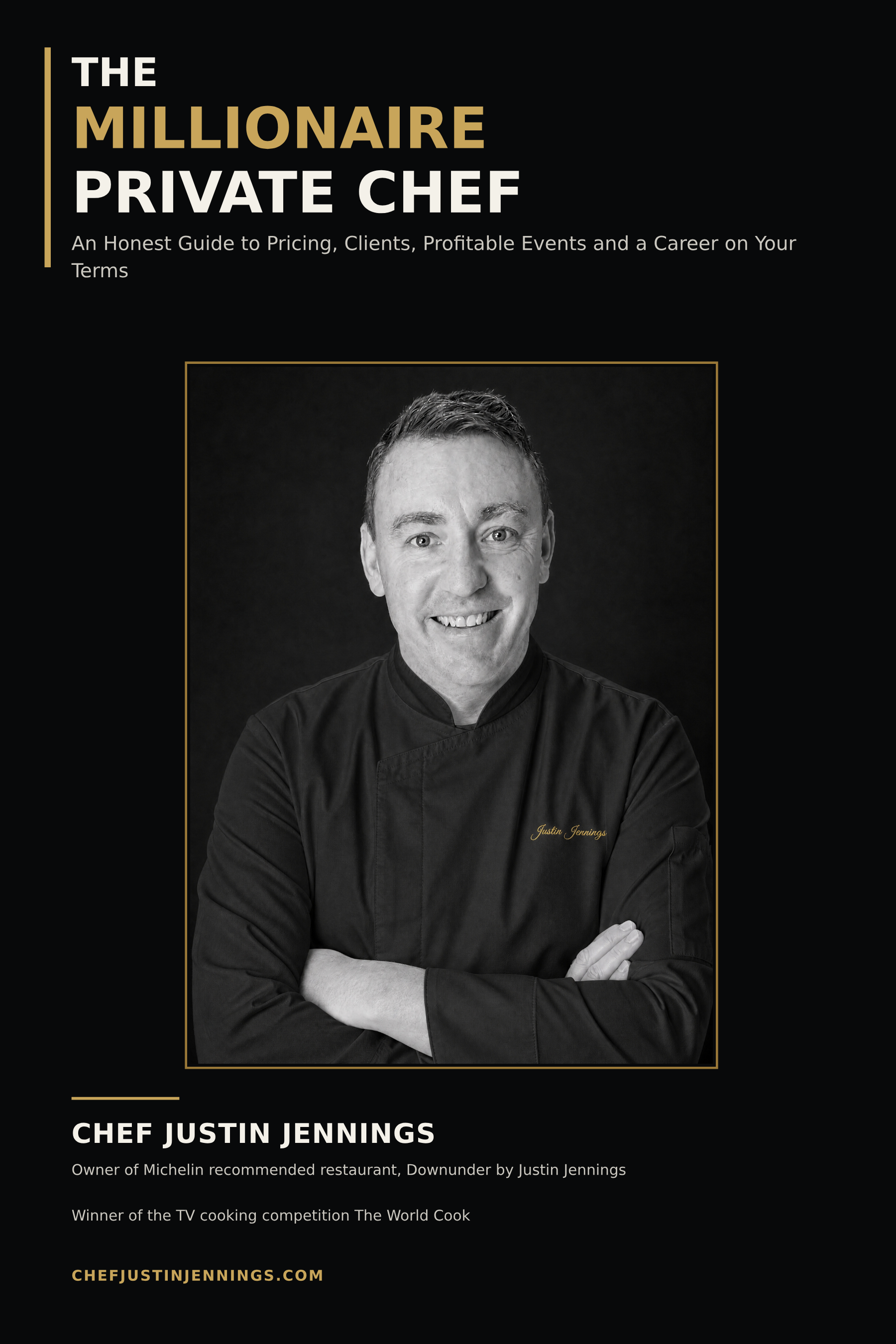
Your first private chef event will be terrifying. Mine was.
I showed up 90 minutes before dinner was supposed to be served, realized I'd forgotten my thermometer, discovered the client's oven ran 30°C cooler than the dial said, and had to replate my first course three times because I couldn't get the portions to look right. I was sweating through my chef whites in an air-conditioned kitchen.
The dinner went fine. Clients were happy. I got paid. But I could have saved myself two hours of panic with a proper checklist.
This is that checklist. Everything I've learned from 200+ private chef events, distilled into what you actually need for your first booking. No fluff. No gear you'll never use. Just the essentials that separate a smooth evening from a stressful disaster.
The Pre-Event Timeline (What to Do When)
Most first-time private chefs underestimate prep time. They think like restaurant cooks mise en place, cook, plate, done. But you're also the event planner, logistics coordinator, and cleanup crew.
Here's my timeline for a standard 3-course dinner for 8 guests:
7 Days Before
□ Finalize menu with client
Email them the full menu with dish descriptions. Ask for approval in writing. This prevents "I thought we were having fish" surprises.
□ Confirm dietary restrictions
Ask again, even if you already know. Someone always forgets to mention their allergy or new diet.
□ Send kitchen questionnaire
"How many hob burners? Oven size? Fridge/freezer space available? Do you have a food processor?" I email this as a simple checklist.
□ Plan your prep schedule
What can you make 2 days ahead? Day before? Day of? Write it down. Your brain will be mush the morning of.
3 Days Before
□ Shop for non-perishables
Dry goods, oils, vinegars, wine for cooking. Get this out of the way early.
□ Confirm final guest count
Text or email: "Just confirming we're cooking for 8 on Saturday if anything changes, let me know by Thursday morning." Gives them time to adjust, gives you time to adjust shopping.
□ Check all equipment
Lay out everything you're bringing. Check knife sharpness. Test your thermometer. Replace batteries. Find that missing tong you swore you had two of.
1 Day Before
□ Shop for fresh ingredients
Protein, produce, dairy. Go early (9am) when quality is best and stock is full.
□ Prep everything possible
Stocks, sauces, desserts, marinated proteins. Pack them in labeled containers. I use masking tape and a sharpie: "Balsamic reduction 2 tbsp per plate."
□ Pack your car
Coolers with ice packs, equipment bags, serving plates if you're bringing them. Do this the night before so you're not rushing.
□ Reconfirm arrival time and access
"See you tomorrow at 5:30pm. I'll text when I'm 10 minutes away. Is parking in the driveway okay?"
Event Day
□ Arrive 2.5-3 hours early (first event)
Yes, 3 hours. You'll need it. For an 8pm dinner, arrive at 5:30pm.
□ Kitchen orientation (15 min)
Where's the cutlery? Serving dishes? Bin bags? How does the oven work? Better to ask now than frantically search later.
□ Unpack and organize (20 min)
Set up your station. Cutting boards, knives, bowls. Put everything in reach. Wipe down surfaces.
□ Final prep (90-120 min)
This is when you do the bulk of cooking and plating prep. Work backward from service time.
□ Service (60-90 min for 3 courses)
Pace courses 20-25 minutes apart. Don't rush. Let guests enjoy.
□ Cleanup (45-60 min)
Leave the kitchen spotless. Seriously this is where you earn repeat bookings.
Essential Equipment: What to Bring
Don't trust the client's kitchen. Ever. Even in a €2 million home with a €40,000 kitchen, the knives will be dull and the pans will be warped.
This is my travel kit for every event. Total investment: €400-€600 if you're starting from scratch, but you already own half of this.
Knife Kit
- 8-10" chef's knife (your workhorse)
- Paring knife
- Serrated bread knife
- Boning knife (if working with whole fish/poultry)
- Steel or sharpener
- Knife roll or case (protect your blades)
Budget: €150-€300 for a solid kit (Victorinox, Wüsthof, or Zwilling)
Cookware & Tools
- 2-3 cutting boards (plastic for protein, wood for veg avoid cross-contamination)
- 8" and 12" non-stick pans (bring your own client's pans are always scratched)
- 2-3 mixing bowls (various sizes)
- Tongs (2-3 pairs, different sizes)
- Spatulas (metal and silicone)
- Ladle
- Whisk
- Microplane grater
- Vegetable peeler
- Kitchen scissors
- Can opener (you never know)
Measuring & Temperature
- Instant-read thermometer (Thermapen or similar worth every euro)
- Timer (phone works, but a dedicated timer is better)
- Measuring cups and spoons
- Kitchen scale (for precision)
Storage & Transport
- 2-3 coolers with ice packs (for transporting prepped food)
- Plastic containers with lids (various sizes, labeled)
- Cling film and foil
- Ziplock bags (multiple sizes)
- Permanent marker and masking tape (for labeling)
Service & Presentation
- Squeeze bottles (for sauces, oils)
- Tweezers (for precise plating)
- Serving spoons (2-3)
- Optional: Your own serving plates if doing high-end plating (clients rarely have nice ones)
Cleaning & Sanitation
- Apron (2 if you're messy like me)
- Kitchen towels (4-6 you'll use them all)
- Hand towel (separate from cooking towels)
- Trash bags (bring extra, clients always underestimate)
- Dish soap and sponges (don't rely on theirs)
- Antibacterial spray or wipes
- Paper towels (a full roll)
Emergency Backup Kit
- Salt, pepper, olive oil (client's might be low or poor quality)
- Lighter or matches (for gas hob or candles)
- Duct tape (fixes everything)
- Portable induction burner (€60 saved me twice when client's hob didn't work)
- Extension cord (kitchens never have enough outlets)
- Bandages and burn cream (hope you don't need them, always bring them)
This is just the equipment list.
My complete guide includes: menu planning templates, timing spreadsheets, client communication scripts, insurance and legal checklists, pricing calculators, and 25+ tested private chef menus with shopping lists.
Buy on AmazonClient Communication: What to Say (And When)
Half the stress of your first event isn't cooking it's managing client expectations. Here's exactly what to communicate and when.
Initial Booking (Week 1)
When they first reach out, send this email within 24 hours:
"Hi [Name],
Thanks for your inquiry! I'd love to cook for your [occasion] on [date].
To put together the perfect menu, I need a few details:
- How many guests?
- Any dietary restrictions or allergies?
- Preferred style: casual, multi-course, tasting menu?
- Foods you love or want to avoid?
- Your address (for travel time)
Once I have these, I'll send you a custom menu and quote within 48 hours.
Cheers,
Justin"
Menu Proposal (Week 1-2)
Send a detailed menu with descriptions. Make it visual. I use a simple PDF format:
SAMPLE 3-COURSE MENU €95 PER PERSON (8 GUESTS)
FIRST COURSE
Pan-Seared Scallops with cauliflower purée, crispy prosciutto, and herb oil
MAIN COURSE
Herb-Crusted Lamb Rack with rosemary jus, roasted root vegetables, and garlic mash
DESSERT
Dark Chocolate Fondant with vanilla ice cream and fresh berries
Includes: groceries, preparation, service, and cleanup
Total: €760 (for 8 guests)
Please confirm if this suits your tastes, or let me know if you'd like any adjustments!
Confirmation (3 Days Before)
Lock in the details with a confirmation email:
"Hi [Name],
Looking forward to Saturday! Quick confirmation:
- Date: Saturday, 14th July
- Arrival: 5:30pm (dinner at 8pm)
- Guests: 8 people
- Menu: Scallops, Lamb, Chocolate Fondant
- Dietary notes: 1 pescatarian (fish course instead of lamb)
Could you please:
- Clear some fridge space for my ingredients
- Have the kitchen clean and available when I arrive
- Let me know about parking
I'll text when I'm 10 minutes away. See you Saturday!
Cheers,
Justin"
The First 15 Minutes: What to Do When You Arrive
You walk into a stranger's kitchen. Your heart is pounding. You're carrying 20kg of equipment and groceries. What do you do first?
1. Greet the client warmly (2 min)
Smile. Introduce yourself. Be confident but not cocky. "Hi, I'm Justin so excited to cook for you tonight!"
2. Ask for a kitchen tour (5 min)
"Mind showing me around? Where's the cutlery, serving dishes, bin bags?" Don't be embarrassed to ask. Clients expect this.
3. Identify potential issues (3 min)
How many hob burners work? Oven temperature accurate? Enough fridge space? If something's wrong, flag it now: "Your oven seems to run cool I'll adjust cook times."
4. Set up your station (5 min)
Unpack knives, cutting boards, tools. Arrange them logically. Wipe down surfaces. This is your kitchen for the next 4 hours make it yours.
5. Reassure them and get to work
"Everything looks great! I'll get started feel free to relax, I'll let you know if I need anything." Then close the kitchen door (if there is one) and breathe.
Common First-Event Disasters (And How to Fix Them)
Something will go wrong. It always does. Here's what to do when it happens:
Disaster #1: The Oven Doesn't Work
Solution: Pivot to stovetop cooking. That lamb rack? Sear it and finish in a covered pan. Chocolate fondant? Make a stovetop chocolate pot de crème instead. Always have a Plan B for every dish.
Disaster #2: You Forgot a Key Ingredient
Solution: Substitute creatively. Forgot cream? Use butter and milk. Forgot wine for deglazing? Use stock and vinegar. No parsley? Use any green herb. Clients won't know the difference.
Disaster #3: The Fish Is Overcooked
Solution: Flake it into a "deconstructed" presentation. Drizzle extra sauce. Garnish heavily. Overcooked protein tastes fine it just looks different. Make it intentional.
Disaster #4: You're Running 30 Minutes Late
Solution: Communicate proactively. Stick your head out and say, "Dinner's going to be about 20 minutes later than planned everything's coming together beautifully, just taking a bit longer." Clients appreciate honesty. Never ghost them and hope they don't notice.
Disaster #5: There's Not Enough Food
Solution: Stretch portions with bread, salad, or cheese. Plate smaller portions artfully. Add an extra course if you have ingredients even just a simple soup or salad. Never admit you miscalculated. Just make it work.
Ready to Do This?
This checklist covers your first event. My book covers everything else: finding clients, pricing confidently, scaling to full-time, legal and insurance setup, 25+ tested menus, and the exact systems I use to run a 6-figure private chef business.
Buy on AmazonAfter the Event: The Follow-Up
Your work isn't done when you leave the client's house. The follow-up is where you turn one-time clients into repeat bookings and referrals.
Same night (before bed): Text them: "Thanks again for tonight hope you and your guests enjoyed it! Let me know if you'd like to do it again."
Next day: Email a thank-you with a Google review link and a referral offer: "If you know anyone looking for a private chef, I'd love to cook for them I offer a 10% discount for referrals."
1 week later: Check in: "Just wanted to see if you have any feedback from Saturday always looking to improve!" This opens the door for testimonials.
1 month later: Add them to your email list. Send a monthly newsletter with new menus, availability, and seasonal specials. Stay top of mind.
The Truth About Your First Event
It won't be perfect. You'll forget something. You'll stress over timing. You'll overthink every plate.
But here's what will also happen: Clients will be thrilled. They'll compliment your food. They'll ask when you can come back. And you'll drive home thinking, "I can't believe I get paid to do this."
My first event was messy, chaotic, and terrifying. I also made €600 in 5 hours and got three referrals from it. Eight years later, I'm still doing this and I've never looked back.
You've got this. Now go book that first event.
Frequently Asked Questions
What equipment do I need for my first private chef event?
For your first private chef event you need: chef's knife set (3-4 knives), cutting boards (2 minimum), mixing bowls, pots and pans (bring your own reliable set), spatulas and tongs, thermometer, timer, apron, towels, and a portable cooler. Don't rely on client kitchens having sharp knives or proper equipment. Bring everything you'd need to execute your menu, plus backups. Total equipment investment for first event: €200-€400 if starting from scratch.
How early should I arrive for my first private chef event?
Arrive 2-3 hours before service time for your first event. This gives you time to: orient yourself in the kitchen (15 min), unpack and organize (20 min), prep ingredients (60-90 min), plate and time dishes (30 min), and buffer for unexpected issues (30 min). For an 8pm dinner, arrive by 5:30pm. As you gain experience, you can reduce this to 90 minutes, but don't rush your first few events.
What should I communicate to clients before my first event?
Before your first event, confirm: final guest count (48 hours before), dietary restrictions and allergies (ask twice), kitchen access details (arrive time, parking, entry instructions), equipment available (oven, hob, fridge space), service style preferences (plated vs family-style), and timeline (when they'd like to eat). Send a confirmation email 3 days before with all details. Ask clients to clear fridge space and have the kitchen clean when you arrive.
How much food should I prepare for my first private chef event?
Prepare 10-15% more food than the exact guest count requires. For 8 guests, prep for 9. This accounts for: larger appetites, seconds, plating errors, and your own stress eating (it happens). Better to have slight leftovers than run short. Track your portioning across events to dial this in. Most private chefs eventually reduce this buffer to 5-10% once they're confident in their portioning.
What if something goes wrong during my first event?
When (not if) something goes wrong: Stay calm clients rarely notice kitchen issues if you don't panic. Have backup options bring extra protein or a simple dessert component. Communicate proactively if a course is delayed, let them know dinner will be 15 minutes later. Pivot confidently if a dish fails, replate it differently or skip it and add portions to other courses. Never apologize profusely acknowledge briefly and move on. Most 'disasters' are only visible to you.
Should I bring a helper to my first private chef event?
For your first 3-5 events with 6-8 guests, work solo to learn the full process. Once you're confident, bring a helper for events with 10+ guests or multi-course tasting menus. Helpers cost €80-€120 for the evening but allow you to focus on cooking while they handle plating, service, and cleanup. Factor this into your pricing (add €10-€15/person for events requiring assistance). Choose someone reliable who understands kitchen flow.
How do I handle cleanup after my first private chef event?
Cleanup protocol: Wash all your equipment and pack it away. Wash pots/pans/dishes used for cooking. Load client's dishwasher with serving plates and cutlery (or hand wash if they prefer). Wipe down all surfaces, stovetop, and counters. Take out trash and recycling. Leave the kitchen cleaner than you found it. This typically takes 45-60 minutes. Some chefs charge extra for 'white glove cleanup' (organizing fridge, deep cleaning), while others include basic cleanup in their rate.
What should I do if the client's kitchen doesn't have what I need?
Always assume the client's kitchen won't have what you need. Bring your own knives, cutting boards, pots, pans, and essential tools. If you arrive and discover a critical missing item (oven doesn't work, not enough hob space), communicate immediately: 'I can adjust the menu to work with this setup' or 'I'll need to pick up a portable burner adds 30 minutes.' Most issues are solvable with creativity. Keep a backup portable induction hob in your car for emergencies (€60 investment that's saved me twice).
Related Articles
How to Start a Private Chef Business in 2026 (Complete Guide)
Step-by-step startup guide from certification to first client
Private Chef Pricing Guide: What to Charge (With Real Examples)
Real numbers, pricing tiers, and how to talk money confidently
Private Chef Equipment Essentials: What You Actually Need
Gear breakdown from must-haves to nice-to-haves