Getting Started
Private Chef Equipment: What You Actually Need (Under €500)
18 June 2026 · 9 min read
My book includes complete equipment checklists, transport setup guides, and the exact gear I've used for 100+ private chef events. No guessing, no waste.
Buy on Amazon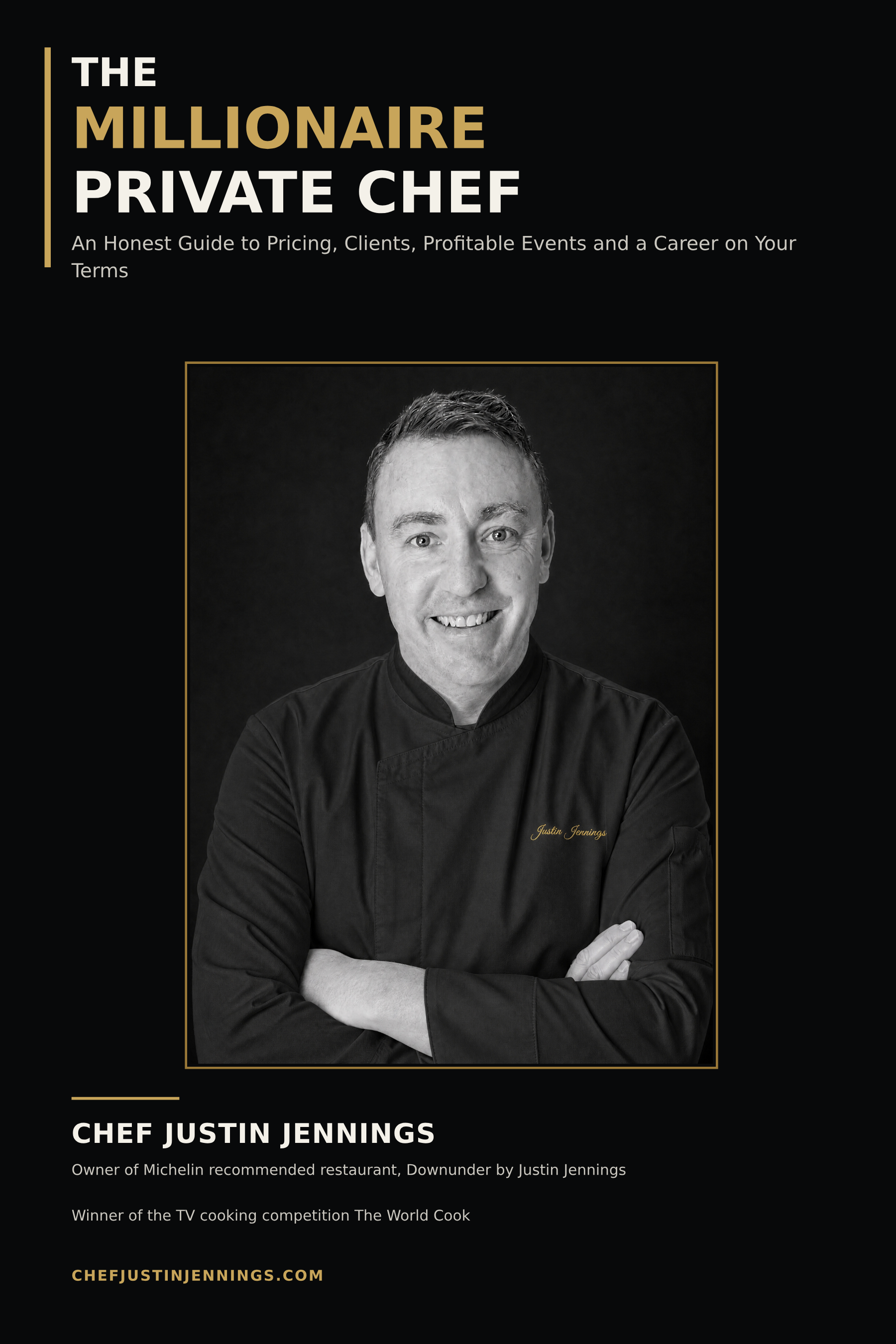
You don't need a van full of gear to start as a private chef. You need three good knives, a handful of reliable pans, and a transport system that doesn't leak in your car boot.
I've done 100+ private chef events with the same core kit that fits in two bags. Total cost: under €500. No fancy gadgets. No "chef lifestyle" nonsense. Just tools that work in client kitchens where nothing is where it should be and half the burners don't light.
Here's exactly what you need, what you don't, and how to avoid buying rubbish that breaks after three events.
The Essentials (€300-€500 Total)
This is your mobile kitchen. Everything listed here will fit in a knife roll, a pan bag, and one plastic storage bin. If it doesn't fit in your car alongside groceries, you don't need it.
Knives (€120-€200)
You need three knives. Not eight. Not a magnetic block set. Three.
1. Chef's Knife (20-25cm)
This does 80% of your work. Chopping, slicing, dicing, mincing. Get something mid-range and durable - Victorinox Fibrox (€50-€80) or Wüsthof Pro (€80-€120). Don't buy Japanese carbon steel for mobile work - it chips in transport and rusts if you don't dry it immediately. Stainless beats fancy.
2. Paring Knife (8-10cm)
Peeling, trimming, detail work. A €20 Victorinox paring knife will outlast any boutique brand. Keep it sharp. That's all that matters.
3. Serrated Knife (20cm)
Bread, tomatoes, anything with a skin. You'll use this more than you think. Victorinox again - €25-€35. Serrated knives rarely need sharpening, which makes them perfect for mobile work.
What you don't need: Boning knives (you're not butchering on-site), cleavers (too heavy), santoku knives (your chef's knife does the same job), or a full knife set (half of them sit unused).
Knife Roll & Sharpening (€50-€80)
Knife Roll: Get a padded canvas roll with reinforced slots and a secure tie. Mercer (€40-€60) or generic canvas (€25-€40). Water-resistant fabric helps. Avoid leather (cracks and weighs a ton) and backpack-style (knives shift and damage each other).
Sharpening: A whetstone (1000/6000 grit, €20-€30) and a honing steel (€15-€25). Learn to sharpen properly - YouTube is free. Sharp knives = faster prep = more profit per event. Dull knives = dangerous and slow.
Pans (€120-€200)
Client pans are universally terrible. Warped bases, scratched non-stick, mismatched sizes. Bring your own.
28cm Stainless Steel Fry Pan (€50-€80)
Your workhorse. Searing, sautéing, pan sauces. Stainless handles high heat and survives car transport. Brands: Tramontina, IKEA 365+, or Tefal Expertise. Tri-ply base prevents hot spots. Non-stick is fine for home cooking but dies fast with professional use.
24cm Non-Stick Sauté Pan (€40-€60)
Eggs, fish, delicate proteins. Get a decent one (Tefal, Scanpan, or similar) with a thick base. Replace it every 12-18 months - non-stick coatings degrade. Don't spend €150 on a "lifetime" non-stick pan. It's a consumable.
2-3L Stainless Saucepan (€30-€60)
Sauces, reductions, blanching. Mid-range quality. Check that the handle is securely riveted - loose handles are dangerous when transporting hot liquids.
What you don't need: Cast iron (too heavy for transport), copper (too delicate), woks (client burners rarely get hot enough), or a full pan set (you use 3 pans max per event).
Hand Tools (€60-€100)
Keep it minimal. You're not setting up a new kitchen - you're filling the gaps in client kitchens.
- 2 Cutting Boards (€20-€30) - One for proteins, one for veg. Plastic, dishwasher-safe, non-slip feet. Size: 30×45cm minimum.
- Tongs (€10-€15) - Stainless, 30cm, lockable. Get two pairs.
- Silicone Spatula (€8-€12) - Heat-resistant to 250°C. One large, one small.
- Whisk (€8-€12) - Stainless, balloon-style. One is enough.
- Peeler (€5) - Y-peeler or swivel. Cheap is fine.
- Microplane Grater (€12-€18) - Citrus zest, garlic, Parmesan, ginger. Essential.
- Instant-Read Thermometer (€15-€25) - ThermoPro or Lavatools. Check doneness without cutting into proteins.
- Kitchen Scissors (€8-€12) - Opening bags, trimming herbs, cutting parchment. More useful than you think.
- Measuring Spoons & Cups (€10-€15) - Client kitchens rarely have them. Stainless or plastic.
What you don't need: Mandolins (dangerous in unfamiliar kitchens), melon ballers, garnish tools, specialty molds, or anything that does one job poorly instead of being versatile.
Transport & Storage (€50-€80)
Food safety isn't optional. You need a system for keeping cold food cold and preventing cross-contamination.
- Airtight Containers (€20-€30) - Various sizes (500ml, 1L, 2L). Glass or BPA-free plastic. Leak-proof lids. Store prepped ingredients, sauces, and leftovers.
- Insulated Bag or Small Cooler (€20-€40) - Keep proteins cold during transport. A soft-sided cooler bag works for 80% of events.
- Ice Packs (€10-€15) - Reusable gel packs. Get 4-6 of them. Freeze overnight before every event.
- Plastic Storage Bin (€10-€15) - For dry goods, pantry items, small tools. Stackable and car-boot friendly.
Pro tip: Label everything. Masking tape and a Sharpie. When you're juggling multiple containers in a client kitchen, you don't want to open five lids to find the vinaigrette.
Optional (But Useful) Additions
Once you've done 10-15 events and know your rhythm, consider these upgrades:
Portable Induction Burner (€60-€100)
Not essential, but helpful for outdoor events, beach houses, or villas with tiny kitchens. Get a 2000W+ model (Duxtop, Tefal, or similar). Anything less doesn't have enough power for real cooking. Make sure your pans are induction-compatible (magnetic base).
Small Food Processor (€40-€60)
For purées, pestos, and quick sauces. Clients often have blenders but not food processors. A 1.5L Kenco or Braun mini processor fits in your car and handles 90% of what you need. Skip the full-size models - too bulky for transport.
Chef Apron (€20-€40)
You're representing yourself, not a restaurant. A clean, dark apron (black or charcoal) looks professional. Cross-back or waist style - whatever's comfortable. Pockets help. No logos, no gimmicks. You want clients to focus on the food, not your outfit.
Portable Bluetooth Speaker (€30-€50)
This sounds frivolous but it's not. Client kitchens are often quiet and awkward. A small speaker playing low background music makes the experience better for everyone. Keep it subtle - you're not DJing. Just filling dead air.
What NOT to Buy
Save your money. These don't earn their keep:
- Sous Vide Machine - Clients rarely request it, and it adds 2-3 hours to your timeline. Restaurant technique, not private chef reality.
- Multiple Knife Sets - You use 3 knives. Stop.
- Molecular Gastronomy Kits - Unless you're charging €150pp and clients specifically want it, this is theatre, not value.
- Branded Chef Whites - Clients don't care about your embroidered name. A clean apron is enough.
- Electric Knife Sharpeners - They remove too much steel and ruin blade geometry. Learn to use a whetstone. It's cheaper and better.
- Novelty Gadgets - Spiralizers, avocado slicers, herb strippers, egg separators. If it does one job, it's clutter.
How to Pack Your Kit
Organization prevents chaos. Here's how I pack for every event:
Bag 1: Knife Roll
Knives, sharpening steel, scissors, peeler, microplane, thermometer. This bag never leaves your sight. Knives are expensive and irreplaceable mid-event.
Bag 2: Pan Bag or Tote
3 pans, cutting boards (slotted between pans for protection), tongs, spatulas, whisk. Wrap pans in tea towels to prevent scratching. A cheap IKEA tote bag works fine.
Bag 3: Cooler/Insulated Bag
Cold proteins, dairy, prepped ingredients. Ice packs top and bottom. Keep raw meat separate from everything else (double-bag if needed).
Bag 4: Plastic Bin (Dry Goods)
Oils, vinegars, spices, small containers, storage bags, kitchen towels, hand soap, cleaning supplies. The boring stuff that you always need and clients never have.
Checklist: Take a photo of your packed kit. Before you leave a client's house, compare what's in your bags to the photo. You'll never leave a knife or pan behind.
Where to Buy (Without Overpaying)
You don't need professional chef supply stores. Here's where I buy:
- Knives: Amazon, Zwilling online, or local kitchenware shops (Continente Lar, El Corte Inglés in Portugal). Compare prices - markups vary wildly.
- Pans: IKEA (365+ line is solid), Worten, or Fnac. Avoid supermarket pans - they warp fast.
- Small Tools: IKEA, Chinese bazaars (Loja do Chinês), or Amazon Basics. Tongs are tongs. You don't need designer utensils.
- Storage/Transport: IKEA, Leroy Merlin, or Decathlon (for cooler bags). Buy functional, not fancy.
Used Gear: Facebook Marketplace and OLX are goldmines for pans and storage. Just check for damage (warped bases, cracked handles, worn coatings). Knives are the one thing I'd buy new - you don't know how they've been treated.
Maintenance Matters
Gear dies fast if you don't take care of it. After every event:
- Wash Everything Immediately - Don't leave dirty pans in your car overnight. Food residue corrodes stainless and ruins non-stick.
- Dry Knives Thoroughly - Even stainless can rust if stored wet. Wipe blades, dry handles, store in your knife roll.
- Check Pan Condition - Scratched non-stick? Replace it. Warped base? Bin it. Bad tools slow you down.
- Sharpen Knives Monthly - Or after 4-5 events. A sharp knife is faster and safer. Dull knives cause accidents.
- Inspect Your Cooler Bag - Mold grows in insulated bags if you don't air them out. Wipe down, leave unzipped to dry.
Replace consumables (non-stick pans, peelers, cutting boards) before they fail during an event. Budget €50-€100/year for gear replacement.
The Real Cost Breakdown
Here's what a complete starter kit actually costs:
| Item | Cost (€) |
|---|---|
| Knives (3) + Sharpening | 150 |
| Knife Roll | 40 |
| Pans (3) | 140 |
| Hand Tools | 80 |
| Cutting Boards (2) | 25 |
| Transport & Storage | 60 |
| Total | €495 |
One private chef event at €85pp for 8 people = €680 revenue. Minus €180 groceries and costs = €500 profit. Your gear pays for itself in one event.
Final Thoughts
Private chef work isn't about having the fanciest gear. It's about bringing reliable tools to unpredictable kitchens and making great food anyway.
Start with the essentials. Three knives, three pans, hand tools, transport. €500 total. Do a few events. See what you actually use. Then add the optional extras if they make sense for your style of work.
Clients don't care if your knife cost €50 or €500. They care if their food is good. Invest in skill first, gear second.
Want the complete private chef startup kit checklist, packing system, and transport setup? It's all in the book including what to bring for different event types (dinner party vs wedding vs villa rental).
Buy on Amazon