Business Essentials
Private Chef Insurance: What You Actually Need (2026 Guide)
23 June 2026 · 12 min read
Get the complete legal and admin checklist for your private chef business, including insurance requirements, contracts, and compliance documents.
Buy on Amazon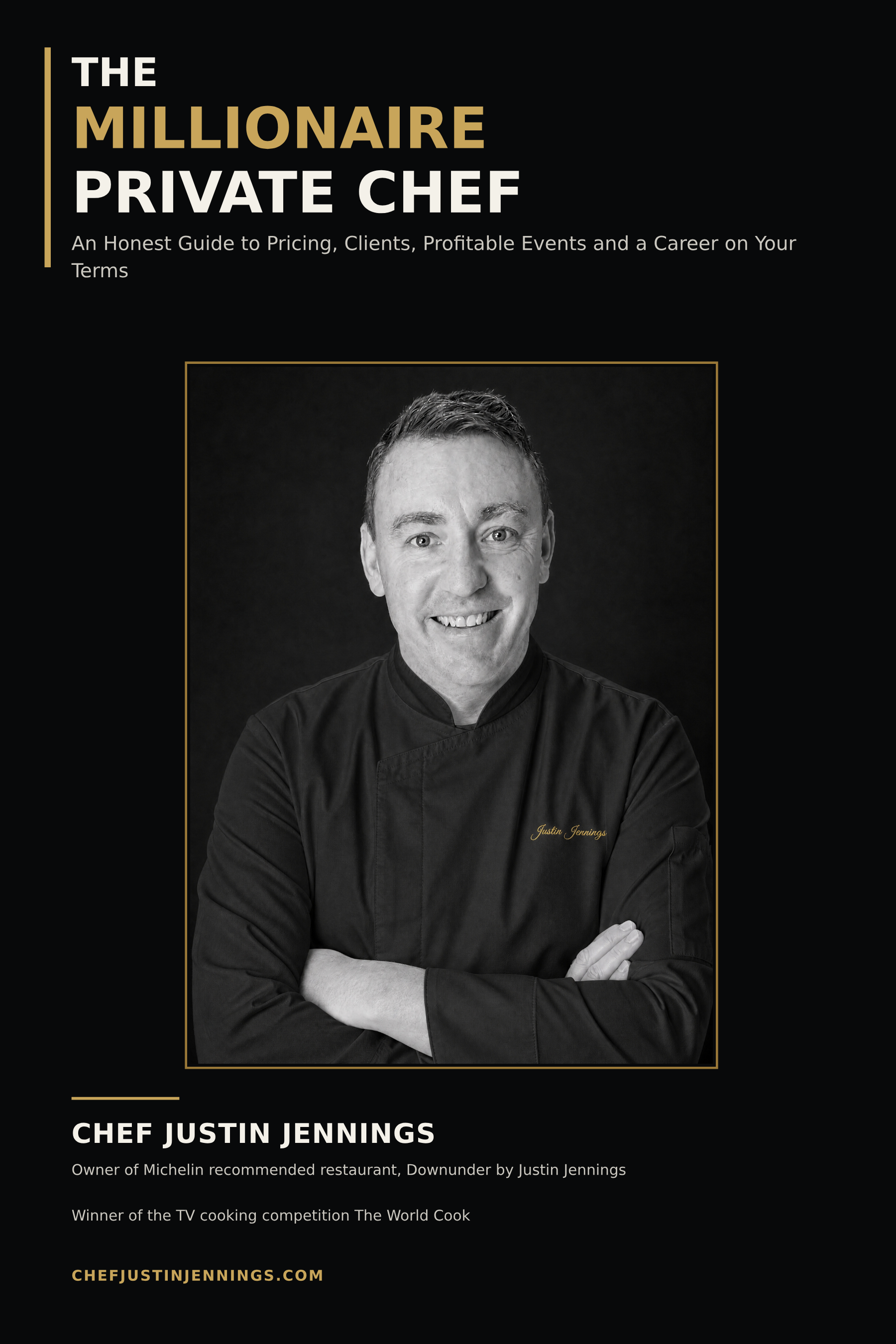
Let me tell you about the worst event of my career and why I'm grateful I had insurance when it happened.
It was a 40-person corporate event in a villa outside Lisbon. Seafood-heavy menu, summer heat, €3,800 booking. Everything went perfectly. The guests raved. I packed up, collected payment, and went home feeling accomplished.
Two days later: the phone call. Eight guests had severe food poisoning. Two were hospitalized. The client was threatening legal action. The venue was demanding my insurance details. I was terrified.
Turns out, the villa's refrigerator had a faulty thermostat. The seafood had been stored at unsafe temperatures before I even arrived. Environmental health inspectors cleared me completely but the investigation took three weeks and cost €12,000 in legal fees.
My insurance covered every cent. Without it, I would have been personally liable. My business would have ended that day.
Insurance isn't optional. It's not something you "get around to eventually." It's the difference between a scare and financial ruin. This guide covers everything you need to know.
Why Insurance Isn't Optional: The Horror Stories
Before we get to coverage types and costs, let me share the stories that made me religious about insurance:
The allergic reaction: A chef in London failed to disclose hazelnuts in a dessert. The guest went into anaphylactic shock and was hospitalized for four days. Legal fees: £45,000. Settlement: £85,000. The chef had no insurance. She declared bankruptcy and never cooked professionally again.
The kitchen fire: A private chef in the US accidentally started a grease fire in a client's €2M home. Damage to the kitchen and adjacent rooms: $180,000. Smoke damage throughout the house: $60,000. Loss of use while repairs happened: $40,000. Total: $280,000. He had no insurance. The homeowner sued. He lost everything.
The slip and fall: A chef in Portugal was carrying a tray of hot soup when she slipped on a wet floor (not her fault client's dog had knocked over a water bowl). She fell, spilled boiling liquid on a guest, and broke her own wrist. Guest's medical bills: €15,000. Chef's lost income during recovery: €8,000. Legal fees: €18,000. Neither had insurance. Both lost.
The viral outbreak: A chef in Australia served raw oysters at a wedding. 60 guests became ill with norovirus (later traced to the oyster supplier, not the chef's handling). Legal defense: AU$95,000. Even though he was found not liable, his career was over no one would book him after the media coverage. Insurance would have covered legal costs and protected his reputation through proper crisis management.
Notice a pattern? None of these chefs meant for it to happen. None were negligent. All lost everything.
Types of Insurance You Actually Need
1. General Liability Insurance (Public Liability)
What it covers: Bodily injury or property damage caused by your work. This includes:
- Slip and fall accidents during your event
- Burns from hot cookware or food
- Damage to client's property (broken dishes, spilled wine on furniture, kitchen damage)
- Fire or smoke damage from cooking
- Injury to third parties (not the client, but their guests or staff)
What it doesn't cover: Food poisoning or illness (that's product liability), professional errors (that's professional indemnity), intentional acts, or your own injuries.
Coverage amount needed: €1M minimum. €2M recommended. €5M if you work in high-value properties or for high-net-worth clients.
My premium: €420/year for €2M coverage (Portugal, 2026).
2. Product Liability Insurance (Food Liability)
What it covers: Claims related to food you prepare or serve:
- Food poisoning (salmonella, E. coli, norovirus, campylobacter)
- Allergic reactions (even if client failed to disclose allergies)
- Foreign objects in food (glass, metal, plastic)
- Contamination or spoilage
- Mislabeling or failure to warn about allergens
What it doesn't cover: Poor taste, customer dissatisfaction, contractual disputes, or intentional contamination.
Coverage amount needed: €1M minimum. €2M recommended.
My premium: €380/year for €2M coverage (included in my hospitality package).
Why it's essential: This is the most common claim type for private chefs. Even with perfect food safety practices, cross-contamination, supplier issues, or client storage problems can lead to illness. Legal defense alone typically costs €10,000-€50,000, even if you win.
3. Professional Indemnity Insurance (Errors & Omissions)
What it covers: Financial loss caused by professional mistakes or negligence:
- Breach of contract (you didn't deliver what was agreed)
- Negligent advice (wrong cooking time, unsafe storage recommendations)
- Copyright infringement (using someone else's recipe commercially)
- Defamation (saying something damaging about a supplier or competitor)
- Lost income due to your failure to perform
What it doesn't cover: Bodily injury, property damage, criminal acts, or intentional wrongdoing.
Coverage amount needed: €500K-€1M for most private chefs. €2M if you consult or train other chefs.
My premium: €290/year for €1M coverage.
Is it necessary? Not as urgent as general and product liability, but important if you: 1) Sign contracts (most corporate events require them), 2) Give cooking advice or consulting, 3) Train staff, 4) Develop recipes commercially.
4. Equipment Insurance (Contents/Tools of Trade)
What it covers: Your cooking equipment, knives, and tools:
- Theft from your vehicle or the client's property
- Accidental damage (dropped knife case, broken equipment)
- Fire or water damage
- Replacement cost for essential tools
Coverage amount needed: Value of your full kit. For me: €8,000 (knives, pans, equipment, serving pieces).
My premium: €150/year for €8,000 coverage with €100 excess.
Is it necessary? Yes, if you own €2,000+ in equipment. Knife sets alone can run €1,500-€3,000. Losing them to theft or fire would be a significant setback.
5. Legal Expenses Insurance
What it covers: Legal defense costs (separate from liability claims):
- Contract disputes with clients or suppliers
- Employment disputes (if you hire staff)
- Tax disputes or audits
- Licensing or regulatory issues
- Debt collection
Coverage amount needed: €50,000-€100,000.
My premium: €110/year for €75,000 coverage.
Is it necessary? Optional but valuable. Legal fees add up fast. Even simple contract disputes can cost €5,000-€15,000. This covers you for legal issues not related to liability claims.
6. Vehicle/Goods in Transit Insurance
What it covers: Food, ingredients, and equipment while transporting:
- Spoilage due to vehicle breakdown or accident
- Theft from your vehicle
- Damage to ingredients during transport
Coverage amount needed: €2,000-€5,000 per trip.
My approach: This is often included in commercial vehicle insurance. Check your policy. If you're using a personal vehicle for business, you may need a commercial use endorsement (adds €200-€400/year).
What About Workers' Compensation?
Do you need it? Only if you hire employees or regular subcontractors. Laws vary by country:
- UK: Required if you employ anyone, even part-time. Fines for non-compliance: £1,000-£2,500 per day.
- US: Required in most states if you have employees. Fines vary by state ($1,000-$10,000+).
- Portugal: Required if you employ staff. Not required for sole traders working alone.
- Australia: Required if you hire anyone, even casually.
If you work alone (no staff): You typically don't need it. But check local laws some jurisdictions consider anyone working with you, even unpaid volunteers, as requiring coverage.
If you occasionally hire help: Check if your liability insurance covers temporary helpers. If not, consider it.
If you hire regular staff: Absolutely required. Penalties for non-compliance are severe, including personal liability for injuries.
My Actual Insurance Costs (2026)
Here's what I pay annually as an established private chef in Portugal, working solo:
- General Liability (€2M): €420/year
- Product Liability (€2M): €380/year
- Professional Indemnity (€1M): €290/year
- Equipment (€8K): €150/year
- Legal Expenses (€75K): €110/year
- Total: €1,350/year (€112/month)
Context: My annual revenue: ~€65,000. Insurance cost: 2.1% of revenue. That's a business expense I gladly pay for peace of mind.
When I started (Year 1): I paid €520/year for just general + product liability (€1M each). As I grew, I increased coverage and added professional indemnity and equipment insurance.
Your costs will vary based on:
- Location (US is typically 30-50% more expensive than Europe)
- Coverage limits (€1M vs. €5M)
- Claims history (clean record = lower premiums)
- Revenue/turnover (higher revenue = higher premiums)
- Services offered (consulting or training adds cost)
- Number of events per year
Where to Buy Private Chef Insurance
Option 1: Specialist Hospitality Brokers (Recommended)
Pros: They understand chef-specific risks, can bundle policies for better rates, offer tailored advice, and advocate for you during claims.
Cons: May be slightly more expensive than online platforms, requires phone/email interaction.
Best for: Chefs with revenue over €30,000/year, those with complex needs (multiple services, staff, high-value clients).
Examples: Specialty brokers like Towergate (UK), Hospitality Insurance Group (US), or local commercial insurance brokers who work with caterers/chefs.
Option 2: Online Insurance Platforms
Pros: Quick quotes, competitive pricing, instant policy documents, simple renewal process.
Cons: Less personalized advice, may not cover niche risks, claims support can be slow.
Best for: Solo chefs, straightforward needs, budget-conscious startups.
Examples:
- UK: Hiscox, Simply Business, Protectivity
- US: Hiscox, Next Insurance, Insureon, Zensurance
- Australia: BizCover, Upcover
- Europe: Check local providers (insurance markets vary widely by country)
Option 3: Professional Associations
Pros: Member discounts (10-20% off), group policies, industry-specific coverage, networking benefits.
Cons: Requires association membership (adds €100-€300/year), not always the cheapest.
Best for: Chefs who value professional development and networking alongside insurance.
Examples:
- American Culinary Federation (ACF) US
- Academy of Culinary Arts UK
- Guild of Professional Chefs UK/Europe
What to Avoid
- Your home insurance agent: They don't understand food business risks and will likely underinsure you.
- The absolute cheapest quote: Compare coverage details, not just price. A €300 policy with €500K coverage and massive exclusions is worse than a €600 policy with €2M coverage and full protection.
- Unrated insurers: Stick with A-rated insurance companies (check ratings on A.M. Best or similar). A cheap policy is worthless if the insurer goes bankrupt or refuses to pay claims.
- Skipping the fine print: Read exclusions carefully. Some policies exclude specific high-risk foods (raw seafood, unpasteurized cheese), allergic reactions, or off-premises work.
How to Shop for Insurance (Step-by-Step)
Step 1: Calculate Your Coverage Needs
- General liability: €1M minimum, €2M recommended, €5M for high-net-worth clients
- Product liability: €1M minimum, €2M recommended
- Professional indemnity: €500K-€1M if you sign contracts or consult
- Equipment: Total replacement value of your kit
- Legal expenses: €50K-€100K
Step 2: Get 3-5 Quotes
Contact at least three providers (mix of brokers and online platforms). Provide identical information to each: services offered, revenue, location, claims history, coverage needs.
Step 3: Compare Coverage, Not Just Price
Create a spreadsheet comparing:
- Coverage limits (general, product, professional indemnity)
- Excess/deductible amounts
- Exclusions (what's NOT covered)
- Territory (where you're covered important if you travel internationally)
- Legal defense costs (some policies cap legal fees, others cover unlimited defense)
- Claims process (how do you report? 24/7 hotline or email only?)
Step 4: Check Insurer Ratings
Look up the insurance company on A.M. Best, Standard & Poor's, or Moody's. Stick with A-rated or higher insurers. A cheap policy from a B-rated insurer is risky.
Step 5: Read Reviews
Google "[insurer name] claims reviews" and check Trustpilot, Reddit, or industry forums. How do they treat chefs during claims? Fast response or months of delays?
Step 6: Ask These Questions Before Buying:
- "Are raw seafood and unpasteurized products covered?"
- "Does this cover work in clients' homes and rented venues?"
- "What's the claims process? How long does it typically take?"
- "Are legal defense costs included in the coverage limit or separate?" (Separate is better your €1M coverage isn't eaten up by legal fees.)
- "Can I increase coverage as my business grows without re-applying?"
- "What's the cancellation policy if I find a better deal?"
When Clients Ask for Proof of Insurance
Most professional clients will request a Certificate of Insurance (COI) before your event. This is standard and non-negotiable for:
- Corporate events
- Wedding venues and event planners
- High-net-worth clients (especially repeat clients)
- Hotels, villas, yachts (any insured property)
- Event management companies
What to do:
- Request a COI from your insurer (usually free, provided within 1-2 business days).
- Check that it includes: Your business name, policy number, coverage amounts, effective dates, and insurer contact details.
- Some clients require being listed as "Additional Insured" on the COI. This adds them to your policy for that specific event. Ask your insurer most allow this at no extra cost for individual events.
- Send the COI promptly. Don't wait until the day before the event. It's unprofessional and may cause the client to cancel.
Pro tip: Keep digital copies of your COI on your phone and in cloud storage. You'll be asked for it often, and having it ready within minutes signals professionalism.
What Happens If You Actually Need to Make a Claim
I've made one claim (the seafood incident I mentioned at the start). Here's what the process looked like:
Day 1: The Incident
- Client calls, reports guests are ill.
- I immediately contact my insurer (24-hour claims hotline).
- Insurer assigns a claims handler and opens a file.
- I'm advised NOT to admit fault or discuss details with the client all communication goes through the insurer.
Days 2-5: Investigation Begins
- Environmental health inspectors interview me and inspect the venue.
- My insurer hires a food safety expert to review my processes.
- I provide: Menu details, supplier invoices, prep logs, temperature records, photos.
- The insurer's lawyer sends a letter to the client offering to cover medical bills in exchange for no legal action (standard practice).
Days 6-20: Resolution
- Investigation concludes: Faulty refrigerator at venue, not my fault.
- Insurer negotiates with client: Covers medical bills (€4,200), refunds event fee (€3,800), and settles nuisance claim (€2,000) to avoid court.
- Total payout: €10,000 + €12,000 legal fees = €22,000.
- My out-of-pocket cost: €0 (no excess on liability claims in my policy).
What I learned:
- Report incidents immediately even if you're not sure it's your fault. Delayed reporting can void coverage.
- Never admit fault or negotiate directly with claimants. Let your insurer handle it.
- Document everything: Photos, logs, invoices, supplier details. The more documentation you have, the stronger your defense.
- Good insurers are worth their cost. My insurer handled everything professionally, kept me informed, and protected my reputation.
Common Insurance Mistakes Private Chefs Make
Mistake #1: Assuming Home Insurance Covers Business Work
It doesn't. Most home insurance policies explicitly exclude commercial activities. If you cook for clients in your home kitchen and something goes wrong, your home insurance will deny the claim. You need dedicated business insurance.
Mistake #2: Underinsuring to Save Money
A €300/year policy with €500K coverage is false economy. If you cause €1M in damages, you're personally liable for the remaining €500K. The cost difference between €1M and €2M coverage is typically only €100-€200/year it's worth it.
Mistake #3: Not Reading Exclusions
Some policies exclude:
- Raw seafood (sushi, ceviche, oysters)
- Unpasteurized cheeses or dairy
- Allergic reactions
- Work outside your home country
- Events over a certain guest count (e.g., 50+ people)
If you regularly serve any of these, ensure your policy covers them or negotiate an exclusion waiver.
Mistake #4: Letting Coverage Lapse
If you forget to renew and have a gap in coverage, any incident during that gap is not covered. Set calendar reminders 30 days before renewal. Most insurers offer auto-renewal use it.
Mistake #5: Not Updating Coverage as You Grow
If you started with €1M coverage at €20K revenue and you're now earning €80K with high-profile clients, your coverage may be inadequate. Review your policy annually and increase limits as your business grows.
Mistake #6: Skipping Professional Indemnity Because "I Don't Need It"
If you sign contracts (corporate events, weddings), you need professional indemnity. A single breach of contract claim even if you win can cost €10,000-€50,000 in legal fees. Professional indemnity covers this.
Is Insurance Tax Deductible?
Short answer: Yes. In most countries, business insurance premiums are fully tax-deductible as a business expense.
What you can deduct:
- General/public liability insurance
- Product liability insurance
- Professional indemnity insurance
- Equipment insurance (business use only)
- Legal expenses insurance
- Commercial vehicle insurance (business portion)
What you can't deduct: Personal insurance (home, health, life) unless it's specifically tied to business protection (e.g., key person insurance for a partnership).
How to claim it: Keep invoices and receipts. Record premiums as "Insurance" in your accounting software. Deduct the full amount when filing annual taxes. If you use a vehicle for both personal and business, you can only deduct the business percentage (e.g., 60% business use = 60% of commercial insurance premium).
My experience: I deduct ~€1,350/year in insurance premiums. At a 30% tax rate, that saves me ~€405/year in taxes. Effective cost: €945/year for full protection.
Final Thoughts: Insurance Is the Price of Peace of Mind
Here's the truth: You can be the most careful, skilled, experienced chef in the world and still face a claim. A supplier error, a venue issue, a client's undisclosed allergy, a freak accident. It happens.
Insurance doesn't prevent incidents. It prevents those incidents from destroying your business and your life.
€1,000-€1,500 per year is a small price to pay for:
- Protection from financial ruin
- Professional credibility (clients trust insured chefs)
- Legal defense (€10,000-€50,000+ in legal fees covered)
- Peace of mind (you can focus on cooking, not worst-case scenarios)
Don't wait. Don't assume it won't happen to you. Get insured before your next event.
The chef who lost her house because of a kitchen fire? She would have paid €50,000 in premiums over her career to avoid losing €280,000. That's a 560% return on investment for something she hoped she'd never use.
Be the chef who's protected. Not the one with regrets.
Get the Full Legal & Admin Checklist
Insurance is just one piece. My book includes:
- Complete insurance checklist and coverage calculator
- Client contract templates (deposit, cancellation, liability waiver)
- Food safety compliance guide
- Tax structure and deductions
- Licensing and permits by region
- GDPR/privacy compliance for client data
- Business structure guide (sole trader vs. company)
Frequently Asked Questions
How much does private chef insurance cost?
Private chef insurance costs €400-€1,200 per year in Europe (£300-£900 in the UK, $500-$1,500 in the US) depending on coverage level, location, and revenue. Basic coverage (€1M general liability + €1M product liability) typically costs €400-€600/year. Comprehensive coverage (€2M+ public liability, €2M professional indemnity, equipment, and legal expenses) costs €800-€1,200/year. Premiums increase as your revenue grows expect to pay 1-2% of your annual turnover for proper coverage.
Where can you buy private chef insurance?
Buy private chef insurance from: 1) Specialist hospitality brokers (best option they understand chef-specific risks). 2) Online platforms like Hiscox, Simply Business, or Zensurance (quick quotes, competitive rates). 3) Professional associations like ACF or Guild of Professional Chefs (member discounts). 4) Your country's national catering insurance providers. Avoid: Your home insurance agent (they don't understand food business risks) and the cheapest online quote without comparing coverage details. Always compare what's included, not just price.
Is private chef insurance required by law?
Private chef insurance is not legally required in most countries if you're a sole trader with no employees. However: 1) Many venues require proof of insurance (minimum €1M-€2M coverage) before allowing you on premises. 2) High-net-worth clients often request certificates of insurance. 3) Event planners won't work with uninsured chefs. 4) A single incident (illness, injury, fire) can bankrupt you without coverage. While not legally mandatory, it's commercially essential and financially irresponsible to operate without it. Think of it like car insurance technically optional until you need it.
What does product liability insurance cover for chefs?
Product liability insurance covers claims related to food you prepare or serve, including: 1) Foodborne illness (salmonella, E. coli, norovirus, allergic reactions). 2) Physical injury from foreign objects in food. 3) Adverse reactions to ingredients (even if client didn't disclose allergies). 4) Defense costs and legal fees (often €10,000-€50,000 even if you win). 5) Settlements or judgments up to your policy limit. It does NOT cover: Intentional acts, contractual disputes, poor quality food (only illness/injury), or your own illness. Minimum coverage: €1M. Recommended: €2M for high-net-worth clients.
Do you need workers' compensation insurance as a private chef?
You need workers' compensation insurance if you hire employees or subcontractors in most jurisdictions. Sole traders working alone do NOT need it in most countries. However: 1) If you hire sous chefs or servers, even occasionally, you likely need it (laws vary by country/state). 2) Some clients or venues require it even for sole traders. 3) It protects you if an assistant is injured while working for you. If you work alone: not required. If you hire help 1-2 times per year: check local laws and consider coverage. If you hire regular help: absolutely required. Penalties for non-compliance can be severe (fines, jail time in some places).
What if you skip insurance and something goes wrong?
If you operate without insurance and something goes wrong, you're personally liable for all costs: 1) Legal defense (€10,000-€50,000+ even if you win). 2) Settlement or judgment (€50,000-€500,000+ for serious illness or injury). 3) Lost income while dealing with legal issues. 4) Potential bankruptcy your personal assets (house, car, savings) can be seized. Real example: A UK chef caused food poisoning at a wedding (40 guests ill, 3 hospitalized). Legal costs: £65,000. Settlement: £180,000. Total: £245,000. He had no insurance. He lost his house. Don't be that chef.
Does home insurance cover private chef work?
No, home insurance does NOT cover private chef work. Most home insurance policies explicitly exclude commercial activities. If you're injured while cooking for a client in your home kitchen, or if a client gets food poisoning from food you prepared at home, your home insurance will deny the claim. Some insurers offer 'business use' riders, but these rarely cover food-related liability. You need dedicated private chef or catering insurance. Operating a food business from home without proper insurance can also void your home insurance policy entirely if they discover commercial activity.
How much liability coverage do private chefs actually need?
Private chefs need minimum €1M (£1M, $1M) general and product liability coverage. Recommended: €2M for most chefs, €5M+ for chefs serving high-net-worth clients, celebrities, or corporate events. Why higher limits matter: 1) A serious allergic reaction or food poisoning incident can easily exceed €1M in medical costs, lost wages, and legal fees. 2) Many venues and event planners require €2M minimum. 3) High-net-worth clients expect €5M+. 4) Legal defense costs alone can reach €50,000-€100,000. The cost difference between €1M and €2M coverage is typically only €100-€200/year it's worth it.
Related Articles
How to Start a Private Chef Business
Complete startup guide with real costs, licensing, and first-year roadmap.
Private Chef Pricing Guide
What to charge per person, pricing psychology, and avoiding undercharging.
Private Chef Business Plan Template
Free template, financial projections, and 90-day launch plan.
How to Find Private Chef Clients
5 proven methods for getting your first clients and building a steady pipeline.
Ready to Start Your Private Chef Business?
Get the complete guide: business plan templates, pricing calculators, client contracts, marketing strategies, and everything else you need to go from restaurant chef to profitable private chef.
Buy on AmazonPaperback · 120 pages · Available on Amazon.