Menu Planning Guide
Private Chef Menu Planning: How to Build Menus Clients Actually Want (+ Templates)
12 August 2026 · 12 min read
Want my full menu templates, pricing calculators, and client communication scripts? They're all in the book.
Buy on Amazon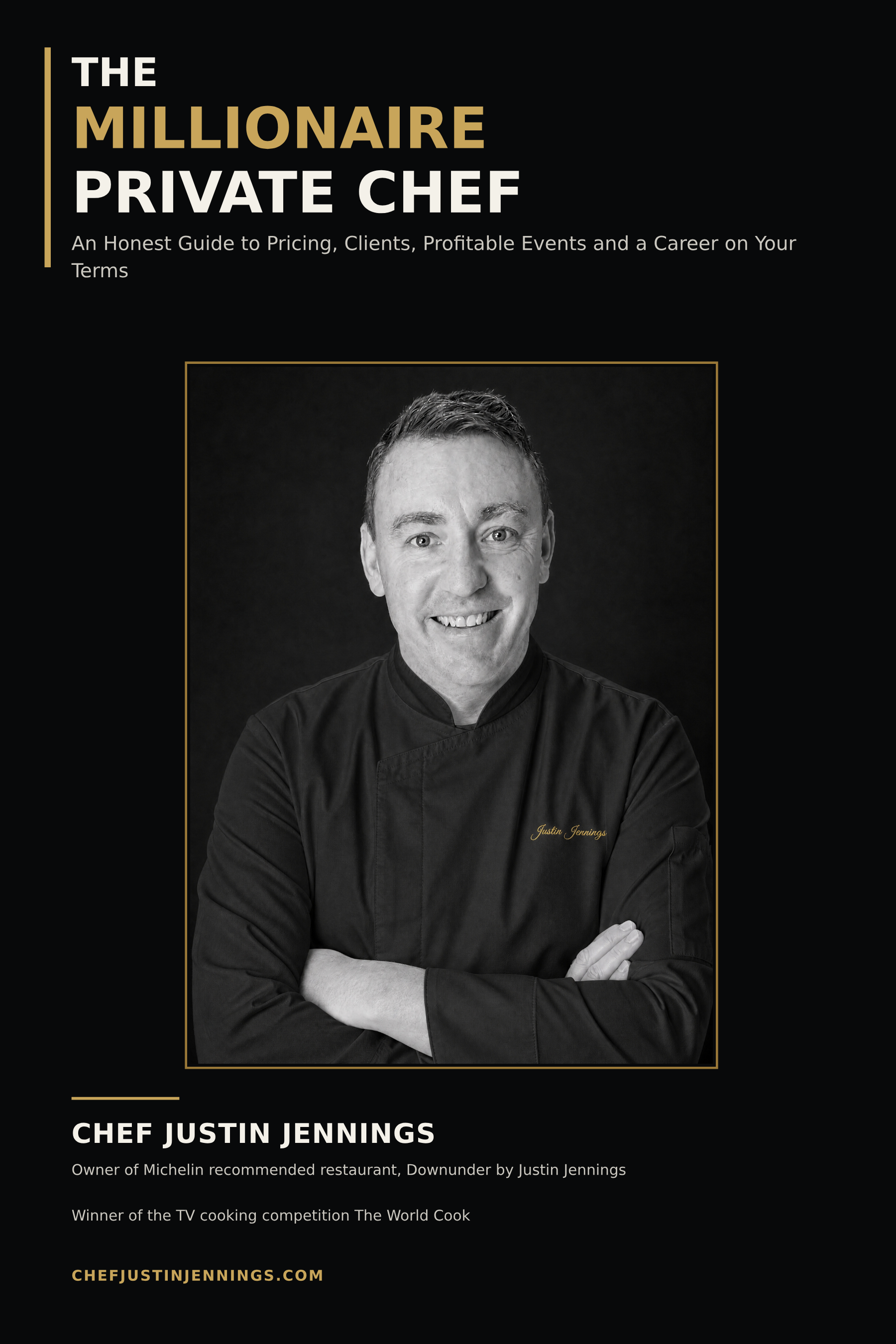
The menu is where most new private chefs either win or lose the booking. Send the right menu and clients say yes immediately. Send the wrong one and you'll get ghosted or hear "we'll think about it" (translation: no).
I've designed over 400 private chef menus in eight years. Some were masterpieces that clients still talk about. Others bombed too complicated, wrong vibe, dietary disaster. The difference wasn't my cooking skills. It was understanding what clients actually want versus what I thought would impress them.
Here's how to plan private chef menus that book every time, handle dietary restrictions without stress, balance creativity with practicality, and make money while doing it.
The Menu Planning Process (Start to Finish)
Most chefs jump straight to writing dishes. That's backwards. Menu planning starts with information gathering, not recipe writing.
Step 1: Client Questionnaire (The Foundation)
Before I write a single dish, I ask:
- Occasion: Birthday? Anniversary? Just because? (This dictates formality and pacing)
- Guest count: 4 people vs 12 changes everything portion sizes, plating time, kitchen logistics
- Dietary restrictions: Not just "vegetarian" specifics: do they eat fish? Eggs? Dairy? Honey? Onions/garlic? This matters.
- Food they LOVE: What do they order at restaurants? Favorite ingredients? Cuisines?
- Food they HATE: Deal-breakers. If they hate cilantro, your Asian fusion menu dies.
- Formality level: White tablecloth tasting menu or casual shared plates?
- Budget per person: €85 menu is different from €130 menu
I send this as a simple email questionnaire. It takes clients 3 minutes to fill out and saves me hours of back-and-forth revisions.
Step 2: Menu Structure Selection
Now you know what they want. Next: how many courses?
3-Course Menu (€75-€95/person)
Best for: Casual dinners, budget-conscious clients, weeknight events
Structure: Starter → Main → Dessert
Total time: 2.5-3 hours
Example: Burrata with tomatoes → Herb-roasted chicken → Chocolate fondant
5-Course Menu (€105-€130/person) My Standard
Best for: Special occasions, food-focused clients, showcasing range
Structure: Amuse → Starter → Intermediate → Main → Dessert
Total time: 3-3.5 hours
This is the sweet spot. Enough courses to impress, not so many you're exhausted.
7-Course Menu (€150-€200+/person)
Best for: VIP clients, milestone celebrations, "experience" seekers
Structure: Amuse → Cold starter → Warm starter → Palate cleanser → Fish → Meat → Dessert
Total time: 4+ hours
Only do this if you have the stamina, kitchen space, and clients willing to pay premium.
Most of my bookings are 5-course. It's long enough to feel special, short enough to not overwhelm, and profitable at €105-€130/person.
Need menu templates for 3, 5, and 7-course dinners across all dietary restrictions?
Buy on AmazonIncludes pricing calculator, seasonal ingredient guides, and client scripts
Step 3: Building the Menu (The Actual Dishes)
Now the fun part. Here's my framework:
1. Start with a signature dish.
Pick ONE dish you're known for something memorable, photogenic, conversation-starting. For me, it's usually my 36-hour pork belly or salt & pepper squid. This is your anchor.
2. Build backwards from restrictions.
If someone's gluten-free, design naturally gluten-free courses (not substitutions). If vegan, make EVERYONE's starter vegan so you're not cooking two separate menus. Work smarter.
3. Balance the flow: Light → Rich → Light → Rich.
Don't put cream-based courses back-to-back. Don't serve three raw dishes in a row. Think about texture, temperature, richness, and acidity.
4. Vary your techniques.
Don't roast everything. Mix: raw (tartare, ceviche), slow-cooked (braises, confits), quick-seared (fish, scallops), baked (desserts), fried (crispy elements). This shows range.
5. Time it for pacing.
Some dishes you can prep 90% in advance (terrines, desserts). Others must be cooked à la minute (fish, steak). Balance make-ahead with fresh-cooked so you're not drowning mid-service.
6. Keep ONE dish simple.
If everything is a 10-ingredient, 12-step production, you'll burn out. One course should be simple but perfect like a perfectly roasted chicken with jus. Clients don't notice. They taste quality, not complexity.
Seasonal Menu Planning (The Smart Way)
Seasonal menus aren't just trendy they're profitable. Seasonal ingredients cost 30-50% less than out-of-season imports, taste better, and signal to clients that you know what you're doing.
I build four core menu templates per year and adapt based on client preferences:
These aren't set in stone. I adapt based on what clients want. But having seasonal frameworks means I'm not starting from scratch every time.
Handling Dietary Restrictions (Without Losing Your Mind)
This is where most private chefs panic. "The client is gluten-free, one guest is vegan, another hates fish what do I do?"
Here's my system:
Rule 1: Design menus that work for everyone when possible.
If one person is gluten-free, don't make a separate gluten-free dish. Make the ENTIRE course naturally gluten-free. Clients don't want to feel like a burden. They want to eat the same thing as everyone else.
Example:
❌ Bad: Pasta carbonara for 7 guests, gluten-free pasta for 1
✅ Good: Risotto with pancetta and parmesan for everyone (naturally GF)
Rule 2: Ask detailed questions upfront.
Don't accept "vegetarian" as an answer. Ask:
• Do you eat fish? (Pescatarian vs vegetarian)
• Do you eat eggs? Dairy? Honey? (Vegan vs vegetarian)
• Do you eat onions and garlic? (Some cuisines avoid them)
• Any allergies? (Nuts, shellfish, soy, etc.)
The more specific you are, the fewer surprises on event day.
Rule 3: When you MUST cook separate dishes, batch intelligently.
If cooking vegan for 2 guests and standard for 8, choose dishes with similar prep:
• Vegan: Roasted cauliflower steak with chimichurri
• Standard: Grilled ribeye with chimichurri
Same sauce, similar plating, different protein. Efficient.
Rule 4: Communicate restrictions to ALL guests.
I always tell the host: "I've designed the menu to accommodate [dietary need] everyone will enjoy the same dishes." This prevents the awkward "why is their plate different?" conversation.
Pricing Your Menu (The Math That Matters)
You've built a beautiful menu. Now: what do you charge?
Here's my pricing formula:
Step 1: Calculate ingredient cost per person.
List every ingredient and cost it out. Be realistic. Include garnishes, butter, oil, salt. Everything.
Example 5-course menu:
• Amuse (soup): €2/person
• Starter (burrata salad): €5/person
• Intermediate (risotto): €4/person
• Main (duck breast): €9/person
• Dessert (tart): €3/person
Total: €23/person in ingredients
Step 2: Add markup for labor, skill, and service.
Ingredients are only 25-35% of your price. The rest is your time, expertise, equipment, transport, insurance, and profit.
I use a 2.8-3.5x multiplier on ingredient cost:
€23 × 3.2 = €73.60 cost recovery
Step 3: Add your hourly rate for service time.
You'll spend 5-6 hours total (shopping, prep, cooking, serving, cleanup). What's your time worth?
€60/hour × 5.5 hours = €330 ÷ 8 guests = €41.25/person for service
Step 4: Total per-person price.
€73.60 (cost recovery) + €41.25 (service) = €114.85/person
I'd round that to €115/person or €120/person to keep it clean.
This ensures you're covering costs, paying yourself fairly, and building a sustainable business. Don't underprice. Ever.
Want my full pricing calculator with cost breakdowns for 50+ dishes?
Buy on AmazonMenu Presentation: How to Send It
You've planned the menu. Now you need to present it in a way that gets clients excited and makes them book.
Format I use:
Subject: Menu Proposal for [Date]
Hi [Client],
Based on our conversation, I've designed a 5-course tasting menu for your [occasion] on [date]. Here's what I'm proposing:
MENU
Amuse-Bouche
Butternut squash velouté with crispy sage and hazelnut oil
(Naturally gluten-free & vegetarian)
First Course
Beetroot-cured salmon with horseradish cream, pickled cucumber, and dill
(Can be prepared vegan with smoked carrot "lox")
Second Course
Wild mushroom ravioli with brown butter, sage, and parmesan
Main Course
Duck breast with fig & port reduction, sweet potato purée, and seasonal greens
Dessert
Dark chocolate fondant with salted caramel and vanilla ice cream
Price: €115 per person (includes all ingredients, preparation, service, and cleanup)
Minimum: 6 guests
Add wine pairing: +€45/person
Let me know if you'd like any adjustments I'm happy to swap dishes or adapt for dietary preferences.
Looking forward to cooking for you,
Justin
What makes this work:
- Each dish has a SHORT description (not a novel)
- Dietary notes in italics show you've thought it through
- Price is clear upfront (no surprises)
- Wine pairing is optional add-on (upsell opportunity)
- Invitation to give feedback (shows flexibility)
Common Menu Planning Mistakes (And How to Avoid Them)
Mistake 1: Overcomplicating every dish.
You don't need 14 ingredients per plate. Clients don't care. They taste "delicious" or "not delicious." A perfectly roasted chicken with jus beats a mediocre 8-component dish every time.
Mistake 2: Ignoring kitchen logistics.
If you're cooking in a tiny villa kitchen with two burners and no oven, don't plan a menu with six hot components. Be realistic about what you can execute in the space.
Mistake 3: Not having backup plans.
Supplier out of duck? Have a backup protein. Tomatoes look terrible? Switch to roasted peppers. Always have Plan B ingredients in mind when shopping.
Mistake 4: Charging the same for all menus.
A 3-course casual menu shouldn't cost the same as a 7-course tasting experience. Price based on ingredient cost + time + complexity.
Mistake 5: Not reusing successful menus.
If a menu worked beautifully perfect timing, great feedback, good profit use it again. Clients don't know (or care) that you've cooked it before. They care about the experience.
What Makes a Menu "Client-Ready"?
Before I send any menu proposal, I run this checklist:
- ✅ Does it match the client's preferences and dietary needs?
- ✅ Is the flow balanced (light → rich → light)?
- ✅ Can I execute this in their kitchen with their equipment?
- ✅ Does the timing work (pacing between courses)?
- ✅ Is there at least ONE memorable signature dish?
- ✅ Are ingredients seasonal and cost-effective?
- ✅ Does the price reflect the value (not underpriced)?
- ✅ Do I have backup plans for key ingredients?
If all eight pass, I send it. If not, I revise.
The Menu Planning Mindset Shift
When I started as a private chef, I designed menus to impress other chefs. Complex techniques, obscure ingredients, 18 components per plate. Clients were polite but rarely rebooked.
Then I shifted: I started designing menus to make clients FEEL something. Comfort, nostalgia, excitement, indulgence. I stopped trying to prove I was a great chef and started focusing on creating experiences people remember.
That's when bookings doubled.
Your menu isn't a CV. It's not a showcase of every technique you learned in culinary school. It's a tool to make people happy, tell a story, and build a business that pays you well.
Design for your clients, not for Instagram or other chefs. That's how you build a calendar full of repeat bookings.
Ready to Build a Menu System That Fills Your Calendar?
Get my complete menu templates, pricing calculator, dietary restriction guides, seasonal ingredient lists, and client communication scripts.
Buy on AmazonIncludes 50+ menu templates, full business plan, client acquisition strategies, and everything I learned in 8 years as a private chef.
Frequently Asked Questions
How do I plan a private chef menu?
Start with client preferences and dietary restrictions, choose seasonal ingredients, design for flow (light to rich), balance techniques, time courses for pacing, and cost each dish to hit your price point. Include 1-2 signature dishes that showcase your style while keeping the rest approachable.
How many courses should a private chef menu have?
3-course menus for casual dinners, 5-course for standard tasting experiences, 7-course for premium events. More courses = higher price but also more prep. Most private chefs build 5-course menus as their standard offering at €105-€130 per person.
How do you handle dietary restrictions as a private chef?
Ask detailed questions upfront (not just "vegetarian" but "do you eat fish/eggs/dairy"), design menus that work for everyone (naturally gluten-free or vegan options), prepare separate dishes only when necessary, and always confirm ingredients with clients 48 hours before the event.
Should private chef menus be seasonal?
Yes. Seasonal ingredients cost less, taste better, and show culinary awareness. Build 4 seasonal menu templates (spring/summer/autumn/winter) and adapt based on client preferences. Clients notice and appreciate seasonal menus.
How do you price a private chef menu?
Calculate ingredient cost per person, add 50-70% markup for technique/time/expertise, include service and cleanup time (5-6 hours total), and compare against your target hourly rate. Standard formula: (€25 ingredients × 1.6) + (€60/hour × 5 hours ÷ 8 guests) = €102/person.
What makes a private chef menu stand out?
1-2 signature dishes clients remember, storytelling (where ingredients come from, why you chose them), perfect execution over complexity, interactive elements (tableside finishing, flambé), and personalisation (incorporate client's favourite ingredient or childhood memory).
How far in advance should you plan a private chef menu?
Send menu proposals 7-10 days before the event, finalize 3-4 days out after client feedback, confirm dietary restrictions 48 hours before, and do ingredient shopping 24-48 hours pre-event. Always have backup plans for key ingredients in case suppliers are out.
Can you use the same menu for multiple clients?
Yes. Build 3-5 core seasonal menus and adapt based on dietary needs and client preferences. Most clients won't know (or care) that you've cooked the menu before they care about taste and execution. Reusing menus = faster prep, better consistency, higher profit margins.