Business Strategy
Private Chef Business Plan Template (Free + Strategy That Actually Works)
13 August 2026 · 14 min read
Want the full business plan template with financial calculators, client scripts, and legal checklists? It's all in the book.
Buy on Amazon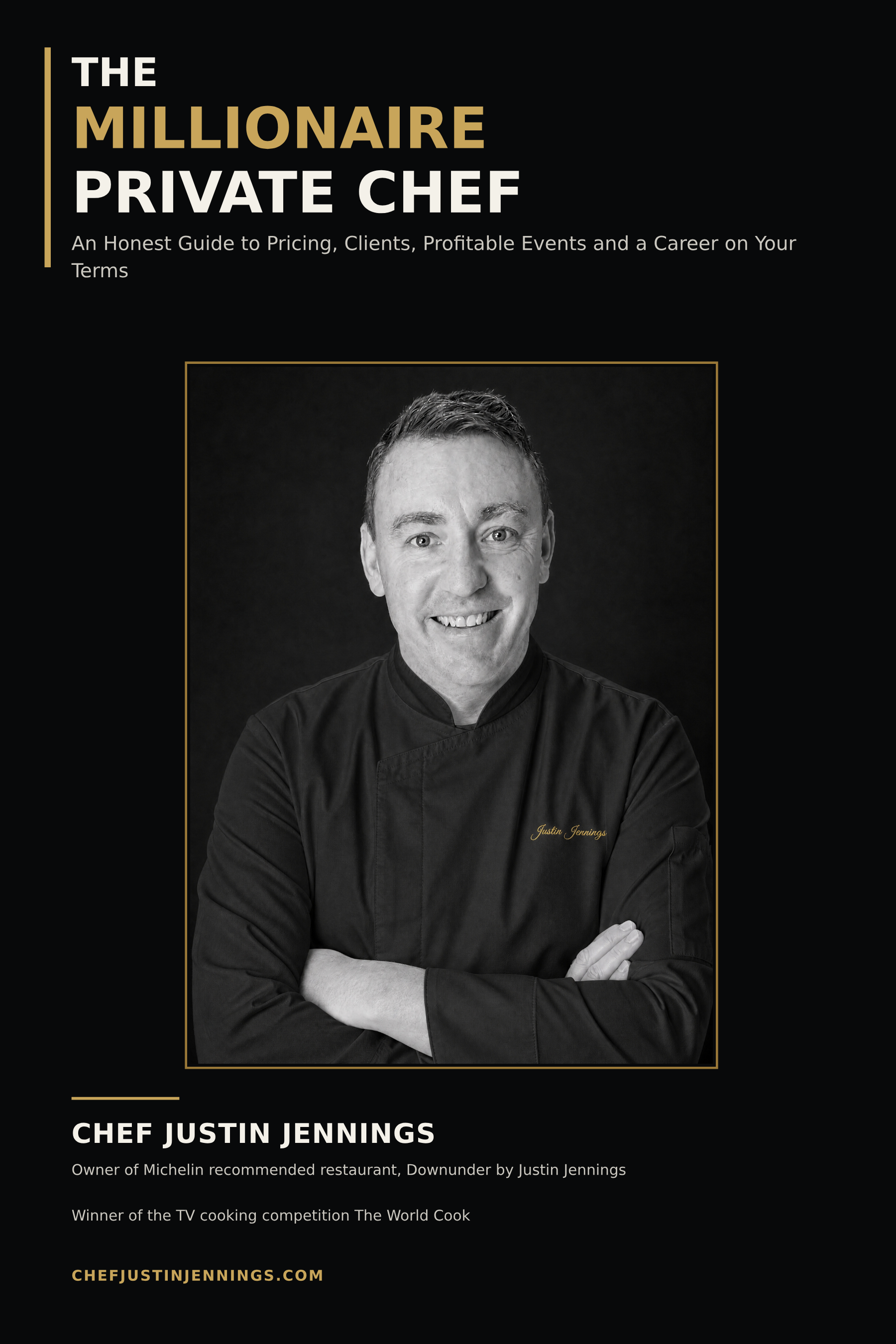
Most chefs skip the business plan. I did too.
I left my restaurant job, bought some knives, printed business cards, and figured I'd "figure it out." Six months later, I'd done exactly 9 events, made €1,600 total, and was seriously questioning whether private chef work was viable. I was winging it pricing randomly, saying yes to terrible clients, spending money on the wrong things.
Then I sat down and wrote an actual business plan. Not a 40-page investor pitch a real working document that answered: Who am I cooking for? What am I charging? How do I get clients? What are my actual costs? What does success look like in month 3, 6, 12?
Everything changed. Within 90 days I'd booked 11 events. Within 12 months I was averaging €7,200/month and turning down clients. The plan forced clarity. Clarity drove decisions. Decisions drove results.
Here's the exact business plan structure I used and still update every year to build a profitable private chef business.
Why Most Chefs Skip the Business Plan (And Why You Shouldn't)
Chefs hate paperwork. We're doers, not planners. Business plans feel corporate, formal, pointless. "I just want to cook."
I get it. But here's the reality: winging it is why 60% of private chefs quit within the first year. They don't fail because they can't cook. They fail because they don't know how to run a business.
A business plan isn't bureaucracy. It's thinking on paper. It forces you to answer the questions that will make or break you:
- Who exactly am I targeting? (Not "everyone who likes food")
- What am I charging, and why?
- How much do I need to earn per month to survive? To thrive?
- What's my marketing strategy beyond "post on Instagram and hope"?
- How much cash do I need to get started?
- What does month 1 look like? Month 3? Month 6?
Without answers to these questions, you're flying blind. With answers, you have a roadmap.
The Private Chef Business Plan Template (5 Essential Sections)
Forget 40-page documents with market analysis and SWOT charts. Your business plan should be 2-5 pages maximum. Here's the structure that actually works:
Section 1: Target Market & Positioning
Who you're cooking for and why they should hire you.
- Who: Define your ideal client age, income, location, occasion type (Don't say "anyone who wants a private chef")
- Why you: What makes you different? (MICHELIN experience, specific cuisine expertise, TV appearances, local ingredient focus)
- Where: Geographic service area (City center? 30km radius? Specific neighborhoods?)
- What problems you solve: Why hire you vs. going to a restaurant or catering company?
My example: "I target 35-60 year old professionals and expats in central Lisbon who value food experiences over things, celebrate special occasions at home, and are willing to pay €95-€130/person for restaurant-quality meals with a personal touch. They hire me because I bring MICHELIN-level training, Australian-Asian fusion cuisine they can't get elsewhere, and zero hassle I show up, cook, clean, leave."
Section 2: Services & Pricing
What you're selling and how much it costs.
- Service types: List what you offer (Intimate dinners, tasting menus, birthdays, anniversaries, corporate, meal prep, cooking classes)
- Pricing structure: Per-person pricing for each service tier (Entry, standard, premium)
- Minimum guest count: (Most private chefs require 4-6 minimum to make it worthwhile)
- What's included: Menu consultation, grocery shopping, cooking, plating, cleanup? Be specific.
- What's NOT included: Ingredients? Wine? Equipment rental? Gratuity?
- Booking terms: Deposit required? Cancellation policy?
My pricing (Year 1): Entry 3-course: €75/person · Standard 5-course: €95/person · Premium 7-course: €130/person · 4 guest minimum · Ingredients included · 50% deposit · 7-day cancellation policy
Section 3: Marketing Strategy
How you'll actually get clients (the most important section).
- Website: Simple one-page site with photos, menu examples, booking form (Essential, not optional)
- Instagram: 3-4 posts/week behind-the-scenes, plated dishes, client testimonials (Primary discovery channel)
- Google My Business: Set up business listing for local search visibility
- Partnerships: Event planners, villa rental managers, concierge services, yacht brokers (B2B channels)
- Word of mouth system: Referral incentive (€50 credit for successful referrals)
- Paid ads (optional): Facebook/Instagram ads targeting your area (Start with €100-€300/month once you've validated pricing)
- Content marketing: Recipe blog posts, cooking tips (SEO long game kicks in after 6 months)
My Year 1 focus: Instagram (daily stories, 4 posts/week) + Personal network outreach (told everyone I knew I'd gone private chef) + Partnered with 2 event planners = First 6 clients. Added website + Google My Business at month 3 = Next wave of bookings.
Section 4: Startup Costs & Monthly Expenses
How much money you need to get started and keep running.
One-Time Startup Costs:
| Professional knives & tools | €800 - €1,500 |
| Portable equipment (induction burner, pans, storage) | €400 - €800 |
| Business registration & licenses | €50 - €200 |
| Website setup | €100 - €500 |
| Initial marketing (logo, photos, business cards) | €300 - €1,000 |
| Liability insurance (year 1) | €400 - €800 |
| TOTAL STARTUP: | €2,050 - €4,800 |
Monthly Recurring Costs:
| Liability insurance | €35 - €70/month |
| Website hosting | €10 - €30/month |
| Marketing (ads, tools) | €100 - €500/month |
| Fuel & transport | €80 - €150/month |
| Accounting software | €15 - €40/month |
| Phone & admin | €30 - €50/month |
| TOTAL MONTHLY: | €270 - €840/month |
Reality check: You can start lean for under €2,000 if you already own decent knives and skip paid ads initially. But plan for €3,000-€4,000 to do it properly without cutting corners on insurance or equipment.
Section 5: Financial Projections (Realistic Year 1)
What you can realistically expect to earn not fantasy numbers.
Conservative Year 1 Revenue Projection:
| Timeline | Events/Month | Avg Revenue/Event | Monthly Revenue |
|---|---|---|---|
| Months 1-3 | 2-3 events | €600 (8 guests × €75) | €1,200 - €1,800 |
| Months 4-6 | 4-5 events | €680 (8 guests × €85) | €2,720 - €3,400 |
| Months 7-9 | 6-7 events | €720 (8 guests × €90) | €4,320 - €5,040 |
| Months 10-12 | 7-9 events | €760 (8 guests × €95) | €5,320 - €6,840 |
Year 1 Total (Conservative): €42,000 - €55,000 gross revenue · After 30% COGS (ingredients) = €29,400 - €38,500 · After business expenses (€3,240-€10,080/year) = €19,320 - €35,260 net profit
Key assumptions:
- You're hustling hard on marketing months 1-3
- You raise prices gradually as you gain confidence and testimonials
- Average 8 guests per event (6-12 range is normal)
- You book less Nov-Jan (holidays/slow season)
- You keep your day job or have savings for months 1-6
What This Means:
By month 6, you're making €2,500-€3,500/month (part-time income). By month 12, you're at €5,000-€7,000/month (full-time viable). Year 2 potential: €8,000-€12,000/month once established.
Need the full business plan template with editable financial calculator and year 2-3 projections?
Buy on AmazonIncludes legal checklist, client contracts, and marketing scripts
First 90 Days Action Plan (What to Do When)
A business plan is useless without execution. Here's exactly what to do in your first 90 days:
Month 1: Foundation
Week 1:
- Register business (sole trader/LLC)
- Open business bank account
- Get liability insurance quote (buy before first event)
- Set up accounting system (Excel or Wave)
Week 2:
- Create simple website (one page: about, services, contact form)
- Set up Instagram business account
- Set up Google My Business listing
- Design 3 core menu templates (3, 5, 7-course)
Week 3:
- Get professional food photos (cook for friends, hire photographer for 2 hours, or DIY with good lighting)
- Write client email templates (inquiry response, booking confirmation, payment reminders)
- Create pricing sheet & terms document
Week 4:
- Tell everyone you know you've launched (personal network first easiest clients)
- Reach out to 5 event planners/concierge services
- Post on Instagram 3-4× (intro, behind-the-scenes, menu examples)
- Goal: Book your first event by end of month 1
Month 2: First Clients
Week 5-6:
- Execute first event (take photos, get testimonial immediately after)
- Post about the event (Instagram stories during, feed post after)
- Send thank-you email asking for Google review + referrals
- Update website with testimonial and new photos
Week 7-8:
- Continue outreach send menu to 10 potential clients in your network
- Partner with 1-2 local wine shops or specialty food stores (cross-promotion)
- Optimize Instagram profile (link to website, clear CTA in bio)
- Goal: 2-3 total events by end of month 2
Month 3: Momentum
Week 9-10:
- Analyze what's working (which marketing channel brought clients?)
- Double down on best channel (more Instagram? More partnerships? Paid ads?)
- Create case study from your best event (blog post or Instagram carousel)
- Start email list (embed signup on website)
Week 11-12:
- Refine pricing based on early feedback (raise if booking out, lower if no inquiries)
- Add seasonal menu option
- Reach out to corporate clients (team dinners, client entertainment)
- Goal: 4-5 total events by end of month 3, clear pipeline for month 4
By day 90, you should have:
- 5-8 completed events
- 3-5 testimonials and Google reviews
- A functioning website with real client photos
- 200-500 Instagram followers (quality > quantity)
- €3,000-€6,000 in revenue
- Clear understanding of your target market and what sells
- Confidence to quit your day job (or commit to growing part-time)
Common Business Plan Mistakes (Learn From Mine)
1. Overestimating Year 1 Income
I projected €8,000/month in my first business plan. I made €1,600 in 6 months. Reality: it takes time to build trust, get testimonials, and refine your offer. Plan conservatively. If you beat projections, great. If you miss, you won't panic quit.
2. Underpricing to "Get Clients Fast"
I charged €55/person my first 3 events. After ingredients, transport, and 6 hours of work, I made €12/hour. That's less than minimum wage. Don't compete on price compete on quality. Start at €75+ minimum or you'll resent every booking.
3. No Clear Target Market
"I'll cook for anyone!" sounds inclusive. It's actually paralyzing. You can't market to everyone. Pick a niche (busy professionals, expats, milestone celebrations, corporate clients) and speak directly to them. You can expand later.
4. Spending Too Much on Equipment Too Early
I bought a €800 sous vide setup, molecular gastronomy kit, and dehydrator in month 1. Used them twice. Start lean. Buy equipment as you need it for actual bookings. Most events need sharp knives, good pans, and reliable transport.
5. No Marketing Budget
Organic growth is slow. If you have €0 for marketing, you're relying 100% on word-of-mouth and luck. Even €200-€300/month on Instagram ads or Google Ads can accelerate your first 10 clients significantly. Budget for it.
6. Ignoring the Legal/Insurance Stuff
Cooking in someone's home without liability insurance is insane. One food allergy incident, one kitchen fire, one slip-and-fall = business over. Get insured before your first event. It's €400-€800/year. Non-negotiable.
When to Update Your Business Plan
Your business plan isn't static. Update it:
- Every 6 months (minimum): Review financials, adjust pricing, update marketing tactics
- When you hit a revenue milestone: €5K/month? Time to plan for €10K. What needs to change?
- When something's not working: If you're 3 months in with 1 booking, revisit your target market and marketing strategy
- When you want to expand: Adding catering? Corporate clients? Cooking classes? Each needs its own mini-plan
I update mine every January (full review) and July (mid-year check-in). Takes 2 hours. Forces me to think strategically instead of just reacting to bookings.
Red Flags to Watch For
Your business plan should include warning signs that something's wrong. Mine are:
- Less than 2 bookings/month for 3 consecutive months: Marketing problem or pricing problem
- High inquiry rate but low conversion: Pricing too high or menu not resonating
- Lots of bookings but losing money: Pricing too low or food costs out of control
- Consistent 5-star reviews but no referrals: Not asking properly or no referral incentive
- Fully booked but burned out: Time to raise prices or hire help
Track these metrics monthly. Early detection = easier fixes.
Want the complete business plan template with monthly tracking spreadsheet and red flag checklist?
Buy on AmazonIncludes legal docs, client contracts, and profit optimization strategies
Final Thoughts: Your Business Plan is Your North Star
Here's what changed for me once I had a real business plan:
- I stopped saying yes to every inquiry (because I knew my target client)
- I raised prices confidently (because I'd calculated my costs properly)
- I focused my marketing (because I knew which channels worked)
- I made decisions faster (because I had criteria, not just gut feelings)
- I stayed motivated through slow months (because I had realistic projections and knew month 3 would be better than month 1)
Most chefs treat their private chef career like a side hustle that might turn into something. The ones who succeed treat it like a real business from day one. That starts with a plan.
You don't need 40 pages. You don't need an MBA. You need 2-5 pages that answer: Who am I cooking for? What am I charging? How will I get clients? How much do I need to earn? What does success look like in 3, 6, 12 months?
Answer those questions on paper. Update them every 6 months. Execute relentlessly. That's the difference between "trying private chef work" and building a profitable private chef business.
Frequently Asked Questions
Do I need a business plan to start a private chef business?
Legally? No. Practically? Yes. A business plan forces you to think through pricing, target market, startup costs, and how you'll get clients. Most private chefs who fail skip this step and figure it out the hard way. A 2-page plan beats winging it.
How long should a private chef business plan be?
2-5 pages maximum. You're not seeking investors you need a working document that covers target market, services, pricing, marketing strategy, startup costs, and year 1 financial projections. If it's longer than 5 pages, you're overthinking it.
What should be in a private chef business plan?
Essential sections: 1) Target market (who you're cooking for), 2) Services (event types and pricing), 3) Marketing strategy (how you'll get clients), 4) Startup costs (equipment, insurance, licenses), 5) Financial projections (realistic year 1 revenue), 6) First 90 days action plan. Skip the fluff.
How much does it cost to start a private chef business?
€2,500-€5,000 for most chefs. Includes professional knives/equipment (€800-€1,500), liability insurance (€400-€800/year), business registration (€50-€200), website (€100-€500), initial marketing (€300-€1,000), and working capital for first events. You can start lean for under €2,000 if needed.
How do you project revenue for a private chef business?
Start conservative: Year 1 = 2-4 events/month at €75/person with 6-8 guests average = €900-€2,400/month. Year 2 = 6-8 events/month at €85/person = €4,000-€5,400/month. Year 3+ = 10-12 events/month at €105/person = €6,300-€10,000/month. Factor in 20% seasonal dip Nov-Feb.
What's the biggest mistake in private chef business plans?
Overestimating year 1 income. New chefs assume they'll book 10+ events/month immediately. Reality: 2-4 events/month is normal for first 6 months. Plan for slower ramp-up, keep your day job initially, or have 3-6 months living expenses saved.
Do you need a formal business structure for private chef work?
Start as a sole trader (simplest, lowest cost). Register with tax authorities, get liability insurance, and open a separate business bank account. You can upgrade to an LLC or Ltd company later if revenue exceeds €50,000-€75,000/year. Don't overcomplicate early.
How long until a private chef business is profitable?
3-6 months to break even (cover monthly costs), 6-12 months to replace part-time income (€2,000-€3,000/month), 12-18 months to replace full-time restaurant income (€4,000+/month). Faster if you have an existing network or invest heavily in marketing upfront.
Should I include catering in my private chef business plan?
Start with intimate dinners (6-12 guests) first. Catering (20-100+ people) requires different equipment, staff, licensing, and logistics. Add catering after you've done 20-30 private dinners successfully. Don't dilute your focus early.
What tools do I need to manage a private chef business?
Essential: booking system (Calendly or Google Calendar), invoicing tool (Wave or QuickBooks), basic website, Instagram account, and a spreadsheet for tracking expenses. Don't buy expensive CRM software until you're doing 15+ events/month. Keep it simple.
Related Reading
How to Start a Private Chef Business in 2026
Complete step-by-step startup guide from certification to first client
Private Chef Salary 2026: How Much Can You Really Make?
Real income numbers and earning potential breakdown
Private Chef Pricing Guide: What to Charge
Pricing strategy with real examples and calculations
Getting Your First Private Chef Client
5 proven client acquisition strategies that actually work