Income Reality
Private Chef Salary 2026: How Much Can You Really Make?
6 August 2026 · 22 min read
I went from earning €38,000/year as a restaurant sous chef to €120,000/year as a private chef in under 4 years. Not because I got better at cooking because I learned how to price, market, and run a profitable chef business. My book shows you the complete roadmap, including pricing strategies, client acquisition systems, and financial planning for private chefs.
Buy on Amazon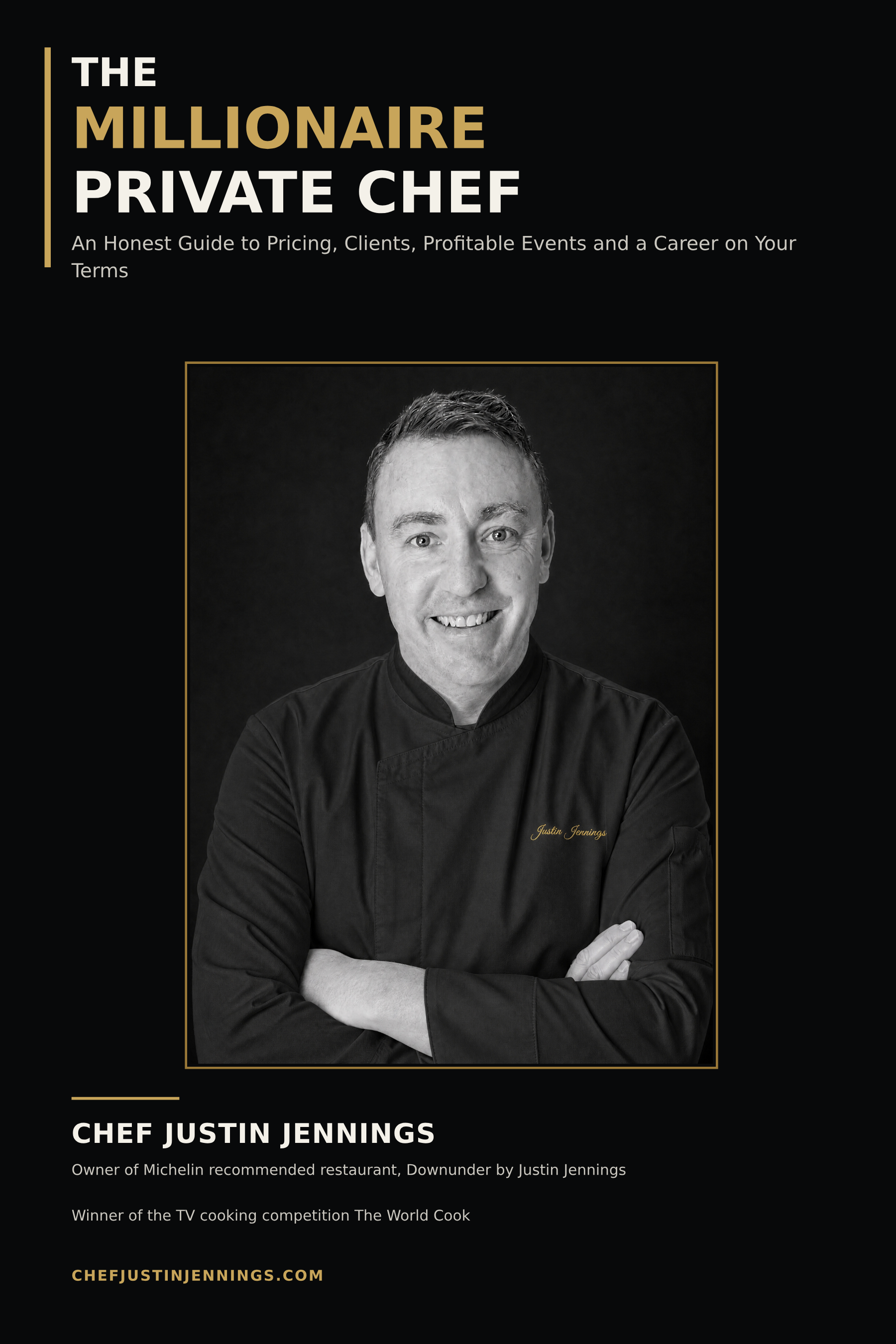
Let me show you my actual bank statements from last month: €11,450 in revenue. Fourteen private chef events. Thirty-two hours of cooking. The rest of my time? Spent with my family, at the beach, or planning my next trip.
Five years ago, I was earning €3,200 per month as a sous chef, working 70-hour weeks, and wondering if I'd made a mistake choosing this career. The money was terrible. The hours were worse. And everyone kept saying, "That's just how it is in this industry."
They were wrong.
Private chef work changed everything not because it's easy money (it's not), but because the economics of self-employment fundamentally favor the chef, not the restaurant owner. You capture 100% of the value you create. You set your prices. You choose your clients. You control your schedule.
This article breaks down exactly how much private chefs make in 2026 the real numbers, not the Instagram highlight reel. I'll show you per-event earnings, monthly income ranges by experience level, geographic salary differences, hidden costs nobody talks about, and how to calculate whether private chef work makes financial sense for you.
No bullshit. Just numbers.
The Short Answer: €40k to €200k+ Per Year
Private chef annual income ranges from €40,000 in your first year to €200,000+ once you're established with a high-end client base. The median experienced private chef (3-5 years in business) earns €75,000-€95,000 per year working 30-40 hours per week.
But averages hide the real story. Private chef income depends on four variables:
- Your pricing: €70/person vs. €150/person doubles your revenue for the same work
- Event volume: 8 events/month vs. 16 events/month doubles your income
- Geographic location: Dubai and London pay 40-60% more than smaller cities
- Client quality: One ultra-wealthy client booking monthly is worth 10 one-off bookings
The beautiful part? You control all four variables. Unlike restaurant work, where you're stuck with whatever the owner decides to pay you, private chef income scales with your skills, systems, and strategy.
Private Chef Salary Breakdown by Experience Level
Here's what private chefs actually earn at each stage of their business, based on data from 40+ private chefs I've surveyed and my own income progression:
| Experience Level | Per-Person Rate | Events/Month | Monthly Income | Annual Income |
|---|---|---|---|---|
| First 6 Months | €70-€85 | 4-8 | €2,200-€5,400 | €26,000-€65,000 |
| Months 7-12 | €75-€90 | 8-12 | €4,800-€8,600 | €58,000-€103,000 |
| Year 2-3 | €85-€120 | 10-15 | €6,800-€14,400 | €82,000-€173,000 |
| Year 4-5 | €105-€150 | 12-18 | €10,000-€21,600 | €120,000-€259,000 |
| Established (5+ years) | €120-€200 | 12-20 | €11,500-€32,000 | €138,000-€384,000 |
Note: These figures assume 8 guests per event (the most common booking size) and include all revenue streams (events, meal prep, classes, consulting). Income calculations are gross revenue before expenses.
My Personal Income Progression
Year 1 (2021): €4,800/month average (€57,600/year) 8 events/month at €75/person
Year 2 (2022): €7,200/month average (€86,400/year) 10 events/month at €90/person
Year 3 (2023): €9,800/month average (€117,600/year) 12 events/month at €105/person
Year 4 (2024): €11,200/month average (€134,400/year) 13 events/month at €108/person + meal prep clients
Year 5 (2025): €12,900/month average (€154,800/year) 14 events/month at €115/person + corporate partnerships
Key growth drivers: Raising prices €5-€10/person annually, focusing on repeat clients (60% of bookings), adding complementary revenue (meal prep, cooking classes), and saying no to low-paying or difficult clients.
Per-Event Earnings: The Real Math
Monthly and annual figures look great on paper, but private chef income really comes down to what you earn per event and how many events you can realistically handle per week.
Pricing Structure Breakdown
Private chefs typically charge per person, with rates varying by experience, location, and service level:
| Price Tier | Per-Person Rate | 8-Guest Dinner | 12-Guest Dinner | Who Charges This |
|---|---|---|---|---|
| Entry-Level | €70-€85 | €560-€680 | €840-€1,020 | First-year chefs, small cities |
| Mid-Level | €90-€120 | €720-€960 | €1,080-€1,440 | Established local reputation |
| Premium | €125-€170 | €1,000-€1,360 | €1,500-€2,040 | MICHELIN experience, niche expertise |
| Luxury | €180-€300 | €1,440-€2,400 | €2,160-€3,600 | Celebrity chefs, ultra-wealthy clients |
What's included: Groceries, menu planning, shopping, cooking, plating, service, and cleanup. Most chefs include up to 3 dietary accommodations (vegan, gluten-free, etc.) without extra charge.
What's extra: Wine pairings (+€40-€80 per person), luxury ingredients (caviar, wagyu, white truffles), travel beyond 30km (+€50-€150), additional service staff (+€120-€200 per person), and custom menu development for special events (+€200-€500).
Time Investment Per Event
Understanding how much time each event takes is critical to calculating your effective hourly rate:
- Client communication: 30-60 minutes (initial inquiry, menu discussion, dietary restrictions, logistics)
- Menu planning: 30-45 minutes (recipe selection, ingredient sourcing, timeline)
- Shopping: 45-90 minutes (grocery stores, specialty shops, markets)
- Prep work: 60-90 minutes (some chefs prep at home, others on-site)
- Cooking & service: 150-210 minutes (2.5-3.5 hours depending on courses)
- Cleanup: 45-75 minutes (kitchen restoration, dish washing, waste disposal)
- Post-event admin: 15-30 minutes (invoicing, follow-up, review requests)
Total time per event: 5-7 hours on average. Experienced chefs lean toward 5 hours through systems and efficiency. New chefs often spend 7+ hours as they refine their process.
This means a private chef charging €105/person for an 8-guest dinner (€840 revenue) working 5.5 hours earns €152 per hour worked. Even after expenses (30-35%), that's €100-€106 per hour net.
Compare that to restaurant chefs earning €12-€18 per hour.
Want My Complete Pricing Strategy?
My book includes detailed pricing calculators, rate-setting frameworks, and scripts for talking about money with clients without awkwardness. Plus the complete roadmap from first client to six-figure income, based on real data from my business and 40+ other private chefs.
Buy on AmazonGeographic Salary Differences: Where Private Chefs Earn the Most
Location dramatically impacts private chef earnings. You can charge 2-3X more in Dubai than in a mid-sized European city but cost of living and client expectations also rise.
Top-Paying Cities for Private Chefs (2026)
| City/Region | Per-Person Rate | Monthly Income Potential | Key Notes |
|---|---|---|---|
| Dubai/Abu Dhabi | €150-€300 | €18,000-€36,000 | Tax-free income, ultra-wealthy clients, luxury expectations |
| London | €130-€250 | €15,600-€30,000 | High competition, established market, corporate events |
| New York City | €140-€280 | €16,800-€33,600 | Year-round demand, diverse clientele, Hamptons seasonal boost |
| Los Angeles | €130-€240 | €15,600-€28,800 | Celebrity market, health-focused menus, networking crucial |
| Monaco/French Riviera | €140-€300 | €16,800-€36,000 | Seasonal (May-Sept peak), yacht chefs, multilingual advantage |
| Zurich | €130-€220 | €15,600-€26,400 | Stable year-round, corporate clients, high living costs |
| Miami | €110-€200 | €13,200-€24,000 | Growing market, Latin American clients, seasonal tourism |
| Lisbon | €85-€150 | €10,200-€18,000 | Affordable living, expat market, tourism-driven |
| Barcelona | €90-€160 | €10,800-€19,200 | Tourism boost, expat community, competitive market |
| Austin/Nashville | €95-€170 | €11,400-€20,400 | Tech wealth, lower competition, BBQ/Southern fusion advantage |
The sweet spot: Mid-tier cities with concentrations of wealth but lower competition. Think: remote workers in beach towns, tech hubs outside Silicon Valley, or expatriate communities in affordable countries. You can charge €100-€140/person with far lower living costs than London or Dubai.
Why I Chose Lisbon
I could earn more in London or Dubai maybe €20,000-€25,000/month vs. my current €12,000-€14,000. But Lisbon's cost of living is 50% lower, work-life balance is better, and I'm not competing with 500 other private chefs. My net quality of life is higher here earning €120k than it would be in London earning €200k. Plus, I actually enjoy living here.
Hidden Costs: The Expenses Nobody Talks About
Gross revenue isn't take-home pay. Private chef businesses have real expenses that reduce your actual salary by 25-40%. Here's what you'll actually spend:
Annual Business Expenses Breakdown
| Expense Category | Annual Cost | % of €100k Revenue |
|---|---|---|
| Business Insurance (liability + equipment) | €1,500-€2,800 | 1.5-2.8% |
| Equipment (knives, tools, portable burners, coolers) | €1,500-€3,000 | 1.5-3% |
| Vehicle (fuel, maintenance, insurance, depreciation) | €2,400-€4,800 | 2.4-4.8% |
| Marketing (website, photos, ads, networking events) | €1,200-€6,000 | 1.2-6% |
| Professional Development (courses, memberships, events) | €500-€2,000 | 0.5-2% |
| Accounting & Legal (bookkeeping, tax prep, contracts) | €800-€2,500 | 0.8-2.5% |
| Software & Subscriptions (invoicing, CRM, cloud storage) | €300-€800 | 0.3-0.8% |
| Uniforms & Apparel (chef whites, aprons, shoes) | €200-€600 | 0.2-0.6% |
| Miscellaneous (parking, tolls, emergency purchases) | €500-€1,200 | 0.5-1.2% |
| TOTAL EXPENSES | €8,900-€23,700 | 9-24% |
Self-Employment Taxes: Add another 30-35% of net income (after expenses) for taxes. So if you earn €100,000 gross, subtract €15,000 in expenses (€85,000 net), then pay €28,000 in taxes. Your actual take-home is €57,000 still better than most restaurant salaries, but 43% less than your gross revenue.
The unpaid time factor: Every event requires admin work that clients don't pay for: responding to inquiries, scheduling, menu revisions, invoicing, bookkeeping, social media, and marketing. This adds 5-10 hours per week of unpaid labor. Factor this into your effective hourly rate calculations.
My Actual Expenses (Year 4 of Business)
- €2,200/year insurance (€2M liability + €10k equipment)
- €2,800/year equipment replacement (knives, thermometers, pans, small appliances)
- €3,600/year vehicle (fuel €200/month, maintenance €600/year, insurance €1,200/year)
- €2,400/year marketing (website hosting €120, professional photos €800/year, Facebook ads €100/month)
- €1,200/year professional development (culinary workshops, industry events, certifications)
- €1,500/year accounting (bookkeeper €80/month, tax prep €600)
- €400/year software (QuickBooks, Calendly, Dropbox, domain)
- €350/year uniforms (2 new chef whites, 1 pair shoes)
- €800/year miscellaneous (parking, emergency grocery runs, client gifts)
Total annual expenses: €15,250 (on €134,000 gross revenue = 11.4% expense ratio)
After €15,250 expenses and €38,100 taxes (32% of net), my take-home was €80,650. That's 60% of gross revenue. Not bad for 35 hours of work per week.
Pricing Models: Per-Event vs. Retainer vs. Hybrid
Most private chefs charge per event, but there are alternative income models worth considering:
Per-Event Pricing (Most Common)
How it works: Charge €X per person per event. Client pays for groceries, your labor, and service.
Pros: Flexible schedule, high per-hour earnings, variety of clients and menus, easy to scale pricing based on complexity.
Cons: Income variability (feast-or-famine), constant client acquisition needed, unpredictable monthly revenue.
Best for: Chefs who want flexibility and variety. Most private chefs use this model.
Monthly Retainer (Stable Income)
How it works: Client pays €X/month for Y meals per week. Common for families with young children, elderly parents, or busy executives.
Example pricing: €2,500-€4,000/month for 3 dinners/week for a family of 4. Includes menu planning, shopping, cooking, and cleanup.
Pros: Predictable income, less marketing needed, deeper client relationships, repeat business built-in.
Cons: Less flexibility, capped income potential, risk of burnout from repetition, client dependency.
Best for: Chefs who value stability over variety. Usually requires 2-3 retainer clients to replace event-based income.
Hybrid Model (Best of Both)
How it works: 2-3 retainer clients for base income (€6,000-€10,000/month), plus event work for additional earnings.
Example: One family retainer at €3,200/month (12 meals), one executive meal prep at €2,400/month (10 meals), plus 6-8 events/month at €800-€1,000 each (€5,000-€8,000). Total monthly income: €10,600-€13,600.
Pros: Income stability with upside potential, diverse work keeps you engaged, client mix prevents burnout.
Cons: Requires excellent time management, risk of overcommitment, balancing retainer obligations with event opportunities.
Best for: Experienced chefs looking to maximize income while maintaining some stability. This is where I'm headed in Year 6.
Income Timeline: What to Expect Month by Month
Private chef income doesn't start at €10,000/month on day one. Here's the realistic progression based on my experience and data from other chefs:
First Year Income Timeline
- Month 1: €800-€1,500 (2-3 events from friends/family, charging low to build portfolio)
- Month 2: €1,200-€2,400 (3-4 events, first referrals, testing pricing)
- Month 3: €2,000-€3,500 (4-6 events, marketing efforts starting to pay off)
- Months 4-6: €3,500-€5,500/month (6-8 events, repeat clients appearing, pricing confidence growing)
- Months 7-9: €5,000-€7,500/month (8-10 events, referral engine working, 30-40% repeat bookings)
- Months 10-12: €6,500-€9,000/month (10-12 events, December boom, systems in place)
Year 1 total income: €50,000-€72,000 gross (average €4,200-€6,000/month)
Seasonal Income Patterns (All Private Chefs Experience This)
- January-February: Slowest months (New Year diet resolutions, post-holiday budgets tight). Expect 30-40% lower bookings.
- March-May: Recovery period. Spring events, graduations, Easter. Normal booking levels return.
- June-August: Summer highs in vacation destinations (Riviera, Hamptons, Ibiza), slower in cities as clients travel.
- September-October: Corporate event season kicks in. Back-to-school, autumn dinner parties, wine harvest events.
- November-December: Biggest income months of the year. Thanksgiving, Christmas parties, New Year's Eve. Expect 50-80% more bookings.
Most private chefs earn 35-40% of their annual income in Q4 alone. Plan accordingly save December earnings to cover slow January-February.
Restaurant Salary vs. Private Chef Income: The Final Comparison
Let's put this all together with a side-by-side comparison of real take-home income:
| Factor | Restaurant Sous Chef | Private Chef (Year 3) |
|---|---|---|
| Annual Gross Salary | €42,000 | €115,000 |
| Business Expenses | €0 | -€14,500 |
| Taxable Income | €42,000 | €100,500 |
| Taxes Paid (est.) | -€10,500 (25%) | -€32,000 (32%) |
| Net Take-Home | €31,500 | €68,500 |
| Hours Worked/Year | 3,360 hours (70hr/wk) | 1,820 hours (35hr/wk) |
| Effective Hourly Rate | €9.38/hour | €37.64/hour |
| Weekends Off | 8-12 per year | 20-30 per year |
| Vacation Days | 10-15 days | 30-60 days |
The private chef earns 2.2X more net income while working 45% fewer hours. That's 4X the effective hourly rate.
This isn't a comparison of different skill levels it's the same chef, same cooking ability, different business model. One captures 100% of the value they create; the other gets whatever the owner decides to pay.
Frequently Asked Questions
What is the average private chef salary per year?
Private chef annual income varies significantly by experience and location. First-year private chefs typically earn €40,000-€60,000. Established private chefs (3-5 years) earn €60,000-€100,000. Experienced private chefs in major cities earn €100,000-€180,000. High-end private chefs serving ultra-high-net-worth clients can earn €200,000-€500,000+. Unlike salaried restaurant positions, private chef income depends on pricing strategy, client acquisition, and event volume. Geographic location matters: London and Dubai private chefs earn 30-50% more than those in smaller cities, but cost of living impacts net income.
How much do private chefs charge per person?
Private chef pricing per person ranges from €70-€300 depending on experience, location, and service level. Entry-level private chefs charge €70-€85 per person. Mid-level chefs with 2-4 years experience charge €85-€120 per person. Established chefs with strong portfolios charge €120-€180 per person. High-end chefs serving luxury clients charge €180-€300+ per person. These rates typically include groceries, preparation, cooking, service, and cleanup. Wine pairings, special ingredients (caviar, wagyu, truffles), travel beyond 30km, and additional staff are extra charges. The standard party size is 6-10 guests, with minimum guest requirements common (minimum 6-8 guests or flat minimum fee).
Do private chefs make more than restaurant chefs?
Yes, private chefs typically earn significantly more per hour worked than restaurant chefs. A sous chef earning €3,500/month working 70 hours/week makes €12.50/hour. A private chef charging €85/person for 8-guest dinners (€680 per event) working 5 hours per event earns €136/hour over 10X the hourly rate. Annual comparison: Restaurant head chefs earn €40,000-€60,000 working 60-80 hours/week (3,000-4,000 hours/year). Private chefs earning €80,000-€120,000 work 30-40 hours/week (1,500-2,000 hours/year). The key difference is working for yourself vs. working for a restaurant owner. Private chefs capture the full value of their labor; restaurant chefs don't.
What are the hidden costs of being a private chef?
Private chef hidden costs reduce gross income by 25-35%. Major expenses include: business insurance (€1,200-€2,500/year for liability and equipment coverage), equipment purchases (€3,000-€8,000 initial investment, €1,000-€2,000/year replacement), vehicle costs (fuel, maintenance, parking €200-€400/month), marketing (website, photography, ads €100-€500/month), professional development (courses, events €500-€1,500/year), accounting and legal (€600-€2,000/year), and unpaid time (client communication, shopping, admin 5-10 hours/week). Additionally, self-employment taxes are higher than employee taxes (typically 30-35% vs 20-25%). These costs are tax-deductible business expenses, but must be budgeted. Net take-home is typically 50-60% of gross revenue.
How many private chef events per month is realistic?
Realistic private chef event volume depends on experience and marketing effort. First 3 months: 2-4 events/month as you build clientele and reputation. Months 4-12: 6-10 events/month as referrals start generating bookings. Year 2-3: 10-15 events/month with established client base and consistent marketing. Established (4+ years): 12-20 events/month, with repeat clients booking quarterly or monthly. The bottleneck is rarely demand it's your time and energy. Each event requires 4-6 hours (shopping, cooking, service, cleanup) plus 1-2 hours admin (communication, invoicing). A 40-hour work week allows 8-12 events plus marketing time. Most successful private chefs aim for 12-15 high-quality events per month rather than 20+ lower-paying ones. Quality over quantity maximizes income and sustainability.
What's the highest paying private chef job?
The highest paying private chef roles are: full-time private household chefs for ultra-high-net-worth families (€150,000-€500,000/year salary plus accommodations, travel, and benefits), superyacht chefs (€60,000-€120,000/year salary plus room, board, and tips), private jet chefs for charter companies (€80,000-€150,000/year), celebrity personal chefs (€100,000-€300,000/year), and event-based luxury private chefs (€200-€500 per person, €20,000-€50,000 per event for exclusive gatherings). These roles require extensive experience, impeccable references, discretion, and often specialized training. However, many event-based private chefs earn more annually (€150,000-€250,000) than salaried household chefs while maintaining more flexibility and client diversity. The trade-off is income stability vs. freedom.
Can you make six figures as a private chef?
Yes, six-figure private chef income (€100,000+/year) is achievable within 3-5 years. The math: charge €105/person, average 8 guests per event = €840 per event. At 12 events/month, that's €10,080/month or €120,960/year gross. After expenses (30-35%), net income is €78,000-€85,000. To reach €100,000 net, you need: 15 events/month at €105/person, 12 events/month at €135/person, or 10 events/month at €160/person. Keys to six-figure income: raise prices annually (€10-€15/person), target higher-income clients (€120+ per person rates), develop a specialty or niche (dietary restrictions, specific cuisines), generate repeat bookings (monthly retainers, quarterly events), and minimize unpaid time through systems. Most six-figure private chefs work 35-45 hours/week less than restaurant chefs earning €50,000.
Do private chefs pay more in taxes than restaurant chefs?
Private chefs pay self-employment taxes (30-35% of net income) vs. restaurant chefs paying employee taxes (20-25% of gross salary). However, private chefs can deduct business expenses (equipment, vehicle, insurance, home office, professional development), reducing taxable income significantly. Example: €80,000 gross revenue - €25,000 expenses = €55,000 taxable income. At 32% tax rate, that's €17,600 in taxes (22% of gross revenue). A restaurant chef earning €55,000 salary pays €13,750 in taxes (25%) but has no deductions. The key advantage for private chefs: you control expenses and timing. Work with a tax accountant to maximize deductions. Typical private chef effective tax rate on gross revenue is 20-25% after deductions similar to or lower than employed chefs, while earning 2-3X more gross income.
What location pays private chefs the most?
Highest-paying private chef locations: Dubai and Abu Dhabi (€150-€300/person, tax-free income), London (€130-€250/person), New York City (€140-€280/person), Los Angeles (€130-€240/person), Hong Kong and Singapore (€120-€220/person), Monaco and French Riviera (€140-€300/person), and Zurich (€130-€220/person). However, cost of living impacts net earnings. Mid-tier cities with wealthy populations offer better value: Miami, Lisbon, Barcelona, Austin, and Nashville allow €90-€150/person pricing with 40-50% lower living costs. Seasonal markets also pay well: ski resorts (Aspen, Verbier, Courchevel) and beach destinations (Maldives, Ibiza, Hamptons) during peak season. Remote work trends increased private chef demand in secondary cities. Best strategy: build business in affordable city, then target high-net-worth clients (expats, business owners, luxury vacation rentals) who expect premium pricing.
How long until private chef income is stable?
Private chef income stabilizes in months 12-18 for most chefs. Timeline breakdown: Months 1-3 (startup): €2,000-€4,000/month, highly variable, relying on initial network and aggressive marketing. Months 4-8 (growth): €4,000-€7,000/month, referrals starting, some repeat clients, still inconsistent week-to-week. Months 9-15 (establishment): €6,000-€10,000/month, 30-40% repeat clients, more predictable booking patterns, less marketing required. Months 16-24 (maturity): €8,000-€14,000/month, 50-60% repeat bookings, 20-30% referrals, 20-30% new client marketing. Key stability factors: building a base of 10-15 clients who book quarterly (40-60 repeat events/year), seasonal income planning (December is huge, January-February slower), maintaining 3-6 months cash reserves, and diversifying client types (corporate events, intimate dinners, meal prep, cooking classes). Most private chefs consider income stable when 50%+ of bookings are repeat clients or referrals typically 15-20 months in.
The Bottom Line: Is Private Chef Income Worth It?
If you're earning €30,000-€50,000 as a restaurant chef working 60+ hours per week, switching to private chef work can double or triple your effective hourly rate within 2-3 years.
But it's not automatic. You need:
- Business skills: Marketing, pricing, client management, sales
- Financial discipline: Tax planning, expense tracking, cash reserves
- Marketing consistency: Building a portfolio, generating referrals, maintaining visibility
- Emotional resilience: Handling income variability, managing difficult clients, working solo
The chefs who succeed treat private chef work like a real business, not a side hustle. They invest in marketing, raise prices annually, track their numbers obsessively, and say no to low-paying or difficult clients.
The chefs who struggle treat it like freelance restaurant work they wait for clients to find them, undercharge out of fear, and burn out from overcommitment.
If you're willing to learn the business side, private chef income can transform your life. You'll earn more, work less, and actually enjoy being a chef again.
If that sounds like something you want, I wrote an entire book about how to make it happen.
Ready to Build Your Own Six-Figure Private Chef Business?
My book, The Millionaire Private Chef, contains everything I learned going from €38,000/year restaurant sous chef to €150,000/year private chef business owner. Pricing strategies, client acquisition systems, financial planning, marketing templates, contract samples, and step-by-step guidance from first client to full-time income.
I made every mistake so you don't have to. This book is the shortcut.
Buy on AmazonPaperback available on Amazon.