Marketing Strategy
Private Chef Marketing Strategy 2026: Fill Your Calendar Without Paid Ads
August 2026 · 13 min read
Want the complete marketing playbook that fills calendars? My book includes 21 proven client acquisition strategies, templates, and systems.
Buy on Amazon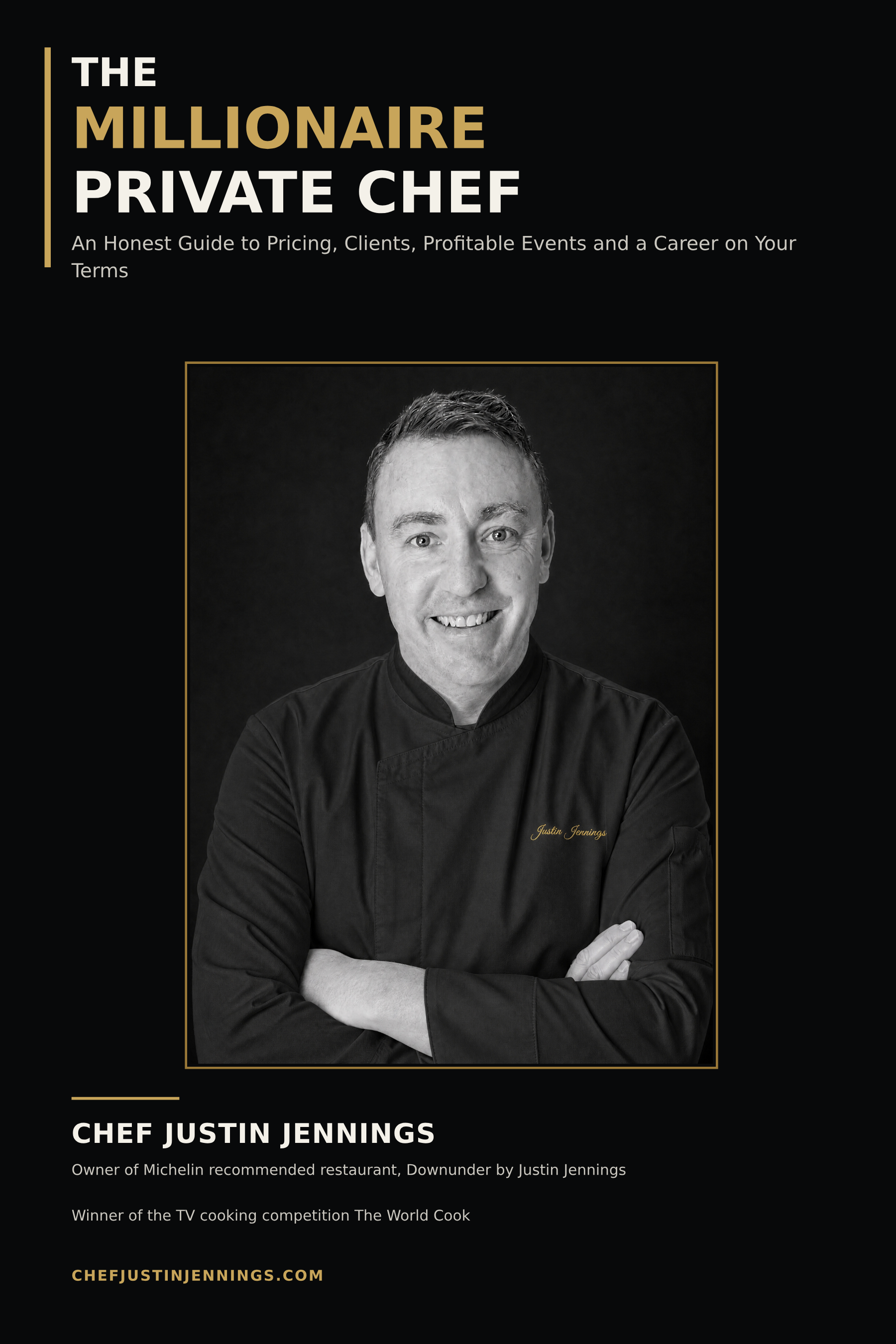
Most private chefs hate marketing. I get it. You didn't spend years perfecting your craft to become a full-time content creator. You want to cook, not post on Instagram five times a day or write blog posts about "5 Ways to Elevate Your Dinner Party."
But here's the uncomfortable truth: being an incredible chef doesn't automatically fill your calendar. I know talented chefs who can't get bookings. And I know mediocre chefs who are booked solid six weeks out.
The difference? Marketing.
When I started as a private chef in 2019, I had zero clients, zero social media presence, and no idea how to market myself. I was a restaurant chef. I knew how to run a kitchen, manage a team, execute 200 covers on a Saturday night. But getting people to hire me for private events? That was a completely different skill.
I tried everything. I spent €2,000 on Facebook ads that generated exactly three inquiries (none booked). I paid for a listing on Take a Chef and watched them take 25% of each booking. I even printed flyers and left them at upscale gyms and yoga studios (cringe, but I was desperate).
Most of it didn't work. But some of it did. And over the next two years, I figured out which marketing channels actually generate high-paying private chef clients - without blowing my budget on ads or spending 40 hours a week creating content.
This post is the marketing strategy that took me from zero to fully booked. Not theory from a marketing consultant who's never cooked professionally. Real tactics from someone who books 12-15 private events per month at €85-130 per person.
Let's start with the foundation.
The Marketing Mindset Shift (Or Why "Good Food Sells Itself" Is a Lie)
When I was working in restaurants, I believed that if you made great food and delivered excellent service, customers would come. Word-of-mouth would handle the rest. Marketing was for mediocre places that needed to trick people into showing up.
That mindset almost killed my private chef business before it started.
Here's what I didn't understand: in a restaurant, you have walk-by traffic, online listings, reservation platforms, and infrastructure that brings customers to you. Even bad restaurants get some baseline traffic just from existing in a visible location.
As a private chef? You have none of that. You're starting from zero visibility. If people don't know you exist, it doesn't matter how good your food is. They'll hire the chef they do know about - even if that chef is worse than you.
Marketing isn't about tricking people. It's about making sure the right people know you exist when they need you.
That realization changed everything. I stopped viewing marketing as this sleazy, inauthentic thing I had to do, and started seeing it as simply: showing up where potential clients are already looking, and making it easy for them to book me.
Once you internalize that, marketing becomes way less overwhelming. You're not trying to manipulate anyone. You're just making yourself visible and accessible. That's it.
Channel Breakdown: What Actually Works (And What's a Waste of Time)
I've tested pretty much every marketing channel over the past five years. Here's what actually drives bookings, ranked by ROI and time investment.
1. Word-of-Mouth Referrals (The #1 Lead Source)
Effectiveness: 🔥🔥🔥🔥🔥
Time Investment: Low (once you have a system)
Cost: Free (or small referral incentives)
Let me be clear: word-of-mouth is responsible for 60-70% of my bookings. After someone hires you and has an amazing experience, they tell their friends. Those friends book you. Those friends tell their friends. And so on.
But - and this is critical - word-of-mouth doesn't just happen automatically. You have to engineer it.
How to systematize referrals:
- Deliver exceptional experiences - This is obvious, but worth stating. Mediocre events don't generate referrals. You need to consistently blow people away.
- Ask for referrals explicitly - At the end of every successful event, I say: "I'm so glad you enjoyed tonight. If you know anyone else who might want a private chef experience, I'd love to cook for them too. Here's my card." Simple, direct, non-pushy.
- Incentivize referrals - I offer clients 15% off their next booking if they refer someone who books me. This turns happy clients into active promoters.
- Make it easy - I send a follow-up email with a referral link they can share. "Love what Justin cooked? Book him here: [link]." Remove all friction.
- Stay top-of-mind - Quarterly email to past clients: "I'm now booking for [season]. Would love to cook for you again - or if you know anyone planning events, I have availability in [dates]."
Word-of-mouth is the only truly scalable marketing channel because it gets stronger the more you use it. Every event you execute creates potential for 2-5 new referrals. Compound that over 50-100 events and you have a self-sustaining pipeline.
The mistake most chefs make: They wait for referrals to happen instead of actively creating systems to generate them. Don't wait. Ask. Incentivize. Follow up.
2. Instagram (Visual Proof You're Legit)
Effectiveness: 🔥🔥🔥🔥
Time Investment: Medium (3-4 hours/week)
Cost: Free
Instagram is the single best organic marketing platform for private chefs. Why? Because food is inherently visual, and Instagram is designed for discovery.
When someone is considering hiring a private chef, the first thing they do is look at your Instagram. They want to see: Can this person cook? Do they have experience? Does their style match what I want?
Your Instagram is your portfolio, your credibility, and your booking funnel all in one.
What to post (and how often):
- Behind-the-scenes content - Prepping in a client's kitchen, setting up, mid-service action. People love seeing the process, not just the finished plate.
- Finished dishes - Obviously. But don't obsess over perfection. Natural lighting, clean plating, and variety matter more than Michelin-level food photography.
- Client testimonials - Screenshot reviews and reshare them. Social proof is incredibly powerful.
- Event setups - Table settings, venue shots, the vibe you create. Clients aren't just buying food; they're buying an experience.
- Stories, stories, stories - Post daily. Polls, Q&As, "what I'm cooking today," countdowns to events. Stories keep you visible in a way posts can't.
Posting frequency: 3-4 feed posts per week. Daily stories. That's it. You don't need to post twice a day to see results.
Hashtags and location tags: Use local hashtags (#LisbonPrivateChef, #CascaisEvents, etc.) and always tag your location. This is how potential clients in your area discover you.
Engagement strategy: Don't just post and ghost. Engage with accounts that fit your ideal client profile - event planners, luxury real estate agents, villa managers, lifestyle influencers. Comment on their posts. Like their content. DM genuine compliments. This creates visibility and relationships.
Biggest Instagram mistake: Treating it like a highlight reel instead of a conversation. People don't book perfect chefs. They book chefs they feel connected to. Show your personality, not just your plating.
Want my full marketing playbook?
21 proven client acquisition strategies, social media templates, email sequences, partnership outreach scripts, and the exact systems I use to stay booked. All in one book.
3. Google Business Profile (Local SEO That Books You)
Effectiveness: 🔥🔥🔥🔥
Time Investment: Low (2 hours setup, 30 min/month maintenance)
Cost: Free
When someone searches "private chef Lisbon" or "personal chef near me," where do you show up? If the answer is "nowhere," you're missing out on high-intent leads actively looking to book.
Google Business Profile (formerly Google My Business) is criminally underused by private chefs. It's free, it takes less than two hours to set up properly, and it generates consistent inquiries from people who are ready to book.
How to optimize your profile:
- Complete every section - Business name, service area, website, phone number, hours (mark as "by appointment"), business description, and services offered.
- Use high-quality photos - Add 20-30 photos of your work. Google prioritizes profiles with rich media.
- Get reviews - Ask every client to leave a Google review. Reviews directly impact your local search ranking AND conversion (people trust businesses with 15+ positive reviews).
- Post weekly - Google lets you post updates, offers, and events. Use this. It signals to Google that your business is active, which boosts visibility.
- Respond to all reviews - Even (especially) the bad ones. This shows professionalism and care.
- Use keywords in your description - "Private chef in Lisbon specializing in intimate dinner parties, weddings, and corporate events. Australian-Asian fusion cuisine, MICHELIN experience, available Lisbon, Cascais, Sintra." Be specific.
I get 4-6 inquiries per month directly from Google Business Profile. These are people searching with buying intent - they're not browsing, they're looking to hire. Conversion rate is high.
4. Strategic Partnerships (Leverage Other People's Audiences)
Effectiveness: 🔥🔥🔥🔥
Time Investment: Medium (networking and relationship building)
Cost: Referral commissions (typically 10-15%)
The fastest way to scale past word-of-mouth is to partner with people who already have access to your ideal clients. Instead of building your own audience from scratch, you tap into theirs.
Who to partner with:
- Event planners - They're constantly organizing events and need trusted chef partners. Offer them 10-15% referral commission or reciprocal promotion.
- Villa and property managers - Luxury rentals often want to offer private chef services to guests. Become their go-to chef.
- Concierge services - High-end concierge companies arrange experiences for wealthy clients. Get on their preferred vendor list.
- Wedding coordinators - Weddings need catering. Position yourself as the upscale alternative to traditional catering companies.
- Yacht brokers and charter companies - If you're in a coastal area, yacht charters need chefs for multi-day trips. This is high-value, high-margin work.
- Corporate retreat organizers - Companies planning off-site team events need quality food. Build relationships with HR departments and event coordinators.
How to approach partnerships:
Don't just send cold emails asking for referrals. Offer value first. "I saw you organized [event]. I'd love to partner with you on future events - happy to offer your clients a discount or kickback on referrals." Be specific. Show you've done research.
Once you have one or two strong partnerships, they can account for 20-30% of your bookings. These are high-quality, pre-qualified leads that require minimal marketing effort on your end.
5. Your Website (The Credibility Hub)
Effectiveness: 🔥🔥🔥
Time Investment: High initial setup (10-15 hours), low maintenance
Cost: €50-200/year (domain + hosting)
Your website isn't where most clients find you - it's where they go to verify you're legit and decide to book.
Think of it this way: Someone hears about you from a friend or finds you on Instagram. They Google your name. They land on your website. What they see in the next 30 seconds determines whether they inquire or move on.
What your website must include:
- Clear service descriptions - What do you offer? Dinner parties, weddings, meal prep, cooking classes? Be specific.
- Transparent pricing - You don't have to list exact prices, but give ranges. "Intimate dinners start at €75/person." This filters out people outside your price range.
- Portfolio/gallery - 20-30 high-quality photos of your work. Show variety: different cuisines, settings, presentation styles.
- Client testimonials - At least 5-7. Include full names and photos if possible (with permission). Generic "Great chef!" testimonials don't build trust. Specific stories do.
- Your story - Who are you? What's your background? Why should someone trust you in their home? People hire people, not résumés.
- Simple inquiry/booking process - Contact form or booking calendar. Make it easy. Every extra step you add reduces conversion.
SEO basics: Use your target keywords throughout the site ("private chef [your city]," "personal chef services," "wedding catering"). Write blog posts targeting common questions ("how much does a private chef cost," "what to expect from a private chef"). This drives organic traffic over time.
Your website doesn't need to be fancy. It needs to be clear, professional, and conversion-focused. A simple one-page site that answers "Who? What? Why? How do I book?" is better than an elaborate 10-page site that confuses people.
6. Email Marketing (The Underrated Retention Tool)
Effectiveness: 🔥🔥🔥
Time Investment: Low (2-3 hours/month)
Cost: Free up to ~300 contacts (Mailchimp, ConvertKit, etc.)
Most private chefs treat every booking like a one-time transaction. That's a mistake. Your existing clients are your most valuable asset. They already trust you, they already know your food is good, and they're the most likely to book again.
Email is how you stay top-of-mind so that when they need a chef again - or when their friend asks for a recommendation - they think of you immediately.
How to build your list:
- Capture emails from every inquiry and booking (obviously)
- Add a simple signup form to your website: "Get seasonal menu ideas and availability updates"
- Offer a lead magnet: "Download my free dinner party planning guide"
What to send (and how often):
- Monthly or seasonal newsletter - New menu highlights, upcoming availability, client spotlights, recipe tips, special offers.
- Seasonal promotions - "Now booking holiday events" or "Summer BBQ packages available"
- Re-engagement campaigns - Every 3-4 months: "It's been a while since we cooked together. Would love to have you again - here's what's new."
Email won't generate floods of new bookings, but it will keep you booked consistently. Repeat clients are easier to sell to, more profitable (no acquisition cost), and more likely to refer others.
What Doesn't Work (Stop Wasting Your Time)
Let's talk about the channels that sound good in theory but rarely generate bookings for private chefs:
Facebook/Instagram Ads (Usually Not Worth It)
I spent €2,000 on Facebook ads in my first year. Got three inquiries, zero bookings. Why? Because private chef services are high-consideration purchases. People don't see an ad and immediately book a €1,200 dinner party.
Ads can work if you have a refined funnel, retargeting campaigns, and a large enough ad budget to test (€500+/month minimum). But for most solo private chefs? Organic marketing delivers better ROI.
Exception: Retargeting ads to people who visited your website but didn't book. This works because they've already shown intent. But even then, organic strategies should be your foundation.
Marketplace Platforms (Take a Chef, MiumMium, etc.)
These platforms take 20-30% commission and own the client relationship. Yes, they provide initial exposure, but you're building their business, not yours.
Use them strategically as a supplemental channel while you build your own marketing. But don't rely on them long-term. Every booking that comes through a platform is money you're giving away.
Cold Outreach (Email Blasts, Cold Calling)
This works for B2B sales. It doesn't work for private chefs. No one hires a chef because they received a cold email. It's too personal, too high-trust. You need warm leads generated through referrals, content, or partnerships.
My Actual Marketing Budget (€157/Month)
Here's exactly what I spend on marketing each month as a fully booked private chef:
- Website hosting + domain: €12/month
- Email marketing platform (Mailchimp): €15/month for 500 contacts
- Canva Pro (graphics for social): €10/month
- Google Workspace (professional email): €6/month
- Photography props and styling: ~€30/month
- Referral incentives (15% discount): ~€84/month average across ~8 referrals
Total: €157/month
That's it. No ads. No expensive software. No marketing agency. Just consistent organic effort and smart systems.
For context, I average 12-15 bookings per month at €85-130 per person (typically 4-8 guests per event). That's €4,000-7,000 in monthly revenue. Marketing spend: 2-4% of revenue.
Compare that to restaurants spending 10-15% on marketing, or businesses running paid ads spending 20-30%. Organic marketing is absurdly cost-effective once you have momentum.
The 90-Day Marketing Plan (How to Go From Zero to Booked)
If you're starting from scratch, here's the exact sequence I'd follow to fill your calendar in 90 days:
Days 1-30: Foundation
- Week 1: Set up Google Business Profile. Build basic website (or one-page landing page). Create/optimize Instagram account.
- Week 2: Shoot 20-30 high-quality photos of your work. If you don't have client events yet, cook for friends and document everything.
- Week 3: Start posting on Instagram 3-4x/week. Write your first blog post targeting "private chef [your city]."
- Week 4: Reach out to 10 potential partners (event planners, villa managers, concierge services). Offer value, not asks.
Days 31-60: Momentum
- Week 5-6: Execute your first 2-3 events (even if they're friends at a discount). Document everything. Get testimonials.
- Week 7: Post those event photos/testimonials on Instagram and website. Ask clients to leave Google reviews.
- Week 8: Launch email list. Send first newsletter to everyone you know announcing your services + availability.
Days 61-90: Scale
- Week 9-10: By now you should have 5-8 events completed. Systematize referral requests. Send follow-up emails to all past clients.
- Week 11: Audit what's working. Double down on the channel driving most inquiries (probably Instagram or referrals).
- Week 12: Plan content calendar for next quarter. Build partnership pipeline (you should have 3-5 active referral partners by now).
This isn't a get-rich-quick plan. It's consistent, strategic effort. But if you execute this 90-day plan, you'll have a functional marketing system generating 4-8 inquiries per month. From there, it compounds.
The Long Game (Why Marketing Gets Easier Over Time)
Here's the best part about private chef marketing: it has a compounding effect.
Your first 10 clients are hard. You're starting from zero visibility, zero social proof, zero word-of-mouth. Every booking requires significant effort.
But after 50 events? You have 50 opportunities for referrals. You have 50+ testimonials and reviews. You have hundreds of photos. Your Instagram has consistent content showing real client experiences. Your Google Business Profile ranks higher because of review volume. Your website has authority.
By client 100, your marketing system is largely self-sustaining. Most bookings come from referrals or organic search. You spend less time actively marketing and more time executing.
That's the goal: build systems that generate leads on autopilot so you can focus on cooking.
Year 1 is the grind. You're creating content, building relationships, establishing credibility. Year 2-3, you're optimizing and scaling. Year 4+, you're selectively booked and turning down clients because you're at capacity.
But you have to put in the work upfront. There are no shortcuts.
Common Marketing Mistakes (That Cost You Bookings)
1. Inconsistent Posting
Posting 10 times one week, then disappearing for a month, kills momentum. Algorithms punish inconsistency, and potential clients lose trust. Pick a cadence you can actually maintain - 3 posts per week is better than 7 posts one week and zero the next.
2. Not Asking for Testimonials
Your clients are happy. They had a great experience. But they won't leave a review unless you ask. Send a follow-up message the day after every event: "So glad you enjoyed last night! If you have 60 seconds, a Google review would mean the world: [link]." Make it easy.
3. Hiding Your Pricing
I get it - you want to avoid scaring people away with high prices. But hiding pricing just generates low-quality inquiries from people who can't afford you. Be transparent. "Intimate dinners start at €75/person." This pre-qualifies leads and saves you time.
4. Treating Social Media Like a Highlight Reel
Perfect, glossy content performs worse than authentic, behind-the-scenes posts. People connect with humans, not food styling robots. Show mistakes, show process, show personality. That's what converts.
5. Not Following Up on Inquiries
Someone inquires. You respond once. They don't reply. You assume they're not interested and move on. Wrong. Most bookings take 2-4 touchpoints before converting. Follow up. "Hey, just checking in - are you still planning that dinner party? Happy to answer any questions." Persistence pays.
Ready to implement this strategy?
My book includes ready-to-use templates, scripts, content calendars, and the complete client acquisition system. Everything you need to go from zero to fully booked.
Final Thoughts: Marketing Is a Multiplier, Not a Replacement
No amount of marketing will save bad food or poor service. Marketing amplifies what you already do well. If you deliver exceptional experiences, marketing just makes sure more people know about it.
But the inverse is also true: if you're an incredible chef and nobody knows you exist, you'll struggle to stay booked. Talent without visibility is wasted potential.
The good news? You don't need to become a full-time content creator or spend thousands on ads. You just need consistent, strategic presence across a few key channels. Do that for 6-12 months, and you'll build momentum that sustains itself.
Start with word-of-mouth systems, Instagram, and Google Business Profile. That's the foundation. Once that's working, layer in partnerships and email. That's 80% of the marketing you'll ever need.
The rest is just execution.
Frequently Asked Questions
What is the best marketing platform for private chefs?
Instagram is the most effective single platform for private chefs due to its visual nature and local discovery features. However, a multi-channel approach combining Instagram, Google Business Profile, and strategic partnerships typically produces the best results. Don't rely on just one platform.
Do private chefs need paid ads to get clients?
No. Most successful private chefs build their businesses through organic marketing: word-of-mouth referrals, social media content, local SEO, and strategic partnerships. Paid ads can accelerate growth, but they're not necessary, especially in the first 1-2 years when building your reputation matters more than scale.
What is an effective Instagram strategy for private chefs?
Post 3-4 times per week featuring behind-the-scenes content, finished dishes, client testimonials, and event setups. Use local hashtags and location tags. Engage with potential client profiles (event planners, luxury real estate, villa managers). Stories are crucial for staying visible. Focus on showing your process, not just perfect plating.
How do private chefs get testimonials and reviews?
Ask immediately after successful events when clients are most satisfied. Make it easy with a simple follow-up message including a Google review link and testimonial form. Offer a small incentive like 10% off their next booking. Most importantly, deliver exceptional experiences that clients naturally want to talk about.
Do private chefs need professional food photography?
Professional photos help, but modern smartphone cameras are sufficient to start. Focus on natural lighting (never flash), clean plating, and varied angles. Authenticity often outperforms overly polished studio shots. Invest in a good smartphone, learn basic composition, and upgrade to professional photography once you're regularly booked.
What are the essential elements of a private chef website?
Clear services and pricing, professional photos of your work, client testimonials, your story and credentials, easy booking/inquiry process, and local SEO optimization. The site should answer: Who are you? What do you offer? Why should I book you? How do I get started? Simple, clean, and conversion-focused beats elaborate and confusing.
Is email marketing effective for private chefs?
Yes, especially for repeat business and seasonal promotions. Build your list by capturing emails from inquiries, events, and website visitors. Send monthly or seasonal newsletters featuring new menus, availability, client stories, and special offers. Email consistently keeps you top-of-mind when clients need a chef.
What partnership strategies work best for private chefs?
Event planners, villa/property managers, luxury concierge services, yacht brokers, wedding coordinators, and corporate retreat organizers. Build relationships by offering referral commissions, exclusive availability, or reciprocal marketing. These partnerships provide consistent, pre-qualified leads without ongoing marketing effort.
How long does it take to fill your calendar through organic marketing?
Most private chefs see their first organic inquiry within 2-4 weeks of consistent posting and SEO work. Fully booked weekends typically take 3-6 months of regular content, networking, and reputation building. The timeline accelerates significantly after your first 10-15 events when word-of-mouth becomes your primary lead source.
Should private chefs use marketplace platforms like Take a Chef?
Platforms can provide early bookings while you build your own marketing, but they take 20-30% commission and own the client relationship. Use them strategically as a supplemental channel while focusing on building direct bookings through your own marketing. Transition clients off platforms once your calendar fills organically.