Business Strategy
How to Build a Private Chef Business While Working Full-Time (2026 Guide)
August 2026 · 13 min read
Ready to start your private chef business without quitting your day job? My book gives you the exact roadmap, templates, and strategies I used.
Buy on Amazon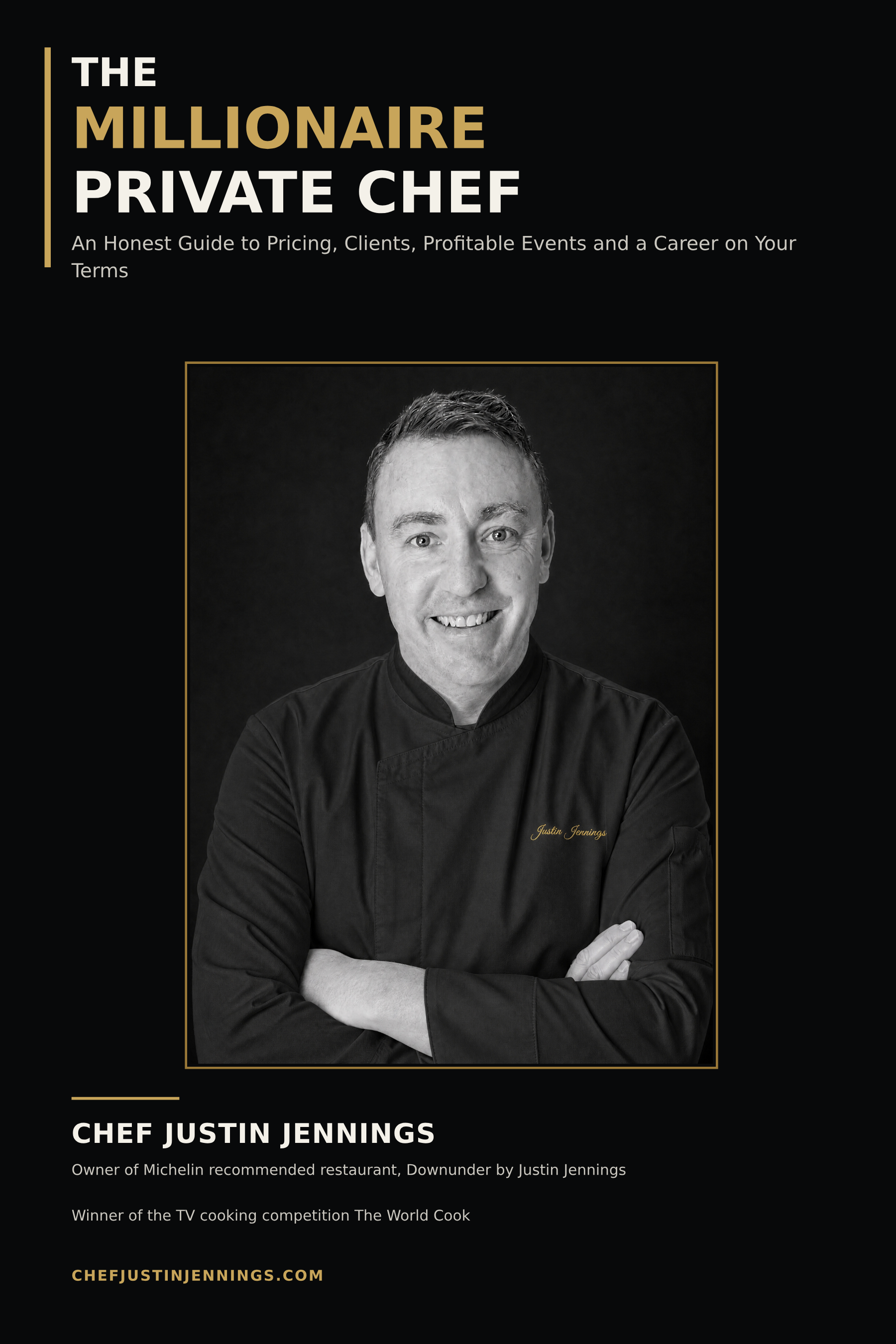
I built my private chef business while working 55 hours a week as a sous chef. Not because I'm superhuman. Not because I had unlimited energy or special advantages.
I did it because I was strategic about it. And because I knew staying in my restaurant job indefinitely would destroy me.
Within six months, my side business was generating €2,800 per month - exactly what my restaurant job paid. Within nine months, I had a three-month waitlist and clients asking when I'd be available to book them.
That's when I quit. Not on hope. Not on potential. On proven, repeatable revenue.
If you're reading this, you're probably where I was: exhausted from your current job, curious about private chef work, but terrified of losing your steady paycheck. You want the freedom and income potential, but you can't afford to take a reckless leap.
Good. You shouldn't.
This guide will show you how to build your private chef business the smart way: while keeping your day job, managing your time without burning out, and creating a validated business model before you ever submit your resignation letter.
Why Building While Working Full-Time Is Actually Smarter
Let me challenge the "just quit and figure it out" advice you've probably heard from entrepreneurship gurus who've never worked a real job.
Starting your private chef business as a side hustle isn't the cautious path. It's the strategic path. Here's why:
1. You Can Test Before You Invest
Your first few events will teach you more about this business than any course or book (including mine). You'll discover what you're good at, what you enjoy, what clients actually want, and what you hate doing.
Better to learn these lessons while you still have a paycheck coming in. I discovered in month two that I loved intimate dinner parties (6-10 guests) but found large corporate events (30+) exhausting and impersonal. If I'd quit my job first, I might have committed to a business model I didn't even enjoy.
2. You Build Skills Without Financial Pressure
When your rent depends on booking your next event, you make desperate decisions. You undercharge. You say yes to nightmare clients. You skip the legal setup because "insurance is expensive."
With a day job covering your bills, you can charge what you're worth, fire bad clients, and build a business properly. The quality of your decision-making improves dramatically when you're not financially desperate.
3. You Create a Safety Net of Clients and Revenue
By the time you quit, you should have 10-15 regular clients who've booked you multiple times. You should have testimonials, a portfolio of events, and a proven system for acquiring new clients.
This isn't about being cautious - it's about quitting from a position of strength rather than hope. When I handed in my notice, my boss asked if I was sure. I pulled up my calendar showing the next three months fully booked. That's confidence.
4. You Validate Your Market Before Going All In
Not every city or demographic has the same demand for private chefs. Some markets are saturated. Some don't have the income levels to support premium pricing. Some prefer catering companies over individual chefs.
Running your business part-time lets you test your local market without betting your entire livelihood on it. I met chefs who moved to expensive cities thinking private chef work would be easy, quit their jobs immediately, and burned through their savings in three months trying to force a market that didn't exist.
Don't be that person.
Want my full "side hustle to full-time" roadmap?
My book includes detailed timelines, client acquisition strategies, and the exact income benchmarks you need to hit before quitting.
The Realistic Time Investment (It's Less Than You Think)
The biggest objection I hear: "I don't have time to build a business while working full-time."
I get it. You're already exhausted. The idea of adding more work sounds impossible.
But here's what most people miss: you're not building a startup that requires 80-hour weeks. You're booking 2-4 events per month and systematizing the rest.
Here's the actual time breakdown for months 1-6:
Per Week Time Investment
- Marketing/Client Acquisition: 2-3 hours (Instagram, networking, responding to inquiries)
- Admin: 1-2 hours (emails, invoicing, calendar management)
- Menu Planning: 1 hour (per booked event)
- Shopping/Prep: 2-3 hours (typically Friday afternoon/evening)
- Event Execution: 4-6 hours (Saturday evening, including setup, cooking, cleanup)
Total: 10-15 hours per week
That's two evenings plus one full weekend day. Less time than most people spend watching Netflix.
And here's the key: as you systematize (templates for quotes, menus, shopping lists), those hours compress. By month 4-5, I was running the same size business in 8-10 hours per week.
My Actual Weekly Schedule (First 6 Months)
Monday-Thursday: Full-time restaurant job (10-hour shifts)
Tuesday evening (1 hour): Instagram content + respond to inquiries
Thursday evening (1 hour): Menu planning for weekend event + send shopping list to myself
Friday:
- Off from restaurant
- Morning: Personal errands, rest
- 2-5 PM: Shopping for weekend event
- 6-8 PM: Prep work (sauces, marinades, components)
Saturday:
- Morning/afternoon: Free (recovery time is essential)
- 4-11 PM: Private chef event (includes travel, setup, cooking, cleanup)
Sunday:
- Morning: Recovery, grocery shopping for personal needs
- Afternoon: Admin (send invoice, follow up email, update portfolio)
- Evening: Prepare mentally for Monday restaurant shift
Notice what's missing? I wasn't doing events every weekend. In months 1-2, I did 2 events per month. Months 3-4, I increased to 3-4 per month. Only in months 5-6 did I book all four weekends consistently.
This gradual ramp-up is crucial. It prevents burnout and gives you time to improve your systems before scaling.
Phase 1: Foundation (Months 1-2)
Your first two months aren't about revenue. They're about setup and validation. Get this phase right and everything else becomes easier.
Week 1: Legal and Admin Setup
- Register as a sole trader (simplest structure to start)
- Get liability insurance (non-negotiable - €300-500/year)
- Food safety certification (if required in your jurisdiction)
- Open separate bank account for business (keeps taxes simple)
- Create simple contract template (Google: plenty of free examples)
Time investment: 6-8 hours total
Cost: €400-700
Yes, this costs money up front. No, you can't skip it. Operating without insurance is gambling with your entire financial future. One food safety incident, one kitchen accident, one client with food poisoning, and you're done.
Week 2: Create Your Minimum Viable Offer
Don't overthink this. You need one great menu to start. Not ten. Not a full website with 47 menu options. One.
My first menu was embarrassingly simple:
- Welcome canapés (3 types)
- Starter: Salmon ceviche OR burrata salad
- Main: Beef tenderloin OR miso-glazed salmon
- Side: Seasonal vegetables + potatoes
- Dessert: Chocolate fondant OR lemon tart
Price: €85 per person, minimum 6 guests
That's it. Five courses, two options per course, clients choose. This menu took me 90 minutes to plan and I used it for my first 12 events with only minor adjustments.
Why this works:
- Simple enough to execute perfectly while learning
- Flexible for dietary restrictions (swap proteins easily)
- Ingredients available everywhere (no specialty sourcing)
- Can be prepped significantly in advance
- Looks impressive, doesn't require advanced techniques
Week 3-4: Book Your First Two Clients
Your goal: book two events before the end of month two. Not ten. Two.
Start with your existing network:
- Restaurant colleagues: Tell every front-of-house staff member what you're doing. They know people throwing events.
- Suppliers: Your meat, fish, and produce vendors know caterers and other chefs. Ask if they can refer you.
- Friends and family: Don't offer free events. Offer a 30% "friends rate" (€60pp instead of €85pp). You want real feedback from real clients paying real money.
- Social media: Post ONE Instagram story: "Starting private chef services. DM if interested." You'd be surprised who responds.
My first two clients: A former colleague's parents (40th anniversary dinner), and my butcher's brother (birthday party). Neither found me through Google or paid marketing. They found me because I told people I was available.
Struggling to book your first clients?
My book includes word-for-word scripts, email templates, and the exact Instagram strategy that booked me 30+ clients in my first 6 months.
Phase 2: Growth (Months 3-6)
By month three, you've done 2-4 events. You know what works. You've refined your menu. You've learned from mistakes. Now you scale strategically.
Goal: €1,500-2,500 Per Month in Revenue
This means 4-6 events per month at €80-90pp with 6-8 guests average.
The math:
- 4 events × 7 guests × €85pp = €2,380/month
- Minus ingredients (30% = €714) = €1,666 net income
- Time investment: 10-12 hours per week
- Effective hourly rate: €35-40/hour
This is now significant supplemental income. More than a second job. Without commuting. On your own schedule.
Client Acquisition Strategy for Months 3-6
1. Leverage Every Event for Referrals
At the end of each event, leave a card with the host and say:
"If you have friends who'd enjoy this, I have limited availability for [month]. Happy to offer them the same rate as a thank you for the referral."
This generated 60% of my new clients in months 3-6. Guests at events see the experience, taste the food, and immediately want to book you.
2. Build a Simple Instagram Presence
Not a full content strategy. Just document your events:
- Before: Ingredients, prep shots
- During: Plating, table setup (ask permission first)
- After: Guest reactions (with their consent)
Post 2-3 times per week. Use location tags. Use relevant hashtags (#privatecheflisbon, #privatedinning, #cheflife).
My Instagram strategy was minimal - maybe 2 hours per week - but it generated 25-30% of my inquiries by month five.
3. Partner With Local Event Professionals
Event planners, photographers, and florists all work with clients throwing parties. Reach out to 5-10 of them with a simple pitch:
"Hi [Name], I'm a private chef offering premium dinner experiences in [city]. If you ever have clients looking for in-home dining, I'd be happy to collaborate. Here's my portfolio: [link]."
One wedding planner sent me 8 clients over six months. One photographer referred me to 3 clients. These partnerships are gold.
Systematize Before You Scale
By month 4, create templates for everything:
- Inquiry response email (with pricing, process, and next steps)
- Menu customization email (questions to ask about dietary needs, preferences)
- Booking confirmation email (with contract, deposit instructions, what to expect)
- Pre-event email (what you need from them, timing, kitchen requirements)
- Post-event email (thank you, invoice, request for testimonial)
- Shopping list template (organized by store/category)
- Equipment checklist (everything you bring to events)
This isn't bureaucracy - it's efficiency. These templates reduced my admin time from 3-4 hours per week to under 1 hour. Copy-paste, customize names/details, send.
Phase 3: Transition Planning (Months 7-9)
If months 1-6 went well, you now have:
- €1,500-2,500 per month in consistent revenue
- 10-15 clients who've booked you (some multiple times)
- A portfolio of successful events
- Testimonials and referrals
- Proven systems and templates
The question shifts from "Can I do this?" to "When do I quit my day job?"
The "Quit Your Job" Checklist
Don't quit based on excitement. Quit based on data. Here's when I knew it was time:
Revenue Benchmark:
- ✅ Side business income = 70-80% of day job salary for 3 consecutive months
- ✅ Projected income for next 3 months (based on bookings) = 100%+ of day job salary
Client Stability:
- ✅ At least 10 repeat clients (booked you 2+ times)
- ✅ Waitlist or future bookings extending 2-3 months out
- ✅ Consistent inquiry flow (5-10 per week minimum)
Financial Safety:
- ✅ 3-6 months of living expenses saved
- ✅ No high-interest debt (credit cards paid off)
- ✅ Emergency fund separate from business capital
Business Operations:
- ✅ All legal/insurance requirements handled
- ✅ Systems and templates in place
- ✅ Can realistically scale to 12-15 events/month without burnout
Personal Readiness:
- ✅ Partner/family supports the decision
- ✅ You've done this long enough to know you love it
- ✅ You have a 12-month business plan and financial projections
When I ticked all these boxes in month 8, I gave my restaurant a 4-week notice. Professional, grateful, confident. They understood. Most importantly, I understood I was making a calculated decision, not a desperate leap.
The Transition Period Strategy
Your last month at your day job is crucial. Here's how to maximize it:
1. Ramp Up Your Calendar
Book out your first 4-6 weeks post-resignation. This gives you momentum and income immediately. I had 11 events booked for my first month as a full-time private chef. The income matched my previous job and the validation was incredible.
2. Notify Your Clients
Send an email to everyone who's booked you:
"Exciting news: I'm going full-time with private chef work starting [date]. This means more availability, including weeknight events and multi-day bookings. If you've been waiting to book me, now's the time."
This generated 4 immediate bookings from people who'd been interested but couldn't make weekends work.
3. Expand Your Offering
Once you're full-time, you can offer:
- Weeknight dinners (Monday-Thursday availability)
- Multi-day retreats or villa stays
- Corporate lunch events
- Meal prep services (weekly client retainers)
- Cooking classes or team building events
These were impossible while working full-time but become viable revenue streams once you have weekday availability.
4. Leave Your Day Job Well
Give proper notice. Train your replacement if possible. Thank your colleagues. Don't burn bridges.
The restaurant industry is small. Your former coworkers and boss will become referral sources if you leave professionally. I've gotten 5-6 client referrals from my old restaurant because I left on good terms.
Common Mistakes That Kill Side Hustles
I've watched dozens of chefs try to build private chef businesses while working full-time. Most fail. Here's why:
Mistake #1: Undercharging Because "It's Just a Side Hustle"
You're not a hobbyist. You're a professional building a business. Charge professional rates from day one.
Undercharging signals low quality, attracts nightmare clients, and makes it mathematically impossible to scale. If you're charging €40pp, you need 3x the clients to make the same money as charging €80pp. Three times the work. Three times the burnout risk.
Your pricing should cover: ingredients (30-35%), your time (50-60%), overhead and taxes (10-15%). Anything less and you're subsidizing clients out of your own pocket.
Mistake #2: Saying Yes to Every Inquiry
Not every client is a good client. Red flags to watch for:
- Price shopping before asking about experience
- Requesting complex customizations before committing
- Vague event details ("just a casual thing, not sure how many people")
- Asking you to work for "exposure" or future business
- Condescending tone or treating you like hired help rather than a professional
You have limited time. Spend it on good clients who respect your expertise, pay your rates, and appreciate your work.
Mistake #3: No Systems = Constant Chaos
Every email you write from scratch, every menu you plan ad-hoc, every shopping trip you wing - that's wasted time and mental energy.
Systematize everything by month 3. Templates. Checklists. Repeatable processes. This is what allows you to run a business in 10 hours per week instead of 25.
Mistake #4: Scaling Too Fast
Going from 2 events per month to 8 events per month in one jump will destroy you. Gradual growth lets you refine processes, maintain quality, and avoid burnout.
I see chefs quit their jobs after 2-3 successful events, assume they can immediately book 15 events per month, and burn out within 8 weeks. Don't be that person.
Mistake #5: Telling Your Boss Too Early
Unless your employment contract prohibits side work, keep your private chef business quiet until you're ready to resign. Once your boss knows you're exploring other options, you become a flight risk. Promotions, opportunities, and trust can evaporate.
There's no upside to early disclosure. Wait until you have your resignation letter ready.
Ready to build your own private chef business?
My book walks you through every phase: legal setup, first clients, pricing, systems, scaling, and when to quit. Everything I learned building from €0 to €7,000+/month.
The Reality Check: This Isn't Easy (But It's Worth It)
I won't lie to you. Building a business while working full-time is hard. You'll be tired. You'll miss social events. You'll question whether it's worth it.
There were Sundays when I wanted to quit. When washing dishes at someone's house at 11 PM while knowing I had to be at the restaurant at 9 AM Monday felt insane. When a client was difficult and I wondered why I was putting myself through this.
But then I'd check my bank account and see an extra €2,400 that month. I'd read a testimonial from a client saying their dinner was "the best meal we've ever had." I'd look at my calendar and realize I was three months away from never having to ask permission for a day off again.
That's what kept me going. The knowledge that every event brought me closer to freedom.
Nine months after my first private chef dinner, I walked out of my restaurant job for the last time. I wasn't scared. I was excited. Because I'd built something real, tested, and profitable.
Three years later, I'm making 2.5x what I made in restaurants, working 35-hour weeks instead of 60, and I love what I do again. I'm not special. I just followed a plan and didn't quit when it got hard.
You can do this too. Start small. Build systems. Grow gradually. Quit strategically.
Your future self will thank you.
Frequently Asked Questions
Can you start a private chef business while working full-time?
Yes, absolutely. Most successful private chefs start this way. Weekend events and evening dinners can fit around a full-time job. I built my business to €2,000/month in extra income before quitting my restaurant job. The key is strategic scheduling and setting clear boundaries with both jobs.
How many hours per week do you need to build a side private chef business?
Start with 10-15 hours per week: 5-8 hours for weekend events, 3-4 hours for prep/shopping, 2-3 hours for marketing and admin. As you gain experience and systems, you'll become more efficient. Most chefs do 2-4 events per month in their first 6 months while working full-time.
When should you quit your day job to go full-time as a private chef?
When your side business income consistently replaces 70-80% of your day job salary for 3-4 consecutive months, and you have 3-6 months of expenses saved. I recommend having 10-15 regular clients and a waitlist before quitting. Don't quit on potential - quit on proven, repeatable revenue.
How do you find private chef clients while working full-time?
Leverage your existing network first: tell restaurant colleagues, suppliers, and friends. Use Instagram to showcase weekend events. Partner with event planners who work evenings. Create a simple website with an enquiry form. Focus on Friday/Saturday events initially - easier to manage around a day job.
What's the best way to manage time between full-time work and a side chef business?
Block schedule everything: Fridays for prep, Saturdays for events, Sundays for recovery and admin. Batch tasks - do all shopping in one trip, all email responses in one block. Use templates for menus, quotes, and contracts. Say no to weekday events until you're more established. Protect your sleep.
Should you tell your employer about your side private chef business?
Check your employment contract first. Most restaurant jobs don't restrict outside work, but corporate chef roles might. If there's no conflict, I recommend transparency - it shows entrepreneurship and can actually improve your day job reputation. Never use company time or resources for your side business.
How much can you realistically make with a side private chef business?
In your first 3 months: €500-800/month (2-3 events). Months 4-6: €1,200-2,000/month (4-6 events). After 6 months with systems: €2,500-4,000/month (6-10 events). I was making €3,200/month from side work before quitting my €2,800/month restaurant job. It's very achievable.
What equipment do you need to start a side private chef business?
Start minimal: professional knives, portable cutting board, apron, food thermometer, portable burner (optional), insulated bags for transport. Total investment: €300-500. Most clients have adequate kitchens. Buy specialized equipment only after you've done 5-10 events and know what you actually need.
How do you price events when you're just starting as a side business?
Don't undercharge just because it's a side hustle. Start at €75-85 per person for dinner parties, minimum 6-8 guests. This covers ingredients, your time (prep, shopping, cooking, cleanup), transport, and overhead. Charge what you're worth from day one - you can always offer an intro discount (10-15%) to build portfolio.
What legal requirements do you need for a side private chef business?
Food safety certification, business registration (sole trader is simplest), liability insurance (essential), and tax registration. Costs: €200-500 to start. You'll need to declare side income on your tax return. Start legal from event #1 - never operate without insurance. One food poisoning claim can destroy you financially.
Related Reading
How to Start a Private Chef Business in 2026 (Complete Guide)
Step-by-step startup guide, costs breakdown, and everything you need to launch successfully.
Private Chef Salary 2026: How Much Can You Really Make?
Real income breakdown, pricing models, and geographic differences for private chefs.
Getting Your First Private Chef Client: 5 Proven Methods
Leverage your network, social media, partnerships, and local marketing to book clients.