Career Transition
How I Went From Restaurant Chef to €1,000/Night Private Chef
22 July 2026 · 16 min read
Thinking about making the leap from restaurant to private chef? My book walks you through the exact roadmap I used to go from €2,400/month salary to €6,500/month in under 3 years.
Buy on Amazon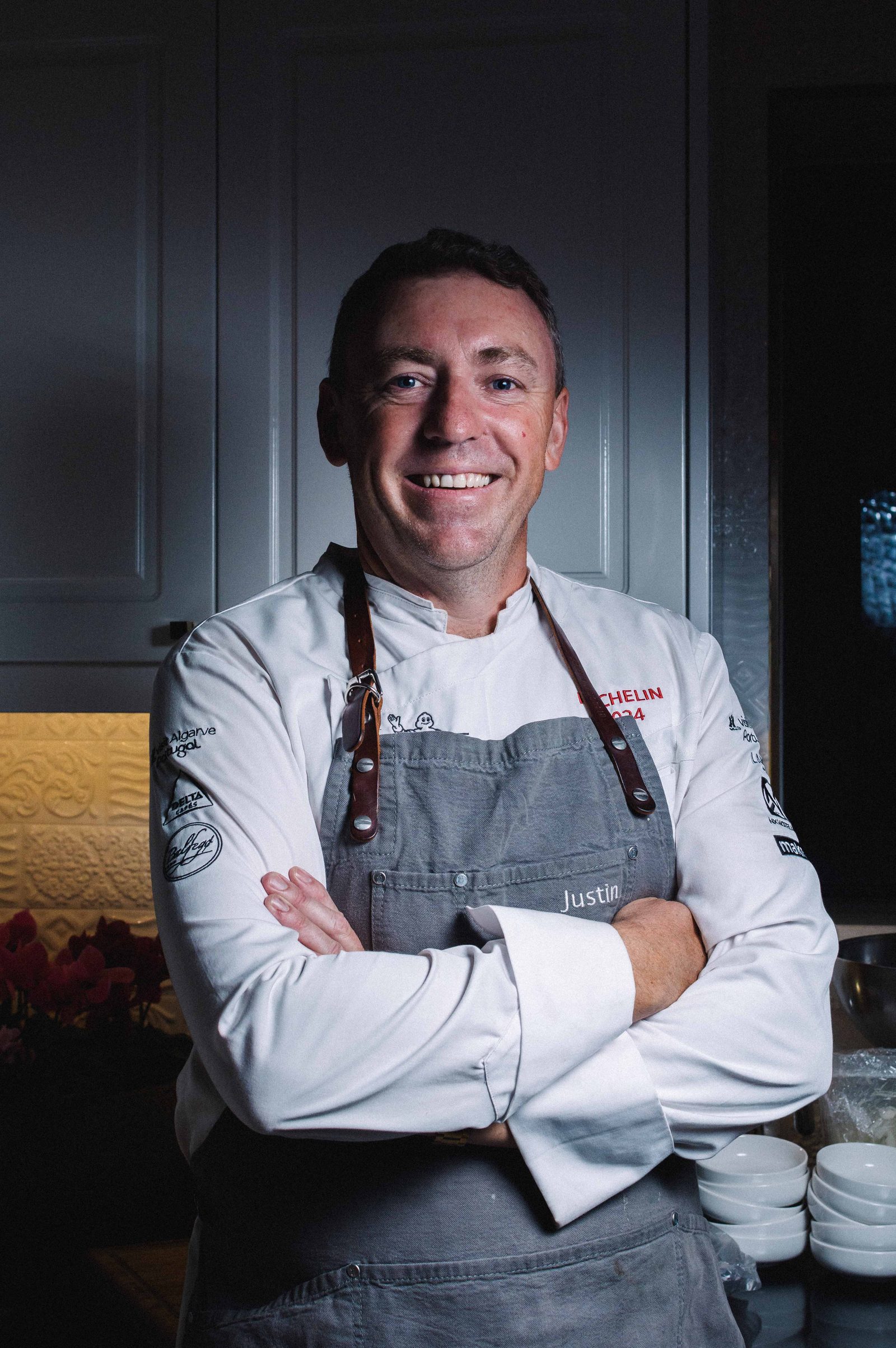
Five years ago, I was a restaurant chef working 70-80 hour weeks for €2,400 a month. Exhausted, burnt out, and watching life happen outside the kitchen window.
Last month, I worked 24 hours total and earned €7,200.
That's not a humble brag it's the reality of private chef work when you do it right. But getting here wasn't a straight line. It was messy, terrifying, full of mistakes, and there were moments I almost gave up and went back to restaurants.
This post is the story no one tells you. Not the highlight reel. The real one: my restaurant career, the moment I decided to leave, my first private chef gig (€200, terrifying), the mistakes in months 1-6, the breakthrough that changed everything, and what I'd do differently if I were starting today.
If you're exhausted, underpaid, and wondering if there's another way to cook for a living, this is for you.
My Restaurant Career: 10+ Years, Exhausted, Fixed Salary
I loved cooking. That's why I became a chef.
But somewhere between culinary school and year 10 in professional kitchens, the job stopped being about food and started being about survival. The hours. The hierarchy. The physical toll. The weekends. The injuries. The screaming. The fixed salary that never seemed to match the effort.
Here's what my life looked like in my final restaurant role (sous chef at a busy fine dining spot in Lisbon):
- Hours: 70-80 per week. Tuesday-Saturday, 10am-midnight. No weekends. No holidays. Weddings, birthdays, family gatherings missed all of them.
- Pay: €2,400/month net. Sounds decent until you do the math: €2,400 ÷ 320 hours = €7.50/hour. Less than minimum wage.
- Health: Chronic knee pain. Lower back wrecked. Burns and cuts everywhere. Drinking too much to decompress.
- Relationships: My partner barely saw me. Friends stopped inviting me to things because I was always working.
- Passion: Gone. I was cooking on autopilot, plating dishes I'd made 500 times, too tired to care.
The promise was always "it gets better when you're head chef." But I'd watched head chefs work even more, for marginally more pay, with the added stress of staff management and owner politics. That wasn't the carrot I was chasing.
I loved food. I hated the job.
The Moment I Decided to Leave (Specific Story)
It was a Saturday night in August. Peak summer service. The restaurant was fully booked 62 covers, half of them tasting menus. The kitchen was 38°C. We were short-staffed (one line cook called in sick). And I was running the pass, plating desserts, and covering garde manger.
At 11:30pm, I plated the last course for table 14. Perfect execution. Walked it to the dining room. The guest sent it back. "Too salty."
I tasted it in the back. It was fine. She just didn't like it. But we remade it anyway, because the customer is always right.
I stood there, holding the rejected plate, watching steam rise off the pass, and something snapped. Not in an angry way. In a clarity way. I thought: I've been doing this for 10 years. I'm 34. My knees hurt. I haven't seen my family in months. I'm making €7.50/hour. And I'm remaking a perfectly good dish because someone doesn't understand how seasoning works.
I finished service. Cleaned my station. Went home. And Googled "how to become a private chef."
That was the moment.
Ready to make the leap?
My book includes the exact steps I followed to transition from restaurant to private chef, including pricing strategies, contract templates, client acquisition systems, and financial planning for the transition period.
Get the Roadmap →First Private Chef Gig: €200, Terrifying, Learned Everything
My first paid private chef client came from a regular at the restaurant. Her name was Clara. She'd been asking me for months: "Do you do private dinners?"
I'd always said no. I didn't have the setup. I didn't know how to price it. I didn't want to upset my employer.
But after that August night, I said yes.
She wanted dinner for 6 people at her apartment. Anniversary celebration. No specific menu, just "surprise us with something amazing." Budget: flexible.
I had no idea what to charge. I Googled "private chef pricing Lisbon" and found numbers ranging from €50-120/person. I panicked and quoted €35/person (€210 total). She said yes immediately. (That should have been my first clue I was underpriced.)
I spent an entire day prepping. Bought all the ingredients myself (I didn't know how to bill for groceries). Showed up 2 hours early with three bags of equipment I didn't need. Cooked a 4-course menu I'd barely tested. And somehow pulled it off.
The food was great. The clients loved it. They tipped me €50. I walked out with €260, exhausted but exhilarated.
Here's what I learned from that first event:
- I'd massively underpriced it. I worked 8 hours (shopping, prep, cooking, service, cleanup) for €260. That's €32.50/hour decent, but not factoring in transport, equipment, or the risk of self-employment.
- Clients value experience, not just food. They didn't want a restaurant meal at home. They wanted a chef who engaged with them, explained the dishes, adapted to their preferences. That's the product.
- I loved it. No kitchen politics. No screaming. No fixed menu. Just me, the food, and people who appreciated it. This was what I'd been missing.
Two weeks later, Clara referred me to a friend. That friend referred me to another friend. And the snowball started rolling.
Mistakes in Months 1-6 (Pricing Too Low, Saying Yes to Everything)
Once I had proof of concept, I made the leap. Gave my restaurant 4 weeks' notice. Registered as a sole trader. Launched a basic website. Posted on Instagram. And said yes to every inquiry that came in.
Which, in hindsight, was a mistake.
Mistake #1: Pricing too low to get bookings faster.
I launched at €55/person, thinking volume would make up for the low rate. It didn't. I was working just as many hours as the restaurant, but now I was also doing all the admin, marketing, shopping, and cleanup. My effective hourly rate was worse than before.
Low prices also attracted the wrong clients: people who haggled, changed guest counts last-minute, and expected restaurant-quality food at home-cooking prices. These clients rarely booked again or referred others. I was building a reputation as "the cheap option," which is the opposite of what you want.
Mistake #2: No contracts.
For the first 6 months, everything was confirmed via WhatsApp or email. No deposits. No cancellation policy. No written terms. This cost me €3,000+ in cancelled bookings, last-minute scope changes, and payment disputes. One client ghosted me the day before an event (I'd already bought €250 of groceries). Another insisted they'd agreed to €50/person when I'd quoted €65. Without a contract, I had no recourse.
Mistake #3: Saying yes to everything.
I accepted every booking, no matter how far, how last-minute, or how unreasonable. I drove 90 minutes each way for a €400 event (net: €150 after fuel and time). I took bookings with 24 hours' notice. I cooked for a "vegan, gluten-free, nut-free, no nightshades" dinner for 10 people (nightmare). I didn't want to say no because I was terrified the bookings would dry up.
But saying yes to everything meant I was exhausted, overworked, and building no systems. I was a restaurant chef who'd swapped one treadmill for another.
The Breakthrough: First €1,000 Event (How I Landed It)
Six months in, I was doing okay but not thriving. I'd done about 25 events, earning €15,000 gross (€2,500/month). That was barely more than my restaurant salary, and I was working harder.
Then I got an inquiry that changed everything.
A corporate client an Australian tech company hosting a leadership retreat in Cascais wanted a private chef for 12 executives. Multi-day event: welcome dinner (Thursday), casual lunch (Friday), farewell dinner (Saturday). They wanted "Australian-Asian fusion, fine dining quality."
This was my moment. I had the background (Australian, trained in Hong Kong, working in Lisbon fine dining). I had the menu ideas. And, for the first time, I had the confidence to price it properly.
Here's how I approached it:
- I didn't quote per-person. I quoted a package: €3,200 for the full weekend (3 meals, all groceries, service, cleanup). That works out to roughly €90/person/meal, but framing it as a package made it feel like better value.
- I emphasized the experience, not just the food. I sent a detailed proposal with menu descriptions, my background (restaurant, TV, MICHELIN), and photos of previous events. I positioned it as an investment in team culture, not just catering.
- I asked for 50% upfront. This was my first time requiring a deposit. They paid without hesitation.
The event went flawlessly. The food was great. The clients loved it. They posted about it on LinkedIn. And I walked away with €3,200 for 18 hours of work (shopping, prep, cooking, cleanup across 3 days). That's €177/hour more than I'd ever made in my life.
More importantly, it gave me proof that premium clients exist, and they'll pay premium prices if you deliver premium experiences.
Year 1 vs Year 3 Income Comparison
Let's talk numbers. Because that's what matters if you're considering this transition.
Year 1 (Part-time, then full-time):
- Events: 47 total
- Average per event: €680 (after ingredient costs, before tax)
- Gross income: €32,000
- Net income (after tax, insurance, equipment): €24,000 (€2,000/month)
- Hours worked: ~960 (20 hours/week average)
- Effective hourly rate: €25/hour
That's slightly less than my restaurant salary, but I was working half the hours and had weekends back. Quality of life was massively better.
Year 3 (Established, higher rates):
- Events: 62 total
- Average per event: €1,260 (higher rates, larger groups, add-ons)
- Gross income: €78,000
- Net income (after tax, insurance, equipment): €54,000 (€4,500/month)
- Hours worked: ~1,240 (24 hours/week average)
- Effective hourly rate: €43/hour
Today (year 5), I average €1,200-1,500 per event, work 20-30 hours/week, and clear €6,500/month. Some months are higher (December: €11,000). Some are lower (January: €3,800). But the annual average is sustainable, enjoyable, and far better than restaurant work.
Want the pricing calculator I use? My book includes a plug-and-play tool that factors in guest count, menu complexity, travel time, and add-ons to give you a confident quote in under 5 minutes.
Buy on AmazonWhat I'd Do Differently If Starting Today
Hindsight is painfully clear. If I could go back and start over, here's what I'd change:
1. Price at €85-95/person from day one.
Not €55. Not "introductory rates." Market rate from event #1. I left at least €10,000 on the table by underpricing in year one. Even if I'd booked 30% fewer events at the higher rate, I'd have made more money and built a better reputation.
2. Use contracts immediately.
A one-page agreement with deposit requirements, cancellation policy, and scope definition. No exceptions. Not using contracts cost me €3,000+ in cancellations, disputes, and scope creep. Every professional service uses contracts. Be professional from day one.
3. Invest in photography and a website in month one.
I waited 6 months to hire a food photographer and 9 months to build a proper website. Those two things professional photos and a clean, simple site drive more trust and bookings than any amount of social media hustle. Spend €500-800 here immediately. It's your best ROI.
4. Say no to bad-fit clients from the start.
Last-minute bookings with vague requirements. Clients who haggle. Events that require 90+ minutes of travel for under €600. I said yes to everything in year one because I was terrified of losing momentum. But bad clients drain your energy, waste your time, and rarely refer good clients. Better to have 3 great clients than 10 difficult ones.
5. Transition part-time, not cold turkey.
I quit my restaurant job completely and jumped into private chef work full-time. The financial stress in months 1-4 was brutal. If I'd kept my restaurant job 2-3 days/week during the transition, I'd have had stable income while building the private chef calendar. Less stress, smarter transition.
6. Build an email list from day one.
Every client who books you should go on an email list. Send them seasonal menu ideas, holiday availability, new services. I didn't start doing this until year 3. Now, 40% of my bookings come from repeat clients or email campaigns. I lost hundreds of potential repeat bookings by not capturing emails early.
7. Raise prices every 6 months, no exceptions.
I waited 18 months to raise my rates from €75 to €95. That delay cost me roughly €8,000. If you're consistently booking 2-3+ events per month, you're underpriced. Raise by €10-15/person every 6 months until you hit resistance or your calendar fills 6-8 weeks out. Price is a signal of quality. Use it.
Is Private Chef Work Right for You?
Not every restaurant chef should become a private chef. It's not easier it's different. Here's who thrives:
- You're comfortable working solo. No kitchen crew. No sous chef to bounce ideas off. Just you. If you thrive on team energy, this will feel lonely.
- You're willing to run a business. 40% of the job is non-cooking: marketing, client communication, admin, invoicing, taxes. If you just want to cook, this isn't it.
- You can handle income variability. Some months you'll make €8,000. Others, €2,500. You need financial discipline and cash reserves. If you need a fixed paycheck, this will stress you out.
- You value time and autonomy over stability. The trade-off for freedom is inconsistency. If you're okay with that, private chef work is incredible. If you need structure, stay in restaurants.
For me, it was the right move. The freedom, the income potential, the quality of life it's everything I wanted. But it took work, mistakes, resilience, and time to get here.
Final Thoughts
Five years ago, I was exhausted, underpaid, and convinced this was just what being a chef meant.
Today, I work 20-30 hours a week, earn more than I ever did in restaurants, have my weekends back, and genuinely enjoy cooking again.
The transition wasn't smooth. I made expensive mistakes. I doubted myself constantly. I almost gave up and went back to restaurants twice.
But I didn't. And I'm glad.
If you're reading this and you're where I was burnt out, underpaid, wondering if there's another way there is. It's not easy. It's not a get-rich-quick scheme. But it's real, it's sustainable, and it's possible.
You just have to take the first step.
Ready to Make the Leap?
My book, The Millionaire Private Chef, walks you through the exact roadmap I used to go from €2,400/month restaurant salary to €6,500/month in under 3 years. Includes pricing strategies, contract templates, client acquisition systems, marketing playbooks, and financial planning tools for the transition.
Buy on AmazonPaperback, 120 pages. Available on Amazon.
Continue Reading
Frequently Asked Questions
How long does it take to replace restaurant income as a private chef?
It took me 8 months to match my restaurant salary (€2,400/month net). But this varies widely based on your market, pricing, and hustle. Some chefs replace their income in 4-6 months; others take 12-18 months. The key factors: your local market's demand for private chefs, your pricing confidence (don't undercharge), your network (referrals accelerate everything), and whether you transition part-time or jump in full-time. I recommend keeping restaurant work 2-3 days/week during the transition until private chef income covers 70-80% of your bills for 3 consecutive months.
What's a realistic first-year income for a private chef?
My first full year: €32,000 gross (47 events averaging €680 per event after costs). That's roughly €2,650/month, slightly above my restaurant salary but with far fewer hours. By year three, I was at €78,000 gross (€6,500/month) from 62 events at higher rates. Realistic range for year one: €25,000-45,000 depending on your market, pricing, and how many events you book per month. The income curve accelerates after year one as referrals compound and you gain pricing confidence. Top earners in major cities (London, Dubai, LA) can hit €100,000+ by year three.
Do you regret leaving restaurant kitchens?
Not for one second. I miss the camaraderie and adrenaline sometimes, but I don't miss the 80-hour weeks, the hierarchy, the fixed salary, the weekends, the burnout, or the physical toll. As a private chef, I work 20-30 hours a week, earn more per hour, control my schedule, and actually enjoy cooking again. The trade-off is loneliness (you work solo most of the time) and inconsistent income (some months are feast, others famine). But I'd take that over another decade in a restaurant kitchen any day. The freedom is worth it.
What was the hardest part of transitioning from restaurant to private chef?
The mindset shift. In a restaurant, you show up, cook the menu, and get paid. As a private chef, you're running a business: marketing, client communication, menu planning, shopping, invoicing, taxes, admin. That business side is 40% of the job, and it's what most chefs struggle with initially. The other hard part is pricing confidence. After years of fixed restaurant wages, charging €1,000-1,500 for a night's work felt absurd at first. It took me months to internalize that I'm not just cooking I'm providing an experience, handling logistics, and solving problems. Once you get comfortable with that, the pricing conversation gets easier.
Can you make €1,000+ per event consistently?
Yes, but not immediately. My first event was €200 (underpriced, terrified). It took 18 months to consistently book €1,000+ events. The factors that got me there: raising my per-person rate from €55 to €95, targeting larger groups (10-12 guests vs 6-8), offering wine pairings and premium add-ons, and positioning myself as the premium option (MICHELIN background, TV credentials). Today, my average event is €1,200-1,500 (12-16 guests at €95-105/person plus wine pairing and service fee). Peak events (corporate, luxury villas) hit €2,500-3,500. But you build to that. Start solid, deliver excellence, raise prices every 6 months.
How did you get your first private chef client?
My first paid private chef client came from a regular at the restaurant where I worked. She'd been asking for months if I did private events. I finally said yes, quoted her €200 for 6 people (wildly underpriced), and showed up terrified with all my gear. The event went well. She referred me to two friends. Those referrals led to more referrals. That's the pattern for most private chefs: your first 5-10 clients come from your existing network (restaurant regulars, friends of friends, former colleagues). After that, word-of-mouth and online presence (website, Instagram, Google) start driving inbound leads.
Do you need restaurant experience to become a private chef?
No, but it helps. Restaurant experience gives you speed, organization, pressure management, and technical skills. That said, some of the best private chefs I know came from catering, culinary school, or self-taught home cooking backgrounds. What matters more than restaurant experience is: technical competency (you need to cook well under pressure), menu development skills (clients expect variety and customization), people skills (you're the chef and the hospitality manager), and business acumen (you're self-employed). If you can cook confidently for 8-12 people, handle special requests, and show up professionally, you can do this. Restaurant experience just accelerates your learning curve.
What would you do differently if starting over?
Three things: 1) Price higher from day one I left €10,000+ on the table by undercharging in year one. 2) Use contracts immediately not using contracts cost me €3,000+ in cancellations and disputes. 3) Focus on fewer, better clients instead of saying yes to everything quality over quantity leads to better referrals, less stress, and higher lifetime value. I also would have invested in professional photography and a simple website in month one instead of month six. Those two things drive trust and conversions more than any social media post or ad. And I'd have transitioned part-time instead of quitting my restaurant job cold turkey the financial stress in months 1-4 was brutal.
Is private chef work sustainable long-term?
Yes, if you manage it well. I'm in year five and it's more sustainable than restaurant work ever was. The keys: diversify income streams (events, meal prep, consulting, teaching), raise prices regularly so you don't burn out from volume, build systems (contracts, templates, suppliers, processes), and don't accept every booking (say no to difficult clients and underpriced gigs). The biggest threat to sustainability is underpricing yourself into exhaustion or not setting boundaries. Treat it like a business, not a side hustle, and it's absolutely viable for decades. Many private chefs I know have been doing this 10-20+ years and have zero interest in returning to restaurants.
What's the income ceiling for private chefs?
There isn't one, really. Solo private chefs in major markets (London, Dubai, NYC, LA) can earn €150,000-250,000+ annually if they're positioned well and charge premium rates. Add-on revenue streams (meal prep, consulting, cookbooks, classes, product lines) can push that higher. The 'ceiling' is how many events you can physically do per month (most chefs max out at 12-16 events/month before burning out) and what your market will bear for pricing. To scale beyond solo work, some chefs hire sous chefs or assistants, which lets them do multiple events per day or serve larger groups. Others transition to hybrid models: fewer private events but higher rates, plus passive income (digital products, courses, etc.). Your ceiling is what you design it to be.