Wedding Catering
Private Chef Wedding Menu Planning: Complete Guide 2026
8 August 2026 · 12 min read
Want the complete system for landing and executing high-end wedding events? My book includes menu templates, client consultation scripts, and logistics playbooks from 50+ weddings.
Buy on Amazon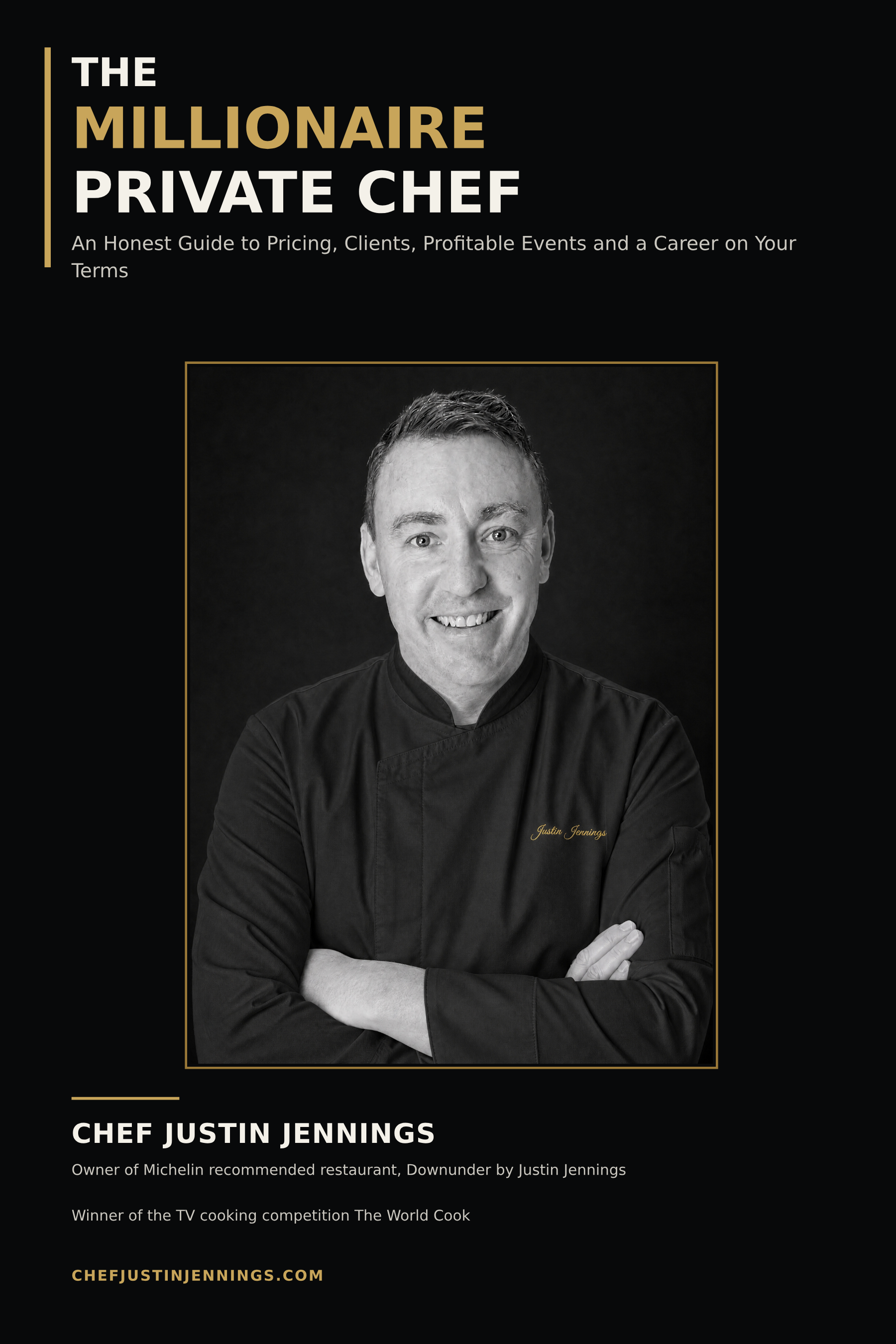
Weddings are the most lucrative events you'll cater as a private chef. They're also the most stressful, with the highest expectations, and zero room for error. Get it right and you'll earn €3,000-€5,000 for a weekend's work. Get it wrong and the internet will know about it by Monday morning.
I've done over 50 weddings in the past five years. From 20-person intimate gatherings in countryside villas to 80-guest celebrations in historic estates. Some went flawlessly. Some nearly broke me. All of them taught me something.
This guide covers everything I wish I knew before my first wedding: menu structure, dietary requirements, pricing, staffing, and the logistical nightmares no one warns you about. If you're thinking about adding weddings to your private chef services, or you've got your first one booked and you're terrified, this is for you.
Why Weddings Are Different (And Why They Pay More)
A private dinner party for 10 people and a wedding for 40 people are not the same thing with different headcounts. Here's why weddings command premium pricing:
- Emotional stakes are higher. It's not just dinner. It's "the most important day of their lives." Every detail matters. Every dietary requirement is a potential disaster. Every delayed course is a crisis.
- Planning is exponentially more complex. You're coordinating with wedding planners, venues, rental companies, florists, photographers. You're working around ceremony timings, speeches, first dances. Nothing runs on schedule.
- Dietary requirements multiply. A dinner party might have one vegan. A wedding will have three vegans, two gluten-free guests, one nut allergy, one shellfish allergy, and someone's grandmother who "doesn't eat anything green."
- Service expectations are restaurant-level. Courses need to arrive hot, plated beautifully, synchronized across 8+ tables. You need trained servers who know how to work a formal event.
- Setup and cleanup take 3x longer. You're often working in temporary kitchens, outdoor spaces, or historic venues with limited facilities. Pack-out at midnight after a 12-hour day.
This is why you charge €100-€150 per person instead of €75. It's not just food. It's theater, logistics, diplomacy, and crisis management wrapped in a bow.
Pro Tip:
Your first wedding should not be for a friend or family member. The emotional pressure will destroy you. Do your first 2-3 weddings for strangers who are paying full price. Then, once you've got systems in place, you can offer discounted rates to people you know.
The Ideal Wedding Menu Structure
After 50+ weddings, I've learned that simpler menus executed flawlessly beat complex menus executed poorly. Every time. Here's the structure that works:
Cocktail Hour (30-60 minutes)
What to serve: 4-6 canapé options, passed by servers. Mix of hot and cold, vegetarian and meat/seafood. One signature cocktail or welcome drink.
Why it works: Gives you time to finish plating while guests mingle. Keeps them fed and happy during the inevitable ceremony delays.
Example lineup:
- Smoked salmon blinis with crème fraîche and dill
- Beef tataki with ponzu and microgreens
- Brie and fig tartlets (vegetarian)
- Prawn tempura with sweet chili sauce
- Mushroom arancini (vegan-friendly)
- Watermelon and feta skewers with mint
Seated Dinner (3 Courses)
Course 1: Starter
One elegant option. Make it visually stunning. This sets the tone for the entire meal.
Examples:
- Seared scallops, pea purée, crispy pancetta, lemon oil
- Heirloom tomato and burrata salad, basil oil, aged balsamic
- Duck liver parfait, fig jam, toasted brioche
- Beetroot carpaccio, goat cheese mousse, candied walnuts (vegetarian)
Course 2: Main
Offer two protein options: one meat, one fish (or one vegetarian). Guests pre-select during RSVP. This avoids on-the-day chaos.
Examples:
- Option A: Slow-roasted lamb shoulder, rosemary jus, fondant potato, seasonal vegetables
- Option B: Pan-seared sea bass, saffron beurre blanc, crushed new potatoes, asparagus
Or for a vegetarian-forward wedding:
- Option A: Herb-crusted beef fillet, red wine reduction, truffle mash, broccolini
- Option B: Wild mushroom Wellington, port wine sauce, roasted root vegetables
Course 3: Dessert
One showstopper. Ideally something that can be pre-plated and held. Avoid anything that needs last-minute assembly.
Examples:
- Dark chocolate fondant, vanilla ice cream, raspberry coulis
- Lemon posset, shortbread crumble, fresh berries
- Panna cotta, passion fruit gel, almond tuile
- Tiramisu, espresso syrup, cocoa dust
Menu Design Rule:
Every course should have at least one component that can be prepped the day before. Sauces, purées, dessert bases, pastry elements. This keeps you sane on event day.
Handling Dietary Requirements (Without Losing Your Mind)
This is the part that stresses most chefs out. A 50-person wedding will have:
- 3-5 vegetarians
- 1-2 vegans
- 2-4 gluten-free guests
- 1-2 nut allergies
- 1 shellfish allergy
- At least one person who "doesn't eat [random ingredient]"
Here's my system that prevents disasters:
1. Collect Requirements Early
Include a dietary requirements field in the RSVP form. Get this information at least 2 weeks before the event. No last-minute surprises.
2. Design Flexible Menus
Build 1-2 vegetarian/vegan options into your standard menu. Don't make them an afterthought. Make them as beautiful and delicious as the meat/fish options.
Example: If your main course is sea bass and lamb, add a third option:
- Option C (Vegan): Cauliflower steak, romesco sauce, herbed quinoa, charred vegetables
Now your vegans, vegetarians, and "I'm trying to eat less meat" guests all have a real option. Not a sad plate of vegetables.
3. Create Substitution Sheets
For every dish, note the allergen-free swap:
- Gluten-free: Replace brioche with GF bread, use cornstarch instead of flour for thickening
- Dairy-free: Replace cream with oat cream, butter with olive oil
- Nut allergy: Replace almond tuile with seed cracker, skip walnut garnish
Print these sheets and give them to your sous chef. Label allergen-safe plates with a small flag or colored napkin underneath.
4. Communicate with Serving Staff
Before service, brief your servers on dietary requirements. Give them a table map with notes:
"Table 3, Seat 2: Vegan main. Table 7, Seat 5: Gluten-free dessert."
Servers should confirm with guests: "You ordered the vegan option, correct?" This catches mistakes before they become problems.
Safety First:
For severe allergies (anaphylaxis-level), prep and plate those dishes separately. Use dedicated cutting boards, knives, and pans. Label with the guest's name. One cross-contamination incident will end your wedding catering career.
Pricing Your Wedding Menu
This is where most chefs undercharge. They think about food cost and forget everything else. Here's the real formula:
Per-Person Rate Formula:
(Food Cost + Labor Cost + Overhead) ÷ 0.30 = Your Price
Example for 50 guests:
Food: €25/person (€1,250 total)
Labor: €35/person (€1,750 total: you + sous + 3 servers + dishwasher)
Overhead: €10/person (€500 total: transport, rentals, insurance, misc.)
Total Cost: €70/person
€70 ÷ 0.30 = €233/person (70% margin)
Market rate: €100-€150/person
Your price: €120/person = €6,000 total
Your profit: €2,500
But here's the thing: Most private chef weddings are 20-60 guests. At that scale, you're not making €2,500 profit because your labor costs don't scale down proportionally. Here's a more realistic breakdown:
Realistic Wedding Pricing (30 Guests)
- Menu rate: €120/person × 30 = €3,600
- Food cost: €750 (€25/person)
- Staffing: €800 (1 chef, 1 sous, 2 servers @ €150-200 each)
- Equipment rental: €300 (plates, glassware, chafing dishes if venue doesn't provide)
- Transport: €100 (van rental + fuel)
- Insurance/misc: €150
- Total costs: €2,100
- Your take-home: €1,500
That's for 12-14 hours of work (including prep the day before). €100-120/hour. Way better than restaurant work. But only if you charge properly.
What to Charge (2026 Market Rates)
- Budget wedding (simple menu, minimal service): €85-€95/person
- Mid-range wedding (3-course plated, cocktail hour): €100-€125/person
- High-end wedding (premium ingredients, elaborate presentation): €130-€150/person
- Luxury wedding (Wagyu beef, lobster, truffle, etc.): €160-€200/person
Additional fees to consider:
- Menu tasting: €150-€300 (often credited toward final invoice if they book)
- Travel surcharge: €50-€150 for venues 30+ minutes away
- Late-night service: +20% if event runs past midnight
- Equipment rental: Pass-through cost + 15% handling fee
- Extra dietary accommodations: €20-€30/person for complex restrictions
Payment Terms:
Always require a 50% deposit to secure the date. Remaining 50% due 7 days before the event. Never start cooking without full payment. Couples disappear after the wedding. Get your money first.
Staffing: Who You Need and What They Cost
You cannot run a wedding alone. Even a 20-person wedding requires at least one server. Here's the breakdown:
20-40 Guests
- Kitchen: 1 head chef (you), 1 sous chef or kitchen assistant
- Front of house: 2 servers (1 per 15-20 guests for plated service)
- Total team: 3 people + you
- Cost: €150-€200/person for 8-10 hours = €450-€800 total
40-60 Guests
- Kitchen: 1 head chef (you), 1 sous chef, 1 kitchen assistant/dishwasher
- Front of house: 3 servers
- Total team: 5 people + you
- Cost: €150-€200/person × 5 = €750-€1,000 total
60-80 Guests
- Kitchen: 2 chefs, 1 sous, 1 dishwasher
- Front of house: 4 servers
- Total team: 7 people + you
- Cost: €1,050-€1,400 total
Where to find reliable staff:
- Former restaurant colleagues
- Culinary school students (cheaper, but less experienced)
- Event staffing agencies (more expensive, but professional)
- Build a roster of 5-10 freelancers you trust and rotate them
Staff Management Tip:
Pay your team the same day. Cash if possible, bank transfer by the next morning at the latest. Good staff will prioritize your events over others if you pay promptly and treat them well. Bad payers get the B-team or last-minute cancellations.
Timeline: Week Before to Pack-Out
Wedding logistics are 60% of the job. Here's my battle-tested timeline:
7 Days Before
- Confirm final guest count with couple
- Receive final payment (remaining 50%)
- Confirm dietary requirements
- Finalize staffing roster
- Order specialty ingredients
- Confirm equipment rental delivery
2-3 Days Before
- Shop for non-perishables
- Prep sauces, dressings, marinades
- Bake dessert components (pastry, biscuits, etc.)
- Print service sheets for kitchen and FOH staff
- Confirm venue access times with coordinator
Day Before
- Shop for fresh produce, proteins, dairy
- Prep vegetables (wash, peel, cut, store)
- Marinate proteins
- Assemble desserts (if they hold overnight)
- Pack equipment: knives, tools, serving platters, first-aid kit
- Confirm staff arrival times
Event Day: Morning
- Arrive 4-5 hours before guest arrival
- Set up kitchen: organize stations, equipment, ingredients
- Brief staff: dietary requirements, service flow, emergency protocols
- Start canapé prep
- Coordinate with venue/wedding planner on timing
Event Day: Service
- Cocktail hour: Pass canapés, serve welcome drinks
- Guests seated: Final plating of starters
- Between courses: 15-20 minute gaps (coordinate with speeches, toasts)
- Stay flexible: Weddings never run on time
- Chef should taste every dish before it goes out
Pack-Out
- Start cleanup during dessert service
- Wash, dry, and pack all equipment
- Return venue kitchen to pristine condition (or they'll charge you)
- Load van, pay staff, debrief
- Expect to leave 1-2 hours after last guest
Common Wedding Disasters (And How to Avoid Them)
1. "The ceremony ran 90 minutes late"
Solution: Build buffer time into your schedule. If cocktail hour is supposed to start at 6pm, plan as if it's starting at 6:45pm. Pre-plate canapés that can sit for 30 minutes without degrading. Have backup snacks for guests who are getting hangry.
2. "The venue kitchen is smaller than they said"
Solution: Always do a site visit. Never trust floor plans. Check: oven capacity, fridge/freezer space, number of burners, counter space, power outlets. If the kitchen is inadequate, bring portable burners and coolers.
3. "A server dropped a tray of starters"
Solution: Always prep 10-15% extra food. Plates break. Dishes get dropped. Someone burns a pan of sauce. Buffer stock saves your sanity.
4. "Guest had an allergic reaction"
Solution: This is why you confirm dietary requirements, label plates, and brief servers. If someone does have a reaction, stay calm, call emergency services, and document everything. This is also why you have insurance.
5. "Couple wants to change the menu 3 days before"
Solution: Your contract should state: "Menu changes after 14 days before the event will incur a 25% surcharge." This discourages last-minute chaos and compensates you if they insist.
6. "It rained and the outdoor kitchen flooded"
Solution: Always have a wet-weather contingency plan for outdoor events. Tents, tarps, plastic sheeting. If the venue doesn't have backup indoor kitchen space, bring pop-up gazebos or refuse outdoor events during rainy season.
Crisis Management Rule:
When something goes wrong, tell the couple AFTER the event. Unless it's a health emergency, don't ruin their day with kitchen drama. Fix it quietly, serve the food, and debrief later. They hired you to handle problems, not create more stress.
Final Thoughts: Is Wedding Catering Worth It?
Weddings are exhausting. They're high-pressure, emotionally charged, logistically complex, and you'll question your life choices at 2am during pack-out. But they're also incredibly lucrative. A single wedding can earn you €1,500-€3,000 for a weekend's work. Do two weddings a month during peak season (May-October) and that's an extra €3,000-€6,000 per month on top of your regular private chef income.
More importantly, weddings build your reputation fast. One perfect wedding leads to three more. Couples talk. Their friends get engaged. Their parents recommend you to colleagues. Wedding clients become private dinner clients. It's the best marketing channel you have.
But only do weddings if you can handle the pressure. If you get flustered by timeline changes, stressed by picky clients, or overwhelmed by logistics, stick to dinner parties. There's no shame in knowing your limits. I know plenty of successful private chefs who refuse wedding work. They're less stressed and just as profitable.
For me? I love weddings. I love the challenge, the intensity, the satisfaction of pulling off a flawless event under impossible circumstances. And I love the money. My first wedding paid €2,800 for 35 guests. My most recent wedding paid €6,500 for 50 guests. That's more than most restaurant chefs make in a month. In one weekend.
If you can master wedding catering, you'll never struggle to fill your calendar again.
Ready to Build Your Private Chef Business?
An honest guide to pricing, finding clients, profitable events and building a career on your terms.
Buy on AmazonPaperback · 120 pages · Available on Amazon
Frequently Asked Questions
How much do private chefs charge for weddings?
Private chefs charge €85-€150 per person for intimate weddings (20-60 guests). Pricing depends on menu complexity, service style (plated vs buffet), dietary requirements, and location. Add 20-30% for staffing, rentals, and travel. Expect to earn €2,000-€5,000 per wedding event.
What is the best menu structure for a wedding?
The best wedding menu structure is a 3-course plated dinner: elegant starter, main course with two protein options, and a refined dessert. This balances wow-factor with kitchen logistics. Include a welcome drink and canapés during cocktail hour. Avoid overly complex menus that stress your kitchen team.
How do you handle dietary requirements at weddings?
Collect dietary requirements at least 2 weeks before the event. Design a flexible menu with 1-2 vegetarian/vegan options as standard. Create substitution sheets for common restrictions (gluten-free, dairy-free, nut allergies). Prep and label allergen-safe dishes separately. Communicate restrictions clearly to serving staff.
How many staff do you need for a wedding?
For 20-40 guests: 1 chef + 2 servers. For 40-60 guests: 1 chef + 1 sous + 3 servers. For 60-80 guests: 2 chefs + 4 servers. Ratio: 1 server per 15-20 guests for plated service, 1 per 25-30 for buffet. Always have a dedicated dishwasher for events over 40 guests.
What are the most popular wedding menu themes?
Top wedding menu themes in 2026: 1) Mediterranean/Coastal (seafood, grilled meats, fresh vegetables), 2) Farm-to-table (seasonal, local, rustic), 3) Fusion (modern twists on classics), 4) Family-style (shared platters, communal feel), 5) Interactive (live stations, chef's table). Couples want personalization, not cookie-cutter menus.
How far in advance should you plan a wedding menu?
Finalize the wedding menu 4-6 weeks before the event. Initial consultation and proposal: 2-3 months out. Menu tasting (if offered): 6-8 weeks out. Final guest count and dietary requirements: 2 weeks out. Ingredient sourcing and prep schedule: 1 week out. Day-before prep: vegetables, sauces, desserts.
What should you avoid when planning a wedding menu?
Avoid: 1) Overly complex dishes that require last-minute plating, 2) Ingredients that don't hold well (delicate fish, wilting greens), 3) Messy foods for outdoor weddings, 4) Strong polarizing flavors (blue cheese, liver, anchovies), 5) Underpricing - weddings require more planning, stress, and coordination than regular private dinners.
Do you need insurance to cater weddings as a private chef?
Yes. You need general liability insurance (minimum €1-2 million coverage) and product liability insurance. Venues often require proof of insurance before allowing external caterers. Budget €400-€800/year for proper coverage. Never skip insurance for weddings - one food safety incident can bankrupt your business.
How do you price a wedding menu as a private chef?
Formula: (Food cost + labor + overhead) ÷ 0.3 = price per person. Example: €25 food + €35 labor + €10 overhead = €70 cost ÷ 0.3 = €233/person with 70% margin. Then adjust for market (€85-€150 typical range). Include staffing, rentals, travel as line items or bundle into per-person rate. Always require a 50% deposit.
Related Articles
Private Chef for Weddings: Complete Guide 2026
How to land wedding clients and position yourself as a premium wedding caterer.
Private Chef Pricing Guide: What to Charge (With Real Examples)
Detailed pricing strategies and real-world examples for every event type.
Private Chef Contracts: What to Include + Free Template
Protect yourself legally with proper contracts and payment terms.
Handling Difficult Private Chef Clients: A Survival Guide
How to manage demanding clients, last-minute changes, and unrealistic expectations.