Career Comparison
Private Chef vs Restaurant Chef: Income, Lifestyle & Career Comparison 2026
1 August 2026 · 18 min read
I spent 15 years in restaurant kitchens before switching to private chef work in 2021. My income doubled, my work hours halved, and my quality of life transformed. If you're considering the switch, my book walks you through every step of building a private chef business from scratch.
Read My Story & Get the Roadmap →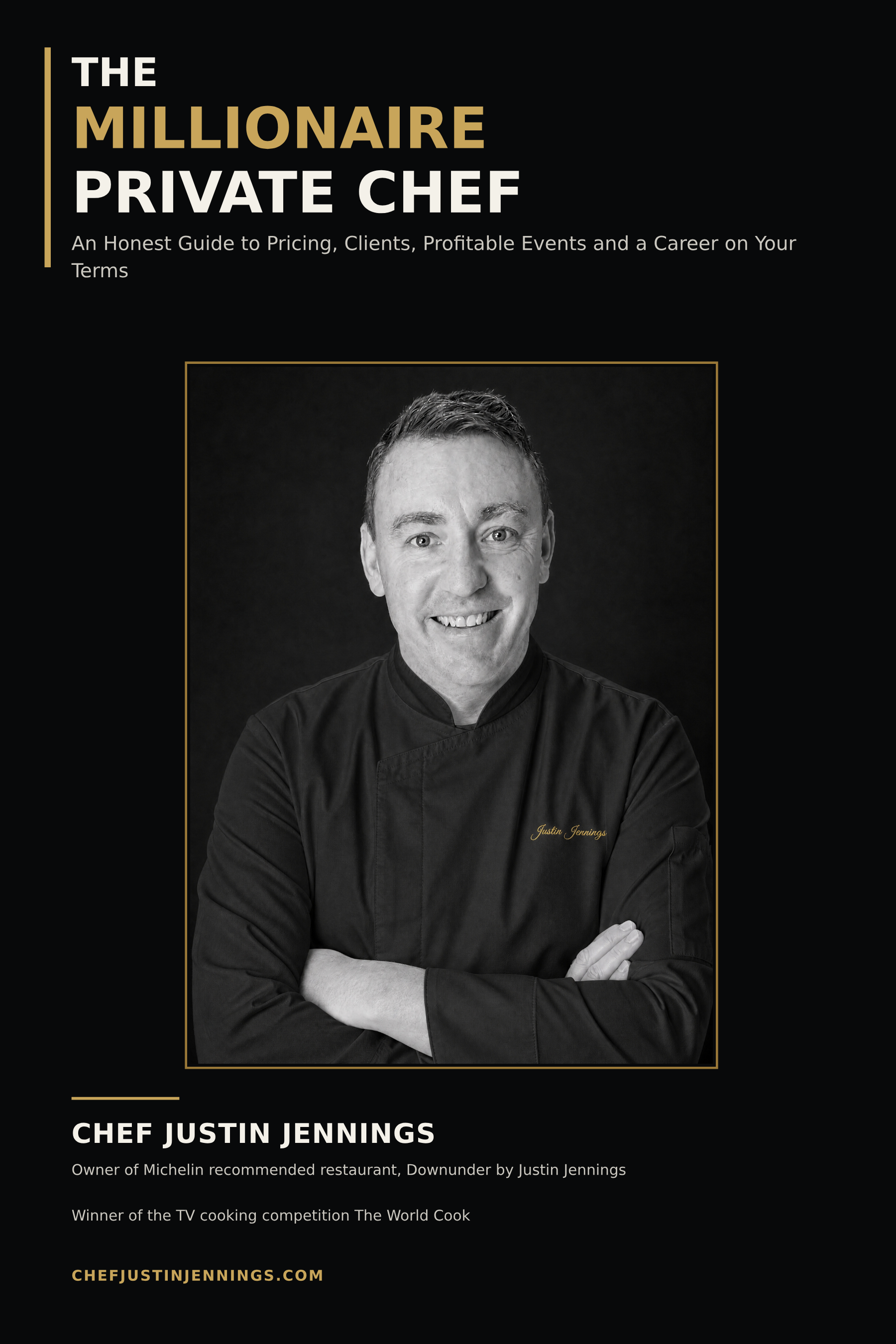
I still remember the exact moment I realized I had to leave restaurant kitchens. It was 11:47 PM on a Saturday in September 2020. I'd worked 14 hours straight, my feet were screaming, and I was cleaning down the line while the front-of-house staff counted their tips tips I'd never see despite doing the work that earned them.
I was 38 years old. My knees hurt. I'd missed my niece's birthday party. Again. And I was earning €3,200 a month before tax as a sous chef in a busy Lisbon restaurant. I was good at my job. I just hated my life.
Fast forward to today: I'm a private chef earning €8,000-€12,000 per month, working 30-35 hours per week, taking Sundays off, and choosing which clients I work with. Same skills. Same city. Completely different reality.
This isn't a get-rich-quick story. It's a honest comparison between two ways of being a professional chef one that destroys your body and bank account, and one that gives you freedom and financial security. Here's everything I wish someone had told me 20 years ago.
Income: The Numbers Don't Lie
Let's start with the thing that matters most when you're struggling to pay rent: money.
Restaurant Chef Income Reality
Here's what restaurant chefs actually earn in 2026 (Western Europe/North America):
| Position | Monthly Salary | Hours/Week | Hourly Rate |
|---|---|---|---|
| Commis/Line Cook | €1,800-€2,400 | 55-70 | €7-€9 |
| Chef de Partie | €2,200-€2,800 | 55-70 | €8-€11 |
| Sous Chef | €2,800-€4,000 | 60-80 | €11-€16 |
| Head Chef (Non-Owner) | €3,500-€5,500 | 65-85 | €13-€20 |
Notice the hourly rate? Most restaurant chefs earn less per hour than a barista at Starbucks once you factor in unpaid overtime, split shifts, and "working through" breaks.
When I was a sous chef in Lisbon, my salary looked decent on paper: €3,200/month. But I worked 65-70 hours per week. That's €11.50 per hour. I had a culinary degree and 12 years of experience.
Private Chef Income Reality
Private chef income is more variable but significantly higher per hour worked:
| Experience Level | Per-Person Rate | Events/Month | Monthly Income |
|---|---|---|---|
| First Year | €70-€85 | 6-10 | €3,400-€6,800 |
| Year 2-3 | €85-€105 | 10-15 | €6,800-€12,600 |
| Established (4+ years) | €105-€150 | 12-20 | €10,000-€24,000 |
| High-End/Celebrity | €150-€300+ | 8-15 | €12,000-€36,000+ |
Key calculation: A private chef charging €85/person for an 8-guest dinner earns €680 per event. If that event takes 5 hours total (1 hour shopping, 2.5 hours cooking/plating, 1.5 hours cleanup), that's €136 per hour worked.
Even factoring in 10 hours per week for admin, marketing, and unpaid work, a private chef doing 10 events per month earns €6,800 for roughly 90 hours of work. That's €75/hour 5-6X what most restaurant chefs earn.
My Personal Income Shift
Restaurant (2020): €3,200/month, 280 hours/month = €11.40/hour
Private Chef Year 1 (2021): €5,800/month, 160 hours/month = €36.25/hour
Private Chef Year 3 (2023): €9,500/month, 140 hours/month = €67.85/hour
Same cooking skills. Different business model. 6X hourly rate increase.
Want to Make This Career Transition?
My book includes detailed pricing strategies, client acquisition systems, and step-by-step guidance to build a profitable private chef business even if you're starting with zero clients. I went from €3,200/month in restaurants to €9,500/month as a private chef in under 3 years. Here's exactly how I did it.
Buy on AmazonWork-Life Balance: The Real Cost of Restaurant Life
Money matters, but so does having a life outside of work. Here's what the day-to-day reality actually looks like.
🍴 Typical Restaurant Chef Week
- Hours: 60-80 hours/week, split shifts (10 AM-3 PM, 5 PM-midnight)
- Days Off: 1-2 per week, rarely consecutive, never weekends
- Schedule Control: Zero you work when the restaurant is open
- Holidays: Work every major holiday (Christmas, New Year's, Easter, Mother's Day)
- Physical Toll: Standing 10-14 hours/day, extreme heat, repetitive strain
- Mental Health: High stress, rigid hierarchy, shouting culture, substance abuse common
- Social Life: Nearly impossible you work when everyone else is off
- Vacation: 2-3 weeks/year (unpaid in many places), hard to take during peak seasons
🏡 Typical Private Chef Week
- Hours: 25-45 hours/week (you choose), flexible schedule
- Days Off: As many as you want block out time for yourself
- Schedule Control: Total accept/decline events based on your calendar
- Holidays: Work if you want (premium rates), decline if you don't
- Physical Toll: Moderate still on your feet, but 4-6 hour events vs. 12-hour shifts
- Mental Health: Different stress (client management, business admin) but no toxic hierarchy
- Social Life: Possible you can block weekends, take spontaneous days off
- Vacation: Unlimited (unpaid) close bookings for 2-4 weeks whenever you want
The difference is night and day. I spent 15 years missing birthdays, weddings, and family holidays because I had to work. Now I block out important dates months in advance and tell clients "I'm unavailable." That freedom alone is worth more than the pay increase.
Daily Reality: What Your Actual Days Look Like
Theory is one thing. Let me show you what a real work week looks like in both roles.
Restaurant Chef: Typical Week (Sous Chef, Busy Restaurant)
Monday (Day Off #1)
- Sleep until 10 AM (exhausted from weekend)
- Errands, laundry, groceries
- Chef calls at 4 PM: "Line cook called in sick tomorrow, can you come in early?"
- So much for your day off
Tuesday-Saturday (Work Days)
- 9:30 AM: Arrive, coffee, check deliveries
- 10:00 AM: Prep work (stocks, sauces, butchery)
- 11:30 AM: Lunch service (12-2:30 PM)
- 3:00 PM: Break (eat, sit down for 30 minutes if lucky)
- 4:00 PM: Dinner prep, train commis, deal with drama
- 5:30 PM: Dinner service (6-11 PM)
- 11:15 PM: Breakdown, clean, inventory, prep tomorrow's orders
- 12:30 AM: Leave, home by 1 AM, shower, collapse
- Total: 14-15 hours at the restaurant
Sunday (Day Off #2)
- Sleep, recover, dread Monday... wait, you're working Monday
Weekly hours: 70-75 | Social life: None | Family time: Minimal | Exercise: Ha.
Private Chef: Typical Week (Established, 3 Events/Week)
Monday (Admin Day)
- 9:00 AM: Coffee, check emails, respond to inquiries
- 10:00 AM: Update website, post on Instagram
- 11:00 AM: Send invoices, follow up on leads
- 12:30 PM: Lunch, gym, errands
- 3:00 PM: Menu planning for Wednesday event
- 5:00 PM: Done for the day
- Total: 5 hours work
Tuesday (Day Off)
- Actual day off. Go to the beach. See a friend. Read a book.
Wednesday (Event Day)
- 10:00 AM: Shopping at market (ingredients for tonight's event)
- 12:00 PM: Prep work at home (stocks, mise en place)
- 4:00 PM: Travel to client's home (30 min drive)
- 4:30 PM: Set up, final prep
- 6:30 PM: Cook and serve 4-course dinner for 8 guests
- 9:30 PM: Cleanup, chat with client, pack up
- 10:30 PM: Home, shower, wind down
- Total: 8 hours work (€680 for this event)
Thursday (Marketing + Prep)
- Morning: Post yesterday's event photos, respond to inquiries
- Afternoon: Menu planning for Saturday event, shopping
- Total: 4 hours
Friday (Day Off)
- Another actual day off. Because you can.
Saturday (Event Day)
- Similar to Wednesday: shopping, prep, travel, cook, cleanup
- Total: 8 hours work (€850 for this event)
Sunday (Family Day)
- Off. Every single Sunday. Because that's your rule.
Weekly hours: 25-30 | Income: €1,530 (3 events) | Social life: Possible | Family time: Abundant | Exercise: Regular
Same professional cooking. Completely different life. The private chef week isn't easier you're running a business, managing clients, handling logistics. But it's sustainable. You have time to breathe. You can go to your kid's school play. You can book a weekend trip without requesting permission.
Career Growth & Long-Term Sustainability
Let's talk about what happens after 5, 10, 15 years in each path.
Restaurant Chef Career Trajectory
👨🍳 Years 1-5: Climb the ladder
Commis → Chef de Partie → Sous Chef. Learn fast, work hard, prove yourself. This is where you build foundational skills.
👨🍳 Years 6-15: Peak earning years
Sous Chef → Head Chef → Executive Chef (if you're lucky). Income plateaus around €4,000-€6,000/month unless you're in a high-end restaurant or become a celebrity chef. Physical toll accumulates: bad knees, back problems, sleep issues.
👨🍳 Years 16+: The reality check
Most chefs burn out by their 40s. Options: (1) Keep grinding (body breaks down), (2) Open your own restaurant (80% fail within 5 years, massive financial risk), (3) Leave the industry entirely (common), or (4) Transition to private chef, catering, consulting, or teaching.
The harsh truth: restaurant kitchens are designed for young chefs. By 45-50, most chefs can't physically handle 70-hour weeks anymore. That's when panic sets in you've given decades to an industry, and you're not sure how to do anything else.
Private Chef Career Trajectory
👨🍳 Years 1-2: Build foundation
Land first 50 clients, dial in systems, learn business basics. Income: €3,000-€6,000/month. It's a grind at first lots of marketing, some financial uncertainty but you're building an asset.
👨🍳 Years 3-5: Scale & optimize
Referrals kick in, raise prices, work less and earn more. Income: €6,000-€12,000/month. You're established. Clients book you months in advance. You turn down work you don't want.
👨🍳 Years 6+: Peak earning & lifestyle
You're in total control. Charge premium rates (€120-€200+/person), work 20-30 hours/week, take 6-8 weeks vacation per year. Some private chefs at this stage add revenue streams: cookbooks, cooking classes, consulting, meal kits. Income potential: €10,000-€30,000+/month.
The best part? Private chef work is sustainable into your 50s, 60s, even 70s. You control your workload. There's no forced retirement. I know private chefs in their 60s still working 2-3 events per week, earning €5,000-€8,000/month, and loving it.
Skills That Transfer (And Ones That Don't)
If you're a restaurant chef considering the switch, here's what translates and what you'll need to learn.
✅ Skills That Transfer Seamlessly
- Cooking technique obviously. If you can cook restaurant-quality food, you're 80% there.
- Time management restaurant mise en place = private chef prep. Same discipline.
- Adapting on the fly client changes the menu day-of? You've handled worse.
- Working clean private chefs who leave messy kitchens don't get rebooked.
- Plating & presentation if anything, clients appreciate this more than diners in restaurants.
- Menu planning costing, seasonality, flavor balance all the same.
❌ Skills You'll Need to Learn
- Client communication you're no longer the invisible kitchen guy. You're the face of the business. Learn to talk to people, read social cues, manage expectations.
- Marketing & sales no one is going to book you automatically. You need a website, social media presence, outreach systems, referral strategies.
- Business admin invoicing, taxes, insurance, contracts. It's boring but essential.
- Adaptability to home kitchens you won't have your restaurant setup. You'll cook on residential ranges, limited counter space, unfamiliar layouts. Bring your own knives and critical tools.
- Solo problem-solving no team to bail you out. If something goes wrong, you fix it yourself. Alone.
- Self-discipline no boss, no schedule. You have to manage your own time, motivation, and follow-through.
Most restaurant chefs overestimate how hard the cooking part is (it's not if you can handle restaurant service, you can handle private events) and underestimate how hard the business part is. The cooking is easy. The marketing, client management, and self-employment admin that's the learning curve.
Ready to Make the Switch?
I wrote an entire book walking restaurant chefs through the transition to private chef work. It covers everything: business setup, pricing strategies, client acquisition, marketing systems, and how to replace your restaurant income within 4-6 months. If I can do it at 38 with zero business experience, you can too.
Buy on AmazonThe Honest Downsides of Private Chef Work
I'm not going to lie and say private chef work is perfect. There are trade-offs. Here's what you give up:
- Team camaraderie you work alone. No kitchen banter, no "we survived another Saturday" bonding. Some chefs miss this deeply.
- Prestige of a known restaurant working at a MICHELIN-starred restaurant has social status. Private chefs work behind the scenes. Clients know you, but the public doesn't.
- Steady paycheck restaurant income is predictable (low, but predictable). Private chef income fluctuates. January is slow. December is insane. You need cash reserves and financial discipline.
- Creative collaboration in restaurants, you bounce ideas off other chefs, get feedback, innovate together. As a private chef, you're the sole decision-maker. That's freedom, but also isolation.
- No "off the clock" you're always the business owner. Emails don't stop. Clients text at 9 PM. There's no clocking out and forgetting about work.
- Client management stress some clients are amazing. Some are demanding, indecisive, or treat you like hired help (not a respected chef). You'll need thick skin.
For me, these trade-offs are 100% worth it. I'd rather deal with occasional difficult clients than a toxic head chef. I'd rather have income variability than work 80-hour weeks. But these downsides are real, and you should go in with eyes open.
Frequently Asked Questions
Do private chefs make more money than restaurant chefs?
Yes, most private chefs earn significantly more per hour worked. A mid-level restaurant chef earns €2,500-€3,500/month (€12-€18/hour for 60-80 hour weeks). An established private chef charging €85/person for 8-guest dinners earns €680 per event, working 4-5 hours including prep and cleanup (€136-€170/hour). Even factoring in marketing time and gaps between bookings, private chefs typically earn 2-3X more per hour. Annual income potential for private chefs ranges from €40,000-€120,000+ depending on location and clientele, compared to €30,000-€60,000 for restaurant chefs.
Is being a private chef less stressful than working in restaurants?
Private chef work is different stress, not necessarily less. Restaurants have intense heat, long hours, rigid hierarchies, and repetitive service. Private chefs face client management stress, income uncertainty, solo responsibility, and the pressure of cooking in unfamiliar kitchens. However, private chefs control their schedule, work 30-40 hours/week instead of 60-80, choose their clients, and avoid toxic kitchen culture. Most chefs who switch report significantly better mental health and work-life balance despite the different pressures.
What's the work-life balance like for private chefs vs restaurant chefs?
Private chefs have dramatically better work-life balance. Restaurant chefs work 60-80 hours/week, miss weekends, holidays, and family events, and have unpredictable schedules. Private chefs typically work 20-40 hours/week, choose which events to accept, can block out personal time, and work primarily evenings and weekends by choice. Private chefs take vacations without requesting permission, attend their kids' events, and have time for hobbies. The trade-off is income variability and self-employment admin, but most chefs consider it a massive quality-of-life upgrade.
Do I need restaurant experience to become a private chef?
Restaurant experience helps but isn't required. The skills that matter for private chefs are: cooking technique, menu planning, time management, food safety, and client communication. Many successful private chefs come from catering, personal chef roles, culinary school, or even home cooking backgrounds. Restaurant experience teaches you to work fast under pressure and plate beautifully, which translates well. But private chef work requires different skills: adapting to unfamiliar kitchens, managing client expectations, working solo, and running a business. You can learn these without restaurant experience.
Can you go back to restaurant work after being a private chef?
Yes, but most chefs don't want to. Skills stay sharp cooking is cooking and restaurant hiring managers value private chef experience (shows entrepreneurship, client management, adaptability). However, after experiencing the freedom, income potential, and lifestyle of private chef work, returning to 80-hour weeks, fixed schedules, and lower hourly pay feels like a downgrade. Some chefs do both: work part-time in restaurants for steady income while building private chef clientele. But once private chef income hits €4,000-€5,000/month, most never look back.
What's harder: running a restaurant kitchen or being a private chef?
They're hard in different ways. Restaurant kitchens are physically harder: longer hours, hotter environment, more repetitive work, managing large teams, handling high volume. Private chef work is mentally harder: you're the business owner, marketer, accountant, and sole cook. Every client interaction, booking, invoice, and decision is on you. There's no team to lean on, no executive chef to make menu decisions, and no steady paycheck. However, private chef work offers better pay per hour, more control, and less physical wear. Most chefs find the mental challenge of entrepreneurship easier than the physical grind of restaurant life.
How long does it take to replace your restaurant income as a private chef?
Most chefs replace their restaurant income within 4-6 months if they market aggressively. If you're earning €3,000/month in a restaurant and charging €85/person for 8-guest dinners (€680 per event), you need 5 events per month to match restaurant income. In months 1-2, expect 2-4 events as you build clientele. Months 3-4: 5-8 events as referrals kick in. By month 6, you should be at 8-12 events/month (€5,500-€8,000), surpassing restaurant income. The key is treating client acquisition like a full-time job in your first 90 days. Part-time hustling extends this timeline to 8-12 months.
What do private chefs miss about restaurant work?
Private chefs most commonly miss: the camaraderie of working with a team (private chef work is solo), the adrenaline rush of busy service (private events are calmer), the creative input from other chefs (you make all decisions alone), the structure of showing up and being told what to cook (entrepreneurship requires self-direction), and the prestige of working in a known restaurant (private chef work is behind-the-scenes). Some chefs also miss the stability of a paycheck and not having to do marketing/admin. But most agree these are minor losses compared to the lifestyle and income gains.
Is private chef work sustainable long-term?
Yes, private chef work is highly sustainable long-term. Unlike restaurant work (which leads to burnout, physical injuries, and career exits by age 40-50), private chef work is physically easier, mentally healthier, and financially stronger. Established private chefs build loyal client bases that book them monthly or quarterly, creating predictable income. Many private chefs work into their 60s and beyond because they control their workload and avoid the physical punishment of restaurant kitchens. The business model is proven: private dining demand is growing, especially in cities with affluent populations, and private chefs can scale income without scaling hours (raise prices, not volume).
Should I quit my restaurant job to become a private chef?
Don't quit immediately build your private chef business on the side first. Work your restaurant job part-time (if possible) or use your days off to book private events. Aim for 3-5 private chef bookings/month before quitting. This proves the model works, builds cash flow, and reduces risk. Once private chef income consistently hits 80-100% of your restaurant salary for 2-3 months in a row, quit. The exception: if you're burned out, underpaid, or in a toxic kitchen, quit sooner your mental health matters. Most chefs successfully transition by building private chef income to €2,500-€3,000/month before leaving restaurant work entirely.
Final Thoughts: Which Path Is Right for You?
I'm not going to tell you that private chef work is objectively better. It's better for me. It might be better for you. Or maybe you thrive in the chaos of restaurant kitchens, love the team environment, and don't mind the hours.
Here's how to know if you should consider switching:
You Might Be Ready for Private Chef Work If:
- You're burned out, exhausted, or resenting your restaurant job
- You're hitting your late 30s/early 40s and your body is breaking down
- You have good cooking fundamentals but feel underpaid and undervalued
- You're willing to learn marketing, sales, and business skills
- You want control over your schedule, income, and lifestyle
- You're comfortable working alone and being your own boss
- You have 3-6 months of savings to cushion the transition
If that sounds like you, this might be the move that changes your life. It changed mine.
I went from hating Mondays to looking forward to my week. I went from dreading my 40th birthday (how much longer can I do this?) to feeling excited about the next 20 years. I went from €3,200/month and chronic exhaustion to €9,500/month and weekends off.
It wasn't easy. The first 6 months were scary. There were slow weeks where I panicked about money. There were difficult clients who made me question everything. But I pushed through, learned the business side, dialed in my systems, and built something sustainable.
And if I can do it someone who spent 15 years thinking restaurants were the only option you can too.
Start Your Transition Today
My book The Millionaire Private Chef is the complete roadmap for restaurant chefs who want out. Step-by-step guidance, real income numbers, client acquisition systems, pricing strategies, and everything I wish I'd known when I started. Available through Amazon. Check the listing for current format details.
Buy on AmazonRelated Reading
How to Start a Private Chef Business in 2026
Complete startup guide: certification, insurance, pricing, and finding your first clients.
How I Went From Restaurant Chef to €1,000/Night Private Chef
My personal journey, income timeline, and biggest lessons from the transition.
Private Chef Salary 2026: How Much Can You Really Make?
Real income breakdowns by experience level, city, and clientele.
Restaurant Chef Burnout: The Reality No One Talks About
The hidden physical, mental, and financial costs of restaurant work.