Getting Started
Do You Need Certification to Be a Private Chef? The Truth
3 June 2026 · 8 min read
Get the complete private chef startup checklist every credential, registration, and requirement mapped out step by step.
Buy on Amazon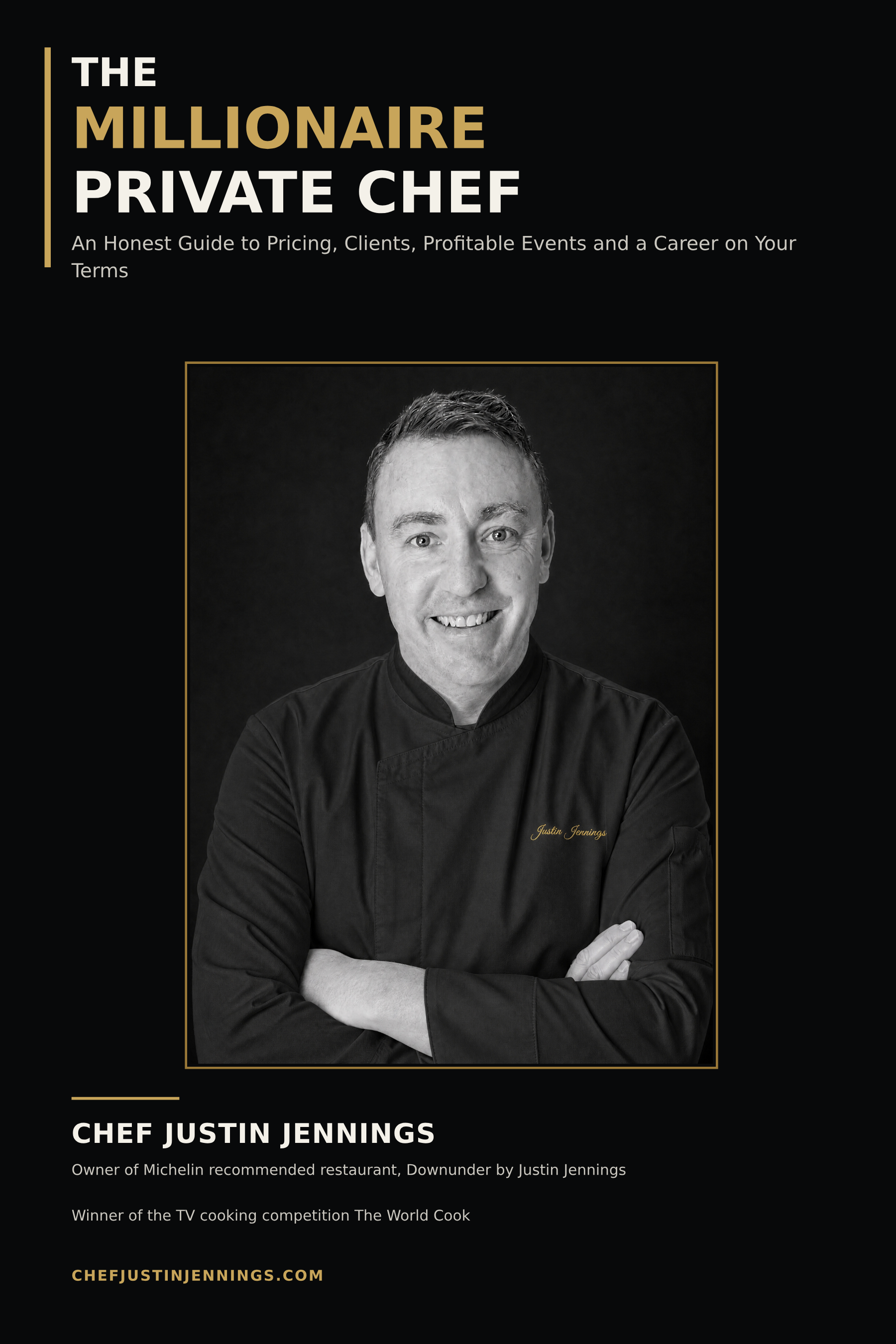
This is the question I get asked more than any other: "Do I need certification to be a private chef?"
Short answer: No. Not in the way you think.
Long answer: You need certain things. Certification the fancy diploma kind usually isn't one of them. But there are non-negotiable credentials that will protect your business and your clients. Let me break down exactly what matters and what doesn't.
What "Certification" Actually Means
People use "certification" loosely. They might mean culinary school, a food safety course, a professional credential from the ACF, or a Le Cordon Bleu diploma. These are wildly different things with wildly different costs and value.
Culinary school (Le Cordon Bleu, CIA, Johnson & Wales): 6 months to 4 years, €10,000-€50,000+. Teaches technique, theory, kitchen management. Useful but absolutely not required.
Professional certification (ACF Certified Chef, City & Guilds): Requires experience + exams. Costs €200-€1,000. Validates existing skill. Nice to have for certain markets.
Food safety certification (ServSafe, Level 2 Food Hygiene, HACCP): 1-2 day course, €50-€200. Often legally required. This one you actually need.
Most aspiring private chefs conflate all three. They think they need to drop €30,000 on Le Cordon Bleu before they can cook in someone's home. That's nonsense.
What Clients Actually Care About
I've cooked for hundreds of clients across Portugal, the UK, and beyond. Want to know how many asked to see my culinary school diploma?
Zero.
Not one. Ever.
Here's what they actually ask about:
"Can I see your menu?" They want to know what you'll cook. A well-crafted sample menu sells better than any certificate.
"Do you have reviews?" Social proof. Testimonials from real clients. Five-star Google ratings. This is your real credential.
"Have you done events like mine before?" Experience and relevance. They want to know you've handled their specific situation (dietary restrictions, large groups, intimate dinners).
"What's your background?" They want a story, not a CV. "I worked in MICHELIN-starred kitchens in Hong Kong and Europe before going private" lands harder than "I have a Level 3 NVQ in Professional Cookery."
Clients hire people, not paperwork. Your personality during the consultation call, the quality of your Instagram feed, and a glowing review from their friend's dinner party that's what closes the deal.
Skip the guesswork on credentials
The book includes my complete startup checklist every legal requirement, insurance option, and registration you need, mapped by country.
What You Actually Need (Non-Negotiable)
Forget the diploma. Here's what you genuinely need before taking your first paying client:
1. Food Safety Certification
This is the one credential that's both legally required in most places and genuinely important. You're handling food commercially. You need to understand safe temperatures, cross-contamination, allergen management, and storage protocols.
- US: ServSafe Food Handler or Manager certification
- UK: Level 2 Food Safety and Hygiene
- EU: Varies by country Portugal requires HACCP training
- Australia: Food Safety Supervisor certificate
Cost: €50-€200. Time: 1-2 days. No excuses get this done before your first event.
2. Liability Insurance
Not technically a "certification," but equally non-negotiable. If a client gets sick, has an allergic reaction, or you damage their €5,000 marble countertop, insurance saves your business and your personal finances.
General liability insurance for a private chef runs €500-€1,500/year depending on coverage level and location. Some policies also cover equipment and professional indemnity.
Many agencies, villa managers, and corporate clients won't even consider you without proof of insurance. It's a business cost, not an optional extra.
3. Business Registration
You need to operate legally. That means registering as a sole trader or limited company, getting a tax number, and understanding your obligations for invoicing, VAT (if applicable), and income tax.
In Portugal, I registered as a sole trader (trabalhador independente) took half a day and cost nothing. In the UK, you'd register with HMRC. In the US, you'd get an EIN and potentially a business license from your city or county.
4. Allergen Knowledge
This isn't a certificate you hang on the wall. It's knowledge you carry in your head. You need to know the 14 major allergens, how to communicate with clients about dietary requirements, and how to prevent cross-contamination in unfamiliar kitchens.
Food allergy mistakes can kill people. This is serious. If you don't feel confident, take a dedicated allergen management course (usually bundled with food safety training).
When Certification Actually Helps
I won't pretend credentials are always worthless. In specific markets, they open doors:
Corporate clients: Companies hiring a private chef for executive dinners or team events often go through procurement. Procurement teams love paperwork. Having ACF certification or equivalent can get you past the gatekeepers.
Luxury staffing agencies: Agencies placing private chefs with ultra-high-net-worth families (think billionaires, royal families) often require formal culinary training plus years of experience. This is a niche market, but a lucrative one.
Yacht and superyacht work: Maritime employers typically want certified chefs. You'll need STCW (Standards of Training, Certification, and Watchkeeping) plus food safety, and often a formal culinary qualification.
International relocation: If you're moving countries to work as a private chef, visa applications sometimes require proof of professional qualification. A culinary diploma can smooth the immigration process.
For everyone else the chef launching a local private dining business, cooking for families and dinner parties formal certification beyond food safety is a nice-to-have, not a need-to-have.
My Credentials (And What Actually Built My Business)
I'll be transparent. I have food safety certification and over a decade of professional kitchen experience across MICHELIN-recognised restaurants. I competed on Amazon Prime's The World Cook. I've cooked in Australia, Hong Kong, London, and now Lisbon.
None of those credentials are printed on a Le Cordon Bleu diploma.
What actually built my private chef business:
- Word of mouth from happy clients (free, powerful, slow to start)
- A solid Instagram presence showing real food from real events
- Google reviews every five-star review was worth more than any diploma
- Partnerships with villa managers, hotel concierges, and event planners
- Being reliable, professional, and easy to work with (underrated)
If I had to choose between a €30,000 culinary school investment and spending that same €30,000 on 12 months of living expenses while building my client base from scratch I'd choose the latter every single time.
The Real Credential: Consistent Execution
Here's what separates private chefs who succeed from those who don't. It's not a certificate. It's not a diploma. It's the ability to show up at a stranger's kitchen, cook a flawless five-course dinner for ten people with unfamiliar equipment, accommodate three different dietary requirements, clean up perfectly, and leave the client so happy they tell everyone they know.
That ability comes from practice. From doing events. From making mistakes and learning fast. From caring deeply about the details the seasoning, the timing, the presentation, the conversation.
No certificate teaches that. Experience does.
So if you're sitting at home googling "best private chef certification" instead of booking your first event stop. Get your food safety cert, get insured, register your business, and go cook for someone. Your first ten events will teach you more than any classroom.
Your Certification Checklist
Here's exactly what to do, in order:
- Week 1: Complete food safety certification (ServSafe, Level 2, or local equivalent)
- Week 2: Register your business and get a tax number
- Week 3: Get general liability insurance
- Week 4: Build a basic portfolio (cook 2-3 dinners for friends/family, photograph everything)
- Month 2: Book your first paid event
- Month 6+: Consider additional certifications only if your target market requires them
Total cost for the essentials: €600-€1,500. Total time: 2-4 weeks. That's it. Everything else is optional.
Frequently Asked Questions
What is the best certification for a private chef?
A food safety certificate (ServSafe, Level 2 Food Hygiene, or HACCP) is the most useful and often legally required. Beyond that, ACF or City & Guilds credentials can help with corporate and high-net-worth clients, but most private clients care more about your portfolio and reviews than formal certifications.
Is culinary school required to become a private chef?
No. Many successful private chefs are self-taught or learned through restaurant experience. Culinary school can accelerate your technique and provide networking, but it's a shortcut not a requirement. Your cooking ability, professionalism, and business sense matter more.
Do I need a food handler's license?
In most jurisdictions, yes. A basic food handler's permit or food safety certificate is legally required when preparing food commercially. It's typically a 1-2 day course costing €50-€200. This is the one certification you absolutely should not skip.
Do I need liability insurance as a private chef?
Yes. Liability insurance protects you if a client has an allergic reaction, gets food poisoning, or if you damage their property. Most professional private chefs carry general liability insurance (€500-€1,500/year). Many agencies and corporate clients require proof of insurance before booking.
Do clients ask to see certifications?
Most private clients never ask. They care about your food, your reviews, and your personality. However, corporate clients, luxury villa management companies, and yacht agencies almost always request food safety certification and proof of insurance.
Is Le Cordon Bleu worth it for a private chef career?
It depends on your budget and goals. At €20,000-€50,000 and 9-15 months, the ROI is questionable if your goal is private chef work. That money and time could instead fund your first year building a real client base. The brand recognition helps with high-end clients, but it's not a prerequisite for success.
Can you be a private chef without restaurant experience?
Yes, but it's harder. Restaurant experience teaches speed, organisation, pressure management, and volume cooking all directly transferable skills. Without it, you'll need to develop those skills independently through practice, catering small events, and building up gradually.
What legal requirements do private chefs need to meet?
At minimum: food safety certification, business registration (sole trader or company), tax registration, and liability insurance. Some locations require additional permits for commercial food preparation. Check your local regulations requirements vary significantly by country and even by city.
Related Articles
How to Start a Private Chef Business in 2026 (Complete Guide)
Step-by-step startup guide with real costs and case studies
Private Chef Pricing Guide: What to Charge in 2026
Real pricing tiers, hidden costs, and scripts for pricing conversations
Your First Year as a Private Chef: What to Really Expect
The honest truth about income, challenges, and survival
Ready to Start Your Private Chef Business?
My book covers the complete roadmap: every credential you need, finding your first clients, pricing your services, building systems, and avoiding the mistakes that sink most new private chefs. Stop researching. Start doing.
Buy on Amazon