Client Acquisition
5 Client Acquisition Mistakes That Cost Private Chefs €10,000+ per Year
5 August 2026 · 11 min read
Want the complete client acquisition system? My book includes follow-up templates, email scripts, and the 7-channel marketing strategy I used to go from 2 bookings/month to fully booked.
Buy on Amazon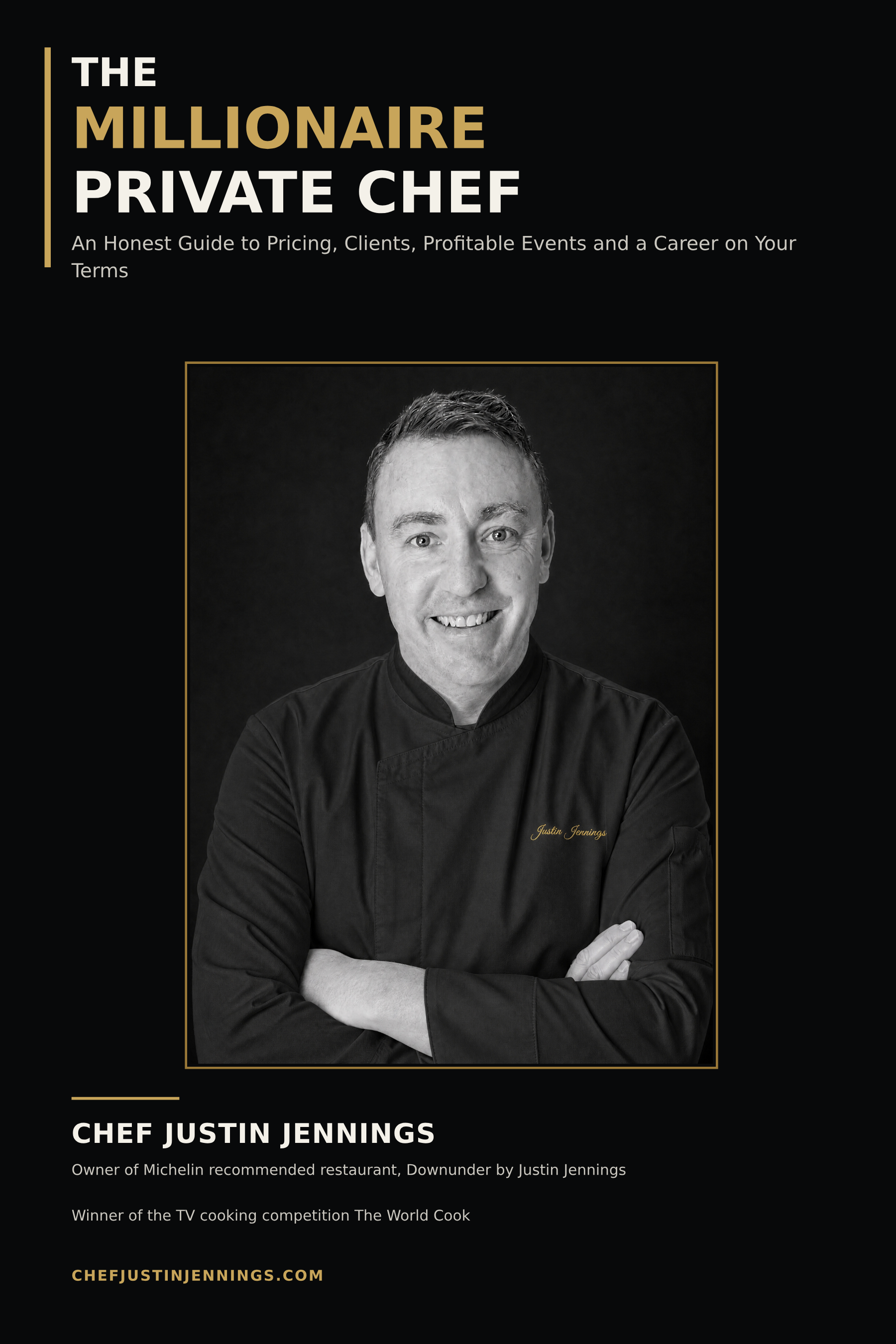
Last year, I watched a talented chef better technical skills than me, better palate, 15 years in Michelin restaurants shut down his private chef business after 18 months. He couldn't fill his calendar.
Meanwhile, another chef I know, decent cook but nothing spectacular, books 12-15 events per month at €110 per person. He's clearing €120,000/year working three days a week.
The difference wasn't cooking ability. It was client acquisition. The first chef made every mistake on this list. The second chef treated marketing like a core skill as important as knife technique.
Here are the five client acquisition mistakes killing private chef businesses, and exactly how to fix each one.
Mistake 1: Relying Only on Word-of-Mouth
This is the most common failure pattern. Chef goes independent, does a few events through friends, gets a couple referrals, assumes word-of-mouth will sustain the business. It won't.
Why this fails: Word-of-mouth is slow, unpredictable, and caps your growth. You can't control when referrals come in. You can't scale referrals. And when you hit a slow month with no bookings, you have no pipeline to fall back on.
The math: Let's say referrals bring you 3 bookings per month at €850 per event (8 guests × €106/person). That's €2,550/month or €30,600/year. Not enough to live on in most cities.
The fix: Treat word-of-mouth as one channel not your only channel. Build at least 3-4 acquisition channels simultaneously:
- Instagram: Post 3-5x per week. Behind-the-scenes prep, finished dishes, client testimonials. Use location tags, food hashtags, and engage with local food accounts.
- Partnerships: Build relationships with event planners, villa rental managers, concierge services, wine shops. They refer clients regularly if you deliver quality.
- Local SEO: Simple website optimized for "[your city] private chef" searches. Most clients Google before booking.
- Networking: Join local business groups, attend food industry events, connect with other chefs who are fully booked (they'll refer overflow).
When I added Instagram + partnerships to my word-of-mouth base, my monthly bookings went from 3 to 9 within four months. Same cooking skills. Different client acquisition strategy.
MICHELIN-Trained Chef · Inaugural World Cook Champion · 20+ Years Experience
Get the full client acquisition playbook 7 channels, 21 strategies, email templates, and follow-up scripts.
Buy on AmazonMistake 2: Not Following Up with Inquiries
You get an inquiry. You send pricing. Silence. You assume they went with someone else. You move on.
This is costing you thousands.
The reality: Most clients who inquire aren't ready to book immediately. They're comparing options, checking schedules, getting approval from spouses or colleagues. 80% of conversions happen after the 5th touchpoint, but most chefs give up after one.
My conversion data (from 147 inquiries last year):
- First response: 12% booked immediately
- Second follow-up (3 days later): 18% booked
- Third follow-up (7 days later): 14% booked
- Fourth follow-up (14 days later): 8% booked
- Fifth+ follow-ups: 6% booked
Total conversion rate: 58%. If I'd stopped after the first response, I would have converted only 12%. That's leaving 46% of potential revenue on the table.
The fix: Build a systematic follow-up sequence. Here's mine:
- Initial response (within 2 hours): Thank them for reaching out, confirm availability, ask 2-3 questions about their event (dietary restrictions, occasion, preferred style).
- Follow-up 1 (next day): Send a personalized menu proposal based on their answers. Include pricing breakdown, what's included, and a clear next-step CTA.
- Follow-up 2 (3 days later): "Hi [Name], just checking in did you have a chance to review the menu? Happy to adjust anything or answer questions."
- Follow-up 3 (7 days later): "Hi [Name], I know you're likely busy planning. If you'd like to move forward, I have [specific date] still available. Let me know!"
- Follow-up 4 (14 days later): "Hi [Name], final check-in if the timing isn't right for this event, I'd still love to work with you in the future. Feel free to reach out anytime."
This isn't pushy. It's professional persistence. Clients appreciate it they're juggling a lot, and your follow-ups often prompt them to finally make the decision.
Mistake 3: Having No Online Presence (or a Bad One)
A potential client hears about you. First thing they do? Google your name. If you have no website, no Instagram, nothing they're booking someone else.
Why this matters: Online presence = credibility. Even if the referral is strong, people want to see your work, read testimonials, and confirm you're legitimate before handing over €1,000+.
What counts as a "bad" online presence:
- Outdated website (no posts since 2023, old menus, broken links)
- Instagram with 12 posts and no recent activity
- Stock photos instead of real dishes you've cooked
- No contact information or unclear how to book
- Generic messaging ("Passionate about food! DM for bookings!")
These signal unprofessionalism. Clients wonder: if they can't maintain a website, can they execute a dinner party?
The fix: You don't need perfection. You need presence. Here's the minimum viable online presence for a private chef:
Website (1-2 pages):
- About page: Your background, credentials, style
- Services page: What you offer, pricing ranges, coverage area
- Testimonials: 3-5 quotes from happy clients
- Gallery: 8-10 high-quality photos of your dishes
- Contact form or email/phone number
Cost: €0-€200 (use Squarespace, Wix, or WordPress). Takes one weekend to build.
Instagram:
- Post consistently: 3-5x per week minimum
- Mix of content: finished dishes, behind-the-scenes prep, testimonials, event photos
- Bio should say clearly: "[City] Private Chef | [Credential] | DM to book"
- Engage with local food accounts and potential client networks (wedding planners, luxury hotels, etc.)
Time commitment: 20-30 minutes per day. Non-negotiable if you want consistent bookings.
Mistake 4: Pricing Too Low to Afford Marketing
This is the death spiral. Chef charges €60/person because they're new and afraid of losing clients. Food costs eat 30-35% of that. After expenses, they're clearing €35/person, or €280 for an 8-person event.
That's not enough margin to invest in marketing. So they stay stuck in the word-of-mouth trap (Mistake #1) because they literally can't afford to run ads, hire a photographer, or build a proper website.
Why this fails: Low pricing doesn't attract more clients. It attracts price-sensitive clients who are harder to please, negotiate more, and don't refer. You work twice as hard for half the revenue.
The fix: Raise your prices to a sustainable level minimum €85/person, ideally €95-€110/person. Yes, you'll lose some inquiries. But you'll convert higher-quality clients who value your work and can afford to pay for it.
The math at €95/person:
- 8 guests × €95 = €760 per event
- Food cost (25%): €190
- Net after food: €570
- Marketing budget (15% of gross): €114 per event
- Your profit after marketing: €456 (€91/hour for 5 hours total work)
Now you can afford to invest €114 per event into Instagram ads, professional photos, website hosting, business cards the things that actually bring in more clients.
When I raised my rates from €75 to €105/person, I lost exactly zero existing clients (they were already happy). My conversion rate on new inquiries dropped slightly (60% to 52%), but my revenue per event increased 40%. Net result: I made more money working fewer events.
Mistake 5: Not Collecting (and Using) Testimonials
You cook an incredible dinner. Client raves. You say "Thanks so much!" and leave. No review. No testimonial. No referral system.
Massive missed opportunity.
Why testimonials matter: Social proof is the most powerful conversion tool you have. A potential client reading "Justin cooked the best meal we've had in years the kangaroo tartare was unforgettable" is 5x more likely to book than someone just seeing your menu.
Where most chefs fail: They're too shy to ask, or they ask once and give up. Successful chefs systematize the ask.
The fix: Build testimonial collection into your workflow:
- At the end of the event: "I'm so glad you enjoyed the meal! If you're happy with how everything went, I'd really appreciate a quick Google review or testimonial it helps me reach more clients like you."
- Follow-up email (next day): Thank them again, attach a direct link to your Google Business review page or a simple testimonial form.
- Make it easy: Don't ask them to write an essay. Offer prompts: "What did you enjoy most about the experience?" or "Would you recommend my service to friends?"
Conversion rate goal: Aim for 30-40% of clients leaving a testimonial. Out of 10 events, you should collect 3-4 testimonials. These go on your website, in your Instagram bio highlights, and in your email proposals.
The compounding effect: More testimonials → higher conversion rate on inquiries → more bookings → more testimonials. This flywheel is how chefs go from struggling to fully booked.
I started asking for testimonials systematically in month 4 of my business. By month 8, I had 12 strong testimonials on my website. My inquiry-to-booking conversion rate jumped from 35% to 58%. That single change added €18,000 to my annual revenue.
Fix These Five, Fill Your Calendar
Most private chefs fail not because they can't cook but because they treat client acquisition as an afterthought. It's not. It's half your job.
If you're making any of these five mistakes, fix them in order:
- Build 3-4 client acquisition channels (don't rely on word-of-mouth alone)
- Create a systematic follow-up process (5+ touchpoints per inquiry)
- Establish a basic online presence (website + active Instagram)
- Raise your pricing to afford marketing (minimum €85/person, ideally €95-€110)
- Collect testimonials from every happy client (aim for 30-40% collection rate)
These aren't optional. They're the difference between a side hustle that pays for groceries and a real business that replaces your restaurant salary.
The chef who shut down his business? He was making all five mistakes. The chef clearing €120,000/year? He fixed all five in his first six months. Same industry, same city, completely different outcomes.
Get the Full Client Acquisition System
My book includes the complete 7-channel marketing strategy, follow-up email templates, pricing calculator, and client acquisition scripts I used to build a six-figure private chef business. No guesswork. Just the exact system that works.
Buy on AmazonStart filling your calendar in the next 30 days.
Frequently Asked Questions
Why do most private chefs struggle with client acquisition?
Most private chefs struggle with client acquisition because they rely on word-of-mouth only, don't follow up with inquiries consistently, have no online presence or outdated websites, price too low to afford marketing, and don't collect testimonials or reviews. The biggest mistake is treating marketing as optional rather than essential to the business. Successful private chefs dedicate 20-30% of their time to client acquisition activities.
How many client inquiries should convert to bookings?
A healthy conversion rate for private chef inquiries is 40-60%. If you're converting less than 30%, you likely have a follow-up or pricing problem. Top-performing private chefs convert 60-70% by responding within 2 hours, offering flexible menu options, and making the booking process frictionless. Track your conversion rate monthly to identify problems early.
What's the best marketing channel for private chefs?
Instagram combined with word-of-mouth referrals drives the most bookings for private chefs. Instagram lets you showcase dishes visually and build credibility through behind-the-scenes content. However, the fastest path to first clients is leveraging your existing network former restaurant colleagues, suppliers, friends, and family. Most successful chefs use 3-4 channels simultaneously rather than relying on one source.
Should private chefs use booking platforms like Take a Chef?
Booking platforms can provide early income and testimonials, but they typically take 20-30% commission and give you limited control over pricing and client relationships. Use them strategically for your first 6-12 months to build reviews, then transition clients to direct bookings. Most established private chefs generate 80%+ of bookings through direct channels to avoid paying platform fees.
How much should private chefs spend on marketing?
Private chefs should invest 10-15% of revenue back into marketing. For a chef earning €60,000/year, that's €6,000-€9,000 annually (€500-€750/month). This can include paid ads, website hosting, professional photography, business cards, and tools. Many chefs start with free channels (Instagram, referrals, networking) and gradually add paid marketing as they grow.
How long does it take to fill a private chef calendar?
With consistent marketing effort, most private chefs can fill their calendar within 6-12 months. The first 3 months are typically slow (1-2 bookings per month) while you build reputation and reviews. Months 4-6 see acceleration as referrals kick in. By month 12, established chefs typically have 8-15 events per month and regular repeat clients. The key is treating marketing as a daily practice, not something you do when you're slow.
What's the biggest client acquisition mistake private chefs make?
The single biggest mistake is not following up. Studies show 80% of sales require 5+ follow-ups, but most private chefs give up after one inquiry response. When someone asks for pricing or availability, they're rarely ready to book immediately. Set up a follow-up system: send a personalized menu proposal within 24 hours, check in after 3-4 days, and follow up again one week later. This simple change can double your conversion rate.
Do private chefs need a website?
Yes, a website is essential. It establishes credibility, allows potential clients to learn about you on their schedule, improves Google search visibility, and gives you a place to showcase testimonials and menus. A simple one-page site with your services, pricing, photos, and contact form is enough to start. You can build one for under €200 or free using platforms like Squarespace or Wix. Most clients will Google you before booking don't lose them because you have no online presence.