Career Guide
5 Chef Side Hustles That Actually Pay Well
16 June 2026 · 9 min read
Ready to turn your side hustle into a full-time career? My book covers the complete roadmap from first gig to six-figure private chef business.
Buy on Amazon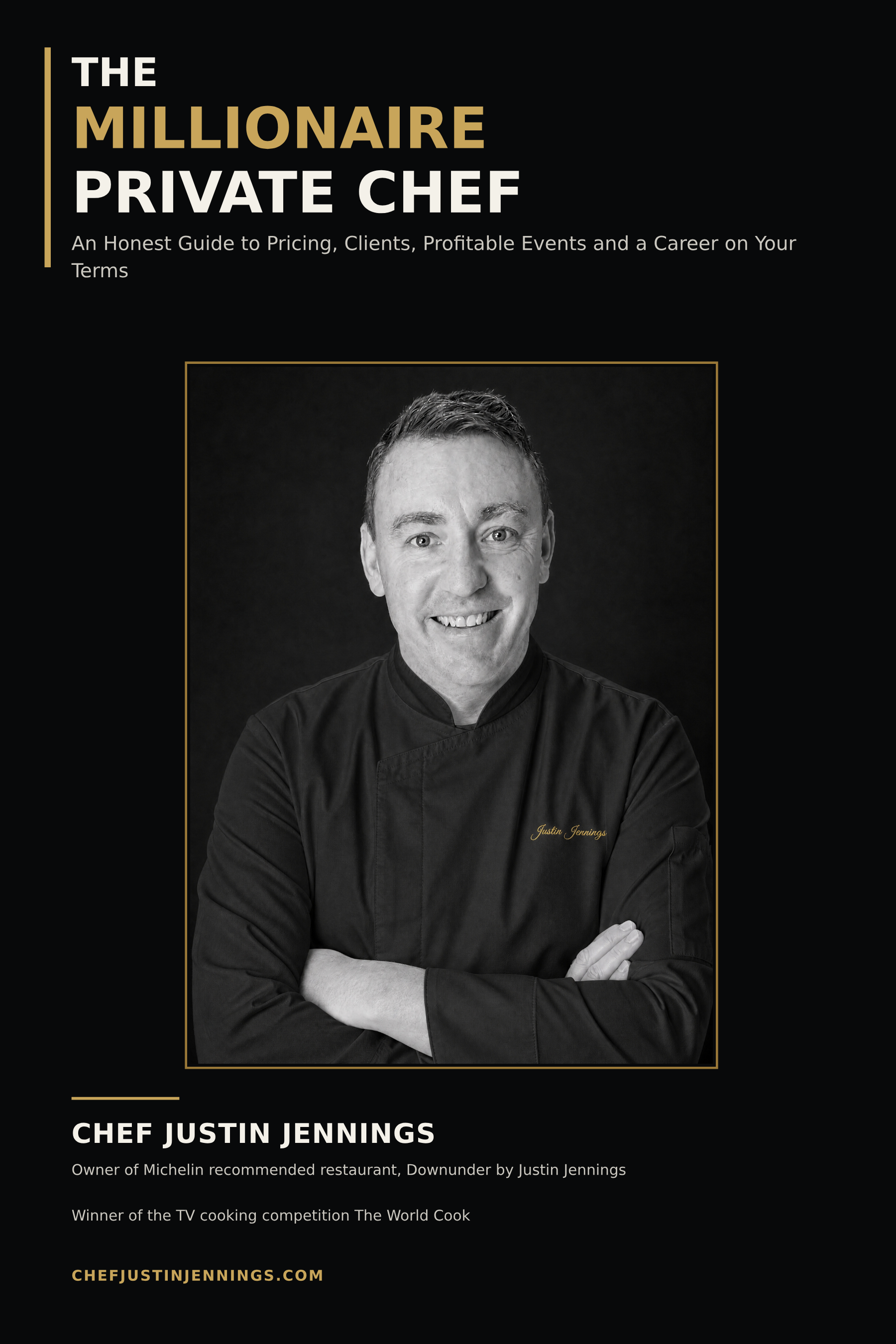
Most chefs I know are broke. Not because they lack talent, but because they're trading 60 hours a week for €2,800 a month. Meanwhile, they're helping restaurant owners build wealth while their own savings stay at zero.
I was there. Ten years in restaurants, working doubles, missing birthdays, wrecking my back, and still barely scraping together €3,000 a month. The moment I started taking private chef gigs on my days off, everything changed. Within six months, my weekend side hustle was making more than my full-time restaurant salary.
Here are five chef side hustles that actually pay well - not "make an extra €200 a month" money, but "replace your restaurant income" money. I've done all five. Some I still do. All of them work if you commit.
1. Private Events (Weekends Only)
Earnings Potential: €500-€2,000/month (1-2 events per week)
This is how I started. One Friday night dinner for eight people at €85/person = €680 for five hours of work. Do that twice a month and you've added €1,360 to your income without quitting your day job.
What it looks like:
Clients book you for dinner parties, birthdays, anniversaries, small weddings. You show up at their home or venue, cook a multi-course meal, serve, and clean up. They get restaurant-quality food without leaving their house. You get paid what you're actually worth.
Startup costs: €200-€500
Liability insurance (€300-€400/year), business cards, basic transport. You probably already own the knives and equipment.
Time investment: 6-8 hours per event (shopping, prep, cook, cleanup)
One event per week = 24-32 hours/month. Two events = 48-64 hours/month.
How to get clients:
- Start with your existing network - tell every regular at your restaurant, every supplier, every friend
- Post on local Facebook groups (expat communities, food groups, neighborhood pages)
- Partner with event planners and villa managers who need reliable chefs
- Instagram + Google Business Profile with clear pricing and photos
What I learned:
Don't underprice yourself. My first event I charged €50/person because I was terrified no one would book me. The client paid immediately, raved about the food, and asked if I could do it monthly. I should've charged €85 from day one. Confidence matters more than experience when you're starting out.
Realistic first-year income: €6,000-€12,000 (1-2 events per month at €500-€1,000 each)
Want to scale this into a full-time business?
My book covers client acquisition, pricing, operations, and the exact system I used to go from 1 event per month to 15.
2. Meal Prep Service
Earnings Potential: €800-€1,500/month (5-10 clients)
Busy professionals, new parents, health-conscious clients - they all need the same thing: quality food ready to eat. You batch-cook meals on Sundays, deliver in containers, and get paid weekly or monthly.
What it looks like:
Clients subscribe to 5, 7, or 14 meals per week. You cook everything in one or two batch sessions, portion it into containers, label, and deliver. They reheat and eat. You get recurring income.
Typical pricing:
- 5 meals/week: €75-€100 (€15-€20 per meal)
- 7 meals/week: €100-€130
- 14 meals/week (lunch + dinner): €180-€240
Ten clients at €100/week = €4,000/month gross. Minus groceries (30-40%) and containers, you're clearing €2,400-€2,800/month.
Startup costs: €400-€800
Containers (buy in bulk), labels, insulated delivery bags, business registration, food safety certification (if required locally).
Time investment: 8-12 hours per week
Sunday meal prep (6-8 hours) + delivery runs (2-4 hours). Highly scalable once you dial in your systems.
How to get clients:
- Target gyms, CrossFit boxes, yoga studios - leave flyers or partner with trainers
- Facebook/Instagram ads targeting "meal prep [your city]" - works surprisingly well
- Offer the first week at 50% off to get people to try it
- Partner with nutritionists or personal trainers who can refer clients
What I learned:
This business lives or dies on systems. You need a rotating menu (don't offer custom meals for every client - you'll lose your mind), efficient shopping lists, and a solid delivery route. I ran a meal prep side hustle for 18 months with 12 clients before I shifted fully to private chef work. It's great recurring income, but it's repetitive and logistics-heavy.
Realistic first-year income: €9,600-€18,000 (5-10 clients at €80-€150/week)
3. Cooking Classes (Virtual + In-Person)
Earnings Potential: €400-€1,200/month (2-4 classes per month)
People will pay to learn what you already know. A two-hour pasta-making class for six people at €60/person = €360. Do that twice a month and you're adding €720/month with zero inventory and minimal prep.
What it looks like:
You host hands-on cooking classes in your home, a rented kitchen space, or even virtually via Zoom. Teach knife skills, fresh pasta, sushi rolling, bread baking, regional cuisines - whatever you're confident in. People show up, learn, eat, and leave happy.
Typical pricing:
- In-person group class (6-10 people): €50-€80/person for 2-3 hours
- Private class (couples or small groups): €150-€300 total
- Virtual class: €25-€40/person (can scale to 20+ people)
Startup costs: €100-€500
Ingredients for first class, printed recipes, aprons (optional but nice), Zoom account for virtual classes. If you host at home, costs are minimal.
Time investment: 4-6 hours per class (prep, teach, cleanup)
Two classes per month = 8-12 hours. Four classes = 16-24 hours.
How to get clients:
- Eventbrite or local event platforms - people search "cooking class [city]"
- Instagram posts with behind-the-scenes content
- Partner with wine shops or kitchenware stores for co-hosted events
- Corporate team-building events (these pay €500-€1,500 per session)
What I learned:
Start with one signature class and repeat it until you've perfected the flow. My first pasta class was a disaster - I ran out of time, people stood around waiting, and I forgot half the ingredients. By the fifth time, I had a tight 90-minute format, printed timelines, and happy students who referred their friends.
Virtual classes are surprisingly profitable. I ran a Zoom series during COVID - 20 people at €30/person = €600 per class. No overhead, no cleanup, and I could do it in my home kitchen.
Realistic first-year income: €4,800-€14,400 (2-4 classes per month at €200-€300 each)
4. Recipe Development & Food Writing
Earnings Potential: €300-€2,000/month (project-based)
Brands need recipes. Food blogs need recipes. Meal kit companies need recipes. Restaurants opening in other cities need menu development. If you can write clear instructions and develop tested recipes, there's steady freelance work.
What it looks like:
A client (brand, publication, startup) hires you to create original recipes, test them, photograph them (or work with a photographer), and deliver formatted instructions. Projects range from single recipes to full seasonal menus.
Typical pricing:
- Single recipe (developed, tested, written): €100-€300
- Recipe package (5-10 recipes): €500-€1,500
- Menu development for restaurant/brand: €1,000-€5,000
- Ongoing retainer (monthly recipes for a brand): €500-€1,500/month
Startup costs: €0-€200
You need a camera (smartphone is fine), basic food styling props, and maybe a website or portfolio. That's it.
Time investment: Varies widely
One recipe = 3-6 hours (development, testing, writing, editing). A menu project = 20-40 hours. Retainer work = 10-15 hours/month.
How to get clients:
- Build a portfolio - create 5-10 recipes, photograph them, and post online
- Pitch food blogs, local magazines, and online publications
- Reach out to meal kit companies (HelloFresh, Gousto, etc.) - they hire freelance developers
- Join freelance platforms like Upwork or Contra (yes, chefs can be freelancers)
- Network with food brands at trade shows or via LinkedIn
What I learned:
This is a slow build, but once you land a few clients, referrals start flowing. I developed recipes for a Portuguese food brand - started with one €300 project, now I'm on a €800/month retainer creating seasonal content. The key is being reliable and easy to work with. Most chefs can cook, but they can't write instructions a home cook can follow. If you can do both, you'll stand out.
Realistic first-year income: €3,600-€12,000 (€300-€1,000/month, project-dependent)
5. Food Consulting (Restaurants, Startups, Ghost Kitchens)
Earnings Potential: €1,000-€5,000/month (project-based or retainer)
New restaurants need menu development. Ghost kitchens need operational systems. Food startups need someone who understands kitchen logistics. If you've got 5+ years experience, you can consult.
What it looks like:
Clients hire you to solve specific problems: design a menu, train kitchen staff, optimize food costs, develop SOPs, audit operations, troubleshoot a failing kitchen. You're the expert they bring in to fix things.
Typical pricing:
- Hourly rate: €75-€150/hour
- Menu development project: €1,500-€5,000
- Monthly retainer (ongoing support): €1,000-€3,000/month
- Kitchen audit/training: €2,000-€4,000
Startup costs: €0-€300
LinkedIn profile, business cards, maybe a simple website. This is a relationship business - you're selling expertise, not products.
Time investment: Highly variable
Some projects are 10 hours total. Others are 40+ hours over several weeks. Retainers typically require 10-20 hours/month.
How to get clients:
- Network with restaurant owners, suppliers, and hospitality groups
- Reach out to ghost kitchen operators (they often need menu optimization)
- Join food industry Facebook groups and answer questions - position yourself as the expert
- Partner with commercial real estate agents who work with food businesses
- Speak at local food industry events or host workshops
What I learned:
You need credibility to charge consulting rates. I didn't start consulting until I had a MICHELIN-selected restaurant on my resume and eight years of private chef experience. But once I did, doors opened fast. A ghost kitchen operator hired me for €3,000 to streamline their five-brand operation. Three weeks of work, and I was paid more than I used to make in two months as a sous chef.
Consulting isn't for beginners, but if you've been cooking for 5+ years and have strong business sense, this is how you leverage your experience into real money.
Realistic first-year income: €12,000-€30,000 (1-3 projects, or 1-2 retainer clients)
Ready to turn your side hustle into your main income?
My book covers everything: pricing, finding clients, scaling operations, and making the leap from part-time to full-time private chef work.
Which One Should You Start With?
It depends on your situation:
If you want fast money and high profit margins: Private events. One weekend gig pays more than a week of restaurant shifts.
If you want recurring income and predictability: Meal prep service. Lock in 10 clients and you've got €4,000/month guaranteed.
If you hate logistics and love teaching: Cooking classes. Low overhead, high engagement, and people leave happy.
If you're good with words and patient with testing: Recipe development. Flexible hours, work from home, build a portfolio that leads to bigger opportunities.
If you've got serious experience and want premium pay: Consulting. Not for beginners, but if you're qualified, it's the highest hourly rate on this list.
I started with private events, added recipe development after year two, and now I do consulting on the side. You don't have to pick one - you can layer these as you grow.
The Mistakes I Made (So You Don't Have To)
1. Underpricing because I was scared
My first private event I charged €50/person when I should've charged €85. I thought no one would pay more. Wrong. Clients don't respect cheap. They respect value. Price yourself properly from day one.
2. Not setting boundaries early
I let clients text me at 11pm, change menus the day before, and demand last-minute additions for free. Set your policies upfront: menu changes cost extra, deposits are non-refundable, and you don't answer texts after 9pm.
3. Saying yes to everything
I took every gig in the first six months, even ones that paid poorly or were logistically difficult. Some clients aren't worth it. Learn to say no to bad deals so you have time for good ones.
4. Not tracking expenses
I lost hundreds of euros in the first year because I didn't save receipts or track mileage. Set up a simple spreadsheet or use an app. You'll need this for taxes anyway.
5. Waiting too long to raise prices
I kept my rates the same for two years because I was afraid of losing clients. I should've raised them every 12 months. Most clients won't even notice a €5-€10 increase, and the ones who do weren't your ideal clients anyway.
The Reality: It Takes Time, But It's Worth It
None of these hustles will make you rich overnight. My first private chef gig paid €200 and I was terrified the entire time. Six months later I was booking €1,200 events and turning down work.
The beautiful thing about chef side hustles is that they're low-risk. You're not quitting your job. You're not investing €20,000 in equipment. You're just taking what you already know how to do and getting paid properly for it.
Start with one. Do it well. Build a reputation. Then scale or add another. Within a year, your side income could replace your restaurant salary. Within two years, you could be fully self-employed, making double what you earned in restaurants, and actually enjoying your life.
That's not a fantasy. That's what happened to me. And hundreds of other chefs I know who finally decided they deserved to be paid properly for their skills.
Frequently Asked Questions
What is the best side hustle for chefs?
Private events are the best chef side hustle. You can earn €500-€1,500 per event working weekends only while keeping your restaurant job. Start with 1-2 events per month and scale up. Low startup costs, high profit margins, and flexible scheduling make it ideal for chefs testing the waters before going full-time.
How much can chefs make from side hustles?
Chefs can make €500-€5,000/month from side hustles depending on the model and time invested. Private events: €500-€2,000/month (1-2 per week). Meal prep: €800-€1,500/month. Cooking classes: €400-€1,200/month. Recipe development: €300-€2,000/month. Food consulting: €1,000-€5,000/month. Most chefs start with one hustle and layer on others as they grow.
Can you do private chef work while working full-time in a restaurant?
Yes. Most private chefs start as a weekend side hustle. Book Friday/Saturday evening events or Sunday brunches - times when you're not working at the restaurant. One event per week adds €2,000-€4,000/month to your income. Once you consistently book 2+ events per week, you'll be making enough to transition full-time.
Do you need licenses for chef side hustles?
Depends on the hustle. Private events: Usually just liability insurance and business registration. Meal prep service: May need food safety certification and kitchen inspection depending on local health department rules. Cooking classes: Insurance recommended but not always required. Recipe development/consulting: No licenses required - you're selling expertise, not food. Always check your local regulations.
What chef side hustle is easiest to start?
Cooking classes are the easiest to start with minimal investment. Host in your home kitchen or rent a community space. Charge €50-€80 per person for 2-hour hands-on classes. Start with 1-2 classes per month to test demand. No inventory to manage, low overhead, and you get paid upfront. Plus, it's fun and builds your personal brand.
How do I get clients for chef side hustles?
Start with your existing network: restaurant regulars, suppliers, friends, and family. They already know your food is good. Post on social media (Instagram, local Facebook groups) with clear offers and pricing. Partner with event planners, villa managers, or real estate agents who work with high-end clients. Join local expat and food communities. After your first few clients, word-of-mouth referrals become your main source - every happy client brings 2-3 more.
What are the tax implications of chef side income?
Side income must be declared to tax authorities. Register as a sole trader (or equivalent business structure in your country). Set aside 25-30% of your gross income for taxes and social security. Track ALL expenses: groceries, transport, equipment, insurance - these are tax-deductible. Keep business and personal finances separate (open a business bank account). Once you're making €1,000+/month consistently, hire an accountant - it pays for itself.