Mental Health
Restaurant Chef Burnout: The Reality No One Talks About
August 2026 · 11 min read
Burned out from restaurants? My book shows you how to build a sustainable chef career with better pay, hours, and mental health.
Buy on Amazon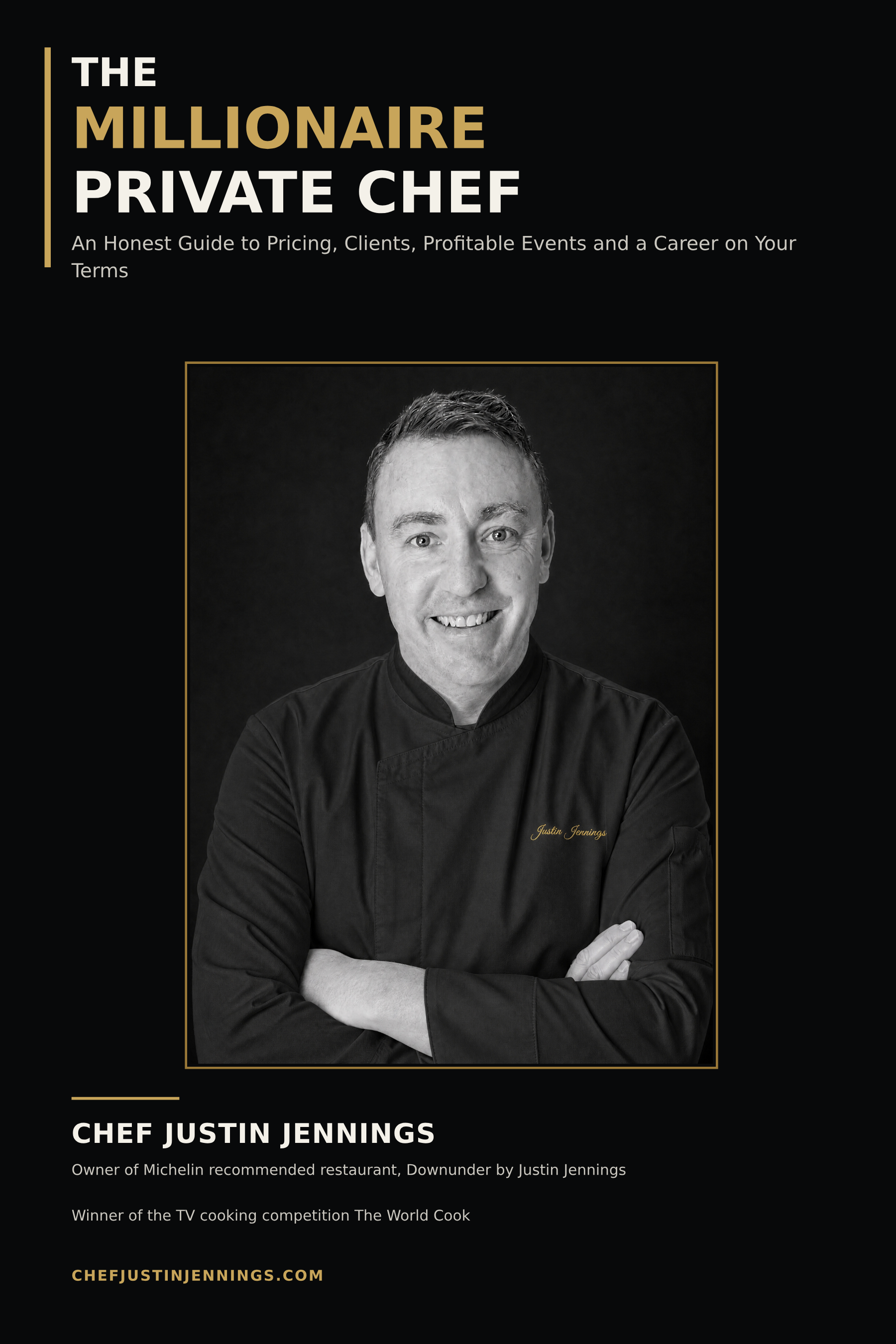
It was 11:47 PM on a Saturday. I was standing at the pass, calling orders for the eighth consecutive hour. My feet were screaming. My back felt like someone had driven a knife between my shoulder blades. I'd burned my forearm earlier and ignored it. The ticket printer wouldn't stop, and I remember thinking: "I can't do this anymore."
Then I caught myself. Where did that thought come from? I was supposed to love this. I'd worked my entire adult life to get here. This was my dream job.
Except it wasn't. And that realization - that the dream had turned into a nightmare - was terrifying.
I didn't talk about it. None of us did. You weren't supposed to admit you were struggling. That meant you were soft. Weak. Not cut out for it. So I pushed it down, worked another shift, and pretended everything was fine.
It took me two more years to leave. Two years of pretending I wasn't breaking down. Two years of telling myself it would get better. Two years of watching my health deteriorate, my relationships suffer, and my passion for cooking disappear.
I'm writing this because chef burnout is an epidemic, and we're still not talking about it honestly. We glorify the suffering. We normalize the destruction. We act like sacrificing your physical and mental health is the price of being a "real chef."
It's not. And if you're feeling what I felt that night at 11:47 PM, you need to know: you're not weak. The system is broken.
The Statistics We Ignore
Let's start with the numbers that the industry doesn't want to talk about.
According to research from the Culinary Institute of America and various hospitality industry studies:
- 80% of chefs report experiencing burnout symptoms during their careers
- 63% report working while injured or ill because they couldn't afford time off or feared retaliation
- Restaurant workers have substance abuse rates 3x higher than the general workforce
- Kitchen staff report depression and anxiety at rates exceeding 50%
- 70% of culinary school graduates leave the industry within five years
- Average career length for line cooks: 7 years before physical or mental breakdown forces career change
These aren't isolated incidents. This is the normal experience of being a chef. When four out of five people in a profession report burnout, that's not a personal failing - that's systemic.
But we don't frame it that way. We tell aspiring chefs that "it's tough, but worth it." We celebrate celebrity chefs who built empires on the backs of grinding 100-hour weeks. We teach young cooks that suffering is the path to greatness.
And then we act surprised when they break.
The Night I Broke Down (My Story)
I'd been working as a sous chef for three years. It was a good kitchen - not abusive, decent pay for the industry, respected chef. I thought I was on the right path. Building experience. Paying my dues. Getting ready for head chef roles.
But I was working 58-hour weeks minimum, often closer to 65 when you counted the unpaid prep, menu testing, and "team meetings" that always happened on our days off. I was making €3,200 a month before tax. The math worked out to about €13 per hour for what I actually worked.
I'd gained 15 kilos because I ate whatever was fast and available, usually standing at the station between services. I had chronic back pain from standing on concrete for 10-hour shifts. My knees hurt when I climbed stairs. I was 31 years old.
My girlfriend - now my wife - had stopped asking me to make plans because I was always working or too exhausted to do anything. I'd missed three family events that year. I didn't have hobbies anymore. I didn't have time.
And the worst part? I didn't even enjoy cooking anymore. It had become mechanical. Repetitive. I could execute the menu in my sleep, and some nights I felt like I was. The creativity that drew me to food in the first place was just... gone.
The night I broke down, it wasn't dramatic. There was no explosion. I just went home after service, sat on my couch, and started crying. My girlfriend asked what was wrong, and I couldn't even articulate it. I just said: "I can't keep doing this."
And the scariest part? I felt relieved to finally say it out loud.
There's another way to be a chef.
I rebuilt my career and my life. Better hours, better pay, sustainable stress levels. Here's exactly how I did it.
The 7 Causes of Chef Burnout (And Why They're All Normalized)
1. The Hours Are Unsustainable
50-60 hour weeks are standard. 70-80 hour weeks happen regularly during busy seasons. Split shifts mean you work lunch service, have three hours off in the middle of the day (not enough time to go home, too much time to just wait), then work dinner service until midnight.
You work weekends and holidays - the exact times when everyone else is celebrating. You miss birthdays, weddings, family gatherings. And when you finally get a day off, you're too exhausted to do anything except recover enough to go back.
The industry justification? "That's just how it is." "You have to pay your dues." "Great chefs sacrifice."
But here's the truth: there is no amount of passion that makes 60-hour weeks sustainable long-term. Your body breaks down. Your mind breaks down. The question isn't if - it's when.
2. The Pay Doesn't Match the Investment
Culinary school costs €15,000-50,000 depending on the program. Then you start at €9-12 per hour as a commis. Work your way up to sous chef over 5-7 years? Maybe €3,000-3,800 per month.
Do the math on 60-hour weeks and you're making €12-15 per hour. Less than many entry-level jobs that don't require years of training and don't destroy your body.
Meanwhile, you're watching finance bros your age buy houses while you're splitting rent with two roommates. You're working three times as hard for half the money. And when you point this out, someone tells you: "You don't do this for the money. You do it for the passion."
Passion doesn't pay rent. Passion doesn't fix your knees. Passion doesn't fund retirement.
3. The Physical Toll Is Brutal
Standing on concrete for 10-12 hours. Lifting heavy pots, bags of flour, boxes of produce. Heat exposure from grills and ovens. Knife cuts and burns that you're expected to just tape up and keep working through.
Every chef I know over 30 has chronic pain somewhere. Bad knees. Destroyed backs. Carpal tunnel. Burns that scarred. That "old football injury" story? For chefs, it's "I can't feel two of my fingers from the time I stuck my hand in the fryer."
And we wear these injuries like badges of honor. Look how tough I am. Look how dedicated. I worked through a second-degree burn.
That's not toughness. That's exploitation dressed up as work ethic.
4. The Mental Load Is Constant
Even when you're not at work, you're thinking about work. Did the produce order come in? Is the new guy going to show up? What needs to be prepped for tomorrow? How do we fix the dish that isn't selling?
You dream about tickets. You wake up in a panic thinking you forgot something. Your day off is spent mentally preparing for the next shift.
The stress doesn't end when you leave the kitchen. It follows you home. It disrupts your sleep. It seeps into every relationship because you're never fully present - there's always part of your brain still at work.
And nobody acknowledges this as a problem. "That's just what it takes to be great."
5. The Hierarchy Is Dehumanizing
The brigade system works on paper. In practice, it creates environments where abuse gets justified as "teaching" and "toughening people up."
I've worked in kitchens where yelling was constant. Where mistakes got you publicly humiliated. Where asking questions made you look weak. Where the head chef ruled through fear and everyone pretended that was normal.
Not every kitchen is like this. But enough are that it's still accepted as part of the culture. The defense is always the same: "I went through it. You need to go through it. That's how you learn respect."
No. That's how you create trauma and normalize toxicity.
6. There's No Real Path Forward
You start as a commis. Work up to chef de partie. Then sous chef. Then... what? Head chef positions are rare. Most chefs spend years at sous level with no clear next step.
You could try to open your own place, but restaurant failure rates are brutal and startup costs are massive. You could chase Michelin stars, but those kitchens work even more hours for often less pay.
So you plateau. You're grinding 55-hour weeks at 35 years old, making the same money you made at 30, watching younger chefs come up behind you, and realizing: this is it. This is the top. And the top isn't what you thought it would be.
That realization - that you've sacrificed everything to get somewhere that isn't worth the sacrifice - is devastating.
7. The Culture Normalizes Self-Destruction
This is the biggest one. All the other causes would be fixable if the culture acknowledged them as problems. But instead, the industry glorifies suffering.
Working through sickness? That's dedication. Working through injury? That's toughness. Drinking to cope with stress? That's just what chefs do. Sacrificing your health, relationships, and mental well-being? That's the price of greatness.
We celebrate the chefs who grind themselves into dust. We tell war stories about 18-hour shifts. We make heroes out of people who destroyed themselves for their craft.
And then we're shocked when young chefs burn out. When substance abuse is rampant. When mental health issues are epidemic.
The culture is the problem. And until we stop celebrating suffering as proof of commitment, nothing will change.
The Health Impact Nobody Mentions
Let's get specific about what burnout actually does to you.
Physical health: Chronic pain (back, knees, feet), repetitive strain injuries, burns and scars, weight gain or loss from irregular eating, cardiovascular issues from stress, sleep disorders, weakened immune system from exhaustion.
Mental health: Depression, anxiety, emotional numbness, irritability and mood swings, difficulty concentrating, loss of motivation, intrusive thoughts about work, panic attacks.
Relationships: Missed events and celebrations, inability to make plans, emotional unavailability from exhaustion, resentment from partners and family, social isolation, loss of friendships from never being available.
Financial health: Living paycheck to paycheck despite long hours, inability to save for emergencies, debt from covering living expenses on low wages, no retirement planning.
This isn't abstract. This was my life at 31. This is the life of thousands of chefs right now, reading this and recognizing themselves in every line.
And here's the scariest part: it's not dramatic. It creeps up slowly. You normalize each new symptom because "everyone deals with this." Until one day you look in the mirror and realize you've become someone you don't recognize.
You don't have to keep sacrificing your health.
I built a chef career that doesn't require destruction. Better balance, better pay, same passion. Here's the roadmap.
The Lie: "It Gets Better When You're Head Chef"
The promise they sell you: grind now, and eventually you'll be running your own kitchen. Then you'll have control. Then it will all be worth it.
Here's what they don't tell you: head chef positions are even more stressful.
You're not just cooking anymore. You're managing staff (and dealing with constant turnover). You're responsible for food costs, labor costs, menu profitability. You're handling difficult owners who don't understand food but have opinions about everything. You're working longer hours than when you were sous because now you're responsible for everything that goes wrong.
And in most cases? You're not making significantly more money. Maybe €4,000-5,000 per month if you're lucky. Still working 60+ hours. Still sacrificing weekends and holidays. Still dealing with all the same systemic problems - but now with the added pressure of keeping the entire operation running.
Some head chefs love it. Some thrive on the pressure and the creative control. But for many, it's just a higher-stress version of the same unsustainable grind.
I have friends who made it to head chef and quit within two years because the reality didn't match the promise. The destination they'd been working toward for a decade turned out to be just as broken as every other level.
Alternatives That Don't Mean Leaving Food
Here's the part that gives me hope: you don't have to leave cooking to escape burnout. You just have to leave the broken system.
When I was at my lowest point, I thought my only options were: keep grinding in restaurants, or leave food entirely and do something completely different. The idea of leaving food was devastating. I'd invested 12 years. I'd sacrificed so much. And despite everything, I still loved cooking - I just hated the environment I was doing it in.
Then I discovered private chef work. And I realized there was a third option: stay in food, leave restaurants.
I'm not saying private chef work is the only alternative. There are dozens of ways to use your culinary skills outside traditional restaurant kitchens:
- Private chef (what I do now) - Better hours, better pay, creative freedom
- Meal prep business - Batch cooking, predictable schedule, no service stress
- Cooking classes - Share your skills, control your schedule, build community
- Recipe development - Work with brands, publications, food companies from home
- Food consulting - Help new restaurants without working in them
- Culinary instruction - Teach at culinary schools or community programs
- Food media - Writing, video, podcasting about food
- Test kitchen work - R&D for food companies, consistent hours
- Yacht or corporate chef - Luxury environments, better compensation
- Catering - Events without the daily restaurant grind
All of these keep you in food. All of these let you use the skills you've spent years developing. And most importantly: all of these give you control over your schedule, your income, and your life.
I chose private chef work because it gave me everything restaurants couldn't: creative freedom, direct client relationships, better pay per hour worked, and the ability to set my own boundaries. I work 25-30 hours a week. I take Sundays off. I haven't missed a family event in seven years.
And I still get to do what I love - create beautiful food that makes people happy.
What I Wish Someone Had Told Me
If I could go back and talk to 28-year-old Justin, grinding himself into dust and thinking that was normal, here's what I'd say:
Your burnout is not a personal failing. The system is designed to extract maximum labor for minimum compensation. When you break under that pressure, it's not because you weren't tough enough. It's because the system is unsustainable.
Suffering is not a prerequisite for greatness. Some of the best chefs I know work reasonable hours, maintain healthy relationships, and don't glorify sacrifice. You can be excellent without destroying yourself.
There are other paths that don't require leaving food. If you're miserable in restaurants but love cooking, the problem isn't cooking - it's restaurants. Explore alternatives before you convince yourself you have to give up on food entirely.
It's okay to change your mind about what success looks like. Maybe 10 years ago, head chef at a Michelin-starred restaurant was your goal. If that goal no longer makes sense for the life you want, that's not failure. That's growth.
Your health - physical and mental - is not negotiable. No job, no matter how prestigious or important, is worth permanent damage to your body or mind. If work is destroying you, it's time to change the work, not accept the destruction.
You don't owe the industry your suffering. Kitchen culture will tell you that real chefs sacrifice everything. That's propaganda designed to keep you accepting unacceptable conditions. You're allowed to want better.
Starting over is not starting from zero. Every skill you've learned, every technique you've mastered, every connection you've made - all of that comes with you. You're not throwing away your investment. You're redirecting it toward something sustainable.
And most importantly: asking for help is not weakness. If you're burned out, talk to someone. A therapist, a trusted friend, a mentor who's been through it. Don't do what I did and suffer in silence for years because you thought that's what being a chef required.
I escaped burnout. You can too.
My book is the guide I wish existed when I was making this transition. Practical steps, honest advice, realistic expectations.
Final Thoughts
Seven years ago, I was standing at the pass at 11:47 PM thinking "I can't do this anymore." Today, I'm writing this at 10 AM on a Tuesday, after a relaxed breakfast with my wife, before I start prep for tonight's private event.
I'm making more money. I'm healthier - physically and mentally. I have actual weekends. I have hobbies again. I still love cooking. Maybe even more than I did before, because it's not killing me anymore.
The transition wasn't easy. The first year was financially scary. I had to learn business skills I'd never needed in restaurants. I had to rebuild my identity around being a private chef instead of a restaurant chef.
But every hard moment was worth it. Because on the other side of that transition was a life I actually wanted to live.
If you're reading this and recognizing yourself in my story - if you're burned out, exhausted, and wondering if this is really all there is - I want you to know: it's not. There are other options. Better options. Options that let you keep doing what you love without sacrificing your health, relationships, and sanity.
You just have to be willing to question the narrative the industry has been selling you. That suffering is necessary. That sacrifice is proof of commitment. That real chefs tough it out no matter what.
Those are lies designed to keep you trapped in a broken system.
The truth is: you deserve better. And better exists. You just have to be brave enough to go after it.
Frequently Asked Questions
What are the signs of chef burnout?
Physical exhaustion that sleep doesn't fix, loss of passion for cooking, irritability and mood swings, substance use to cope, recurring injuries or illness, dreading work, emotional numbness, and isolation from friends and family. If you're experiencing three or more of these consistently, you're likely burned out.
How do you recover from chef burnout?
Take real time off (at least 2-3 weeks), seek therapy or counseling, establish boundaries around work hours, reduce shifts if possible, reconnect with why you loved cooking, and evaluate whether your current role is sustainable. Recovery requires actually addressing the root causes, not just pushing through.
Is staying in restaurants worth the burnout?
For some chefs, yes - if you're in a healthy kitchen environment, working reasonable hours, and building toward ownership or a clear career goal. But if you're grinding with no end in sight, sacrificing health and relationships, and seeing no path forward, it's worth exploring alternatives before burnout becomes permanent damage.
Do private chefs experience burnout?
Private chefs can experience burnout, but it's less common and usually self-inflicted from overbooking. The difference is you control your schedule, set boundaries, and can take time off without asking permission. Most private chefs report significantly lower stress than restaurant work.
What is the average restaurant chef career length?
Most chefs stay in the industry less than 10 years. Many leave between years 3-7 when the physical and mental toll becomes unsustainable. Only about 20-30% of culinary school graduates are still working as chefs five years after graduation.
Are there mental health resources for chefs?
Yes. Organizations like Chefs with Issues, Hospitality Health ER, and local culinary associations offer support. Many countries have mental health hotlines specifically for hospitality workers. Employee assistance programs (EAPs) through larger restaurant groups also provide confidential counseling.
When should you quit being a chef?
When work is causing serious health problems (physical or mental), when you've lost all passion and it's not returning, when your relationships are suffering significantly, or when you're using substances to cope. Don't wait until you're completely broken. It's okay to change careers or pivot within food.
Can you come back to cooking after burnout?
Yes, many chefs return after time away, but usually to different roles - private chef work, consulting, teaching, or ownership rather than line cooking. The key is addressing what caused burnout in the first place. Returning to the same toxic environment will just restart the cycle.
Why is chef burnout normalized in the industry?
Kitchen culture glorifies suffering as proof of dedication. The 'pay your dues' mentality, brigade system hierarchy, and celebrity chef narratives all reinforce the idea that great chefs must sacrifice everything. This normalization keeps broken systems in place and prevents meaningful change.
What are alternatives to restaurant work for burned-out chefs?
Private chef work, meal prep businesses, cooking classes, recipe development, food consulting, culinary instruction, food media (writing, video, podcasting), test kitchens, product development, yacht or corporate chef roles, and catering. All keep you in food without the restaurant grind.
Related Reading
7 Reasons Restaurant Chefs Are Switching to Private Chef Work
Better work-life balance, higher pay, creative freedom, and escape from toxic kitchen culture.
Getting Your First Private Chef Client: 5 Proven Methods
Leverage your network, social media, partnerships, and local marketing to book clients.
Private Chef Salary 2026: How Much Can You Really Make?
Real income breakdown, pricing models, and geographic differences for private chefs.