Menu Design & Strategy
How to Design a Private Chef Menu That Actually Books Clients
24 June 2026 · 14 min read
Get 12 done-for-you menu templates, pricing calculators, and my complete private chef business system in one guide.
Buy on Amazon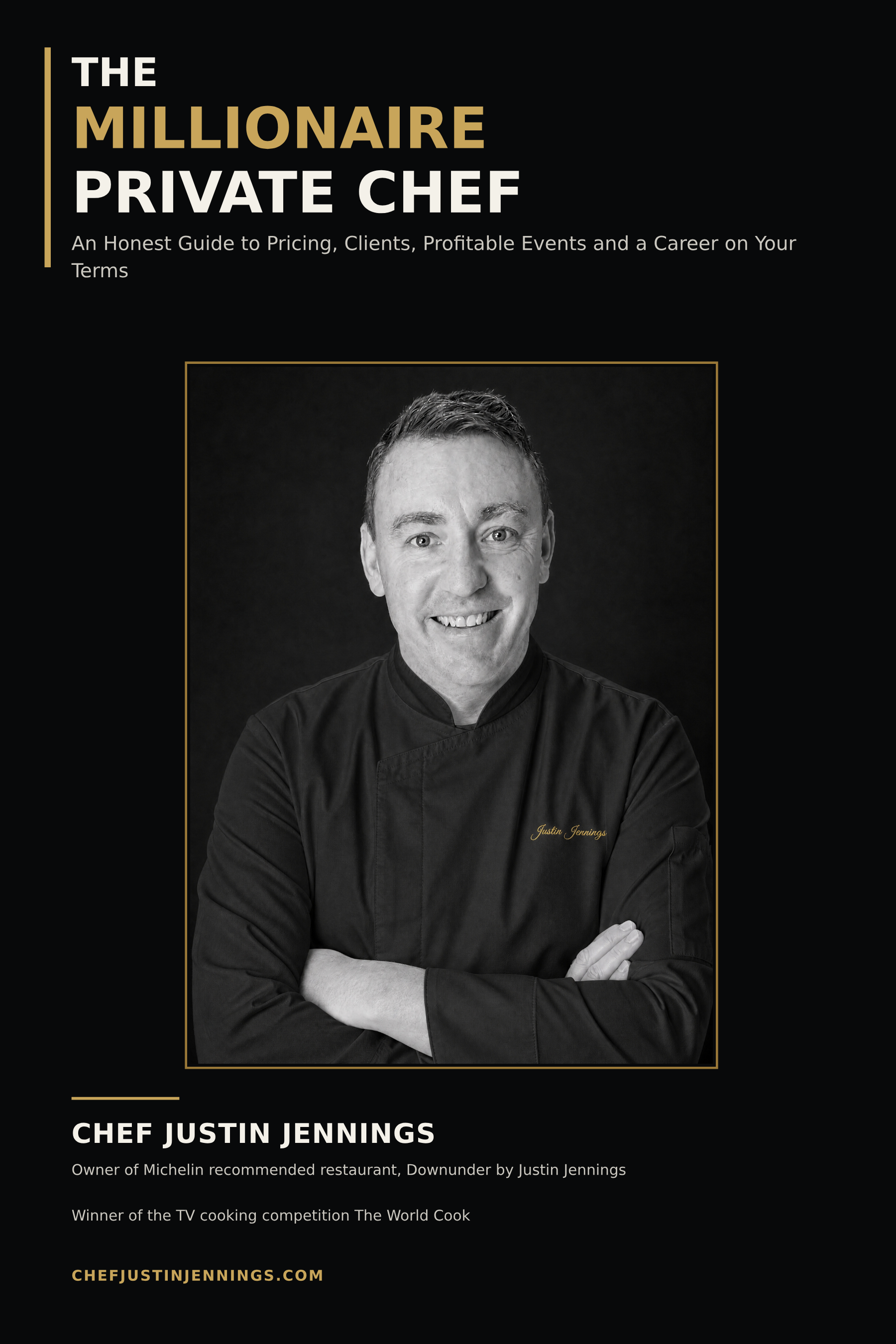
Your menu is your sales tool. Not your cooking skills, not your experience, not your personality your menu is what closes the booking.
I learned this the hard way. In my first year as a private chef, I had incredible technique, a decade of fine-dining experience, and a portfolio of dishes I was proud of. But I was barely booking one event per week.
The problem? My menus were designed like a chef would design them technically impressive, but completely disconnected from what clients actually wanted to buy.
I was writing "Pan-seared line-caught sea bass, fennel purée, citrus beurre blanc, crispy capers." Clients were reading: "I don't know what half of these words mean and I'm worried my guests won't like it."
Once I redesigned my menus around client psychology instead of chef ego, my bookings tripled in 60 days. Same dishes. Different words. Completely different results.
This guide shows you how to design menus that sell themselves structure, pricing, language, and proven templates you can use today.
Why Most Private Chef Menus Don't Book
Most chefs make one of these mistakes when designing their menus:
Mistake #1: Writing for other chefs, not clients. Your menu is full of technique terminology confit, emulsion, sous-vide, brunoise. Your client doesn't care. They don't know what it means. They're not trying to impress other chefs. They're trying to impress their dinner guests without looking stupid.
Mistake #2: Too many options. You offer 6 appetizers, 8 mains, 5 desserts, thinking more choice = more bookings. Wrong. More choice = decision paralysis. Clients don't know what to pick. They get overwhelmed and book someone else with a simpler menu.
Mistake #3: No clear pricing structure. Your menu says "prices vary based on menu selection." That's not transparency that's making the client do math homework. They don't want to calculate. They want to know: "If I book you, what does this cost?"
Mistake #4: Showing off instead of solving problems. Your menu screams "look how skilled I am!" instead of "here's how I'll make your event stress-free and impressive." Clients don't hire chefs to validate their technique. They hire chefs to look good in front of their friends.
Mistake #5: Ignoring dietary restrictions until it's too late. You design a pork-heavy menu and find out the day before that half the guests are Muslim or vegetarian. Now you're scrambling. A good menu is flexible by design.
If your menu isn't booking clients, it's not because you're not a good chef. It's because your menu doesn't speak their language.
The Psychology of a Menu That Sells
Before we get to structure and templates, understand how clients make buying decisions:
1. Clients Buy Outcomes, Not Ingredients
They don't care that you're using Carnaroli rice imported from Piedmont. They care that their guests will be talking about your risotto for weeks.
Bad menu description: "Carnaroli risotto, porcini mushrooms, aged Parmigiano-Reggiano, white truffle oil."
Good menu description: "Creamy mushroom risotto finished with truffle oil rich, earthy, and unforgettable."
The second version sells an experience. The first version sounds like a grocery list.
2. Clients Fear Looking Stupid
Your client is hosting 12 people. Half are their boss's boss and their spouse. They're terrified that someone will: a) not like the food, b) have an allergic reaction, or c) think they wasted money on a pretentious chef.
Your menu needs to scream: "I've got this. You'll look like a genius for hiring me. Your guests will love it."
How? Include phrases like:
- "Crowd-pleaser that works for every palate"
- "Can be adapted for dietary needs"
- "Proven favorite at 200+ events"
- "Safe for most allergies (nut-free, dairy-free option available)"
You're not dumbing down your food. You're removing their fear.
3. Clients Use Price as a Shortcut for Quality
If you price too low, they assume you're inexperienced or cutting corners. If you price too high without justification, they assume you're ripping them off.
The sweet spot: Price confidently, then justify it with credentials.
Example: "5-course tasting menu: €120 per person. Designed by a MICHELIN Guide chef with 20 years experience. Includes premium ingredients, full table service, and complete cleanup."
Now the price feels justified. You're not expensive you're worth it.
4. Clients Want to Feel Special, Not Stupid
They want to feel like they're getting something unique, but they don't want to feel alienated by cuisine they've never heard of.
Bad: "Deconstructed beef Wellington with duxelles, pâté, and puff pastry shards."
Good: "Beef Wellington reimagined tender beef, wild mushrooms, and flaky pastry with a modern twist."
You're still being creative. You're just making it accessible.
Menu Structure That Converts
Here's the structure I use for every menu proposal. It books 7 out of 10 inquiries.
The 3-Tier Model
Offer three menu options: Classic, Signature, Luxury. Why? Because pricing psychology.
Classic Menu (€85-€95pp):
- 3-4 courses
- Familiar, crowd-pleasing dishes
- High-quality ingredients, refined execution
- Safe for all skill levels (beginner clients pick this)
Signature Menu (€110-€125pp) ⭐ MOST POPULAR:
- 5 courses
- Your best work creative, but not intimidating
- Premium ingredients (dry-aged beef, fresh lobster, seasonal truffles)
- Instagrammable plating
- Clearly labeled "Most Popular" (social proof + anchoring bias = 60% of clients pick this)
Luxury Menu (€140-€160pp):
- 7 courses
- Ultra-premium ingredients (Wagyu, caviar, gold leaf if you're into that)
- Fine-dining presentation
- This tier exists to make the Signature look reasonable by comparison
Most clients book the middle option because it feels like the "smart" choice not cheap, not excessive, just right.
The Perfect Course Breakdown
Use this structure for your 5-course Signature menu (the one that books most often):
Course 1: Amuse-Bouche or Canapé
A one-bite welcome. Something impressive but simple to execute. This sets the tone. Make it memorable.
Example: "Seared scallop on crispy pancetta with lemon foam one perfect bite to start your evening."
Course 2: Appetizer
Something light, flavor-forward, visually stunning. This is your Instagram moment.
Example: "Burrata with heirloom tomatoes, basil oil, and aged balsamic summer on a plate."
Course 3: Palate Cleanser or Soup
Reset the palate. Can be as simple as a sorbet or a small soup course. Don't overcomplicate this.
Example: "Chilled cucumber and mint soup with a hint of lime refreshing and light."
Course 4: Main
The hero dish. This is what they'll remember. Protein + starch + vegetable. Nail the cook on the protein.
Example: "Pan-roasted duck breast with cherry gastrique, creamy polenta, and roasted asparagus rich, balanced, and unforgettable."
Course 5: Dessert
End on a high note. Sweet, indulgent, but not so heavy they feel sick. Bonus points if it's interactive (tableside flambé, liquid nitrogen, etc.).
Example: "Dark chocolate fondant with salted caramel ice cream molten center, pure decadence."
How to Write Descriptions That Sell
Every dish description should follow this formula:
[Dish Name]: [Key Ingredient/Technique], [Supporting Elements] [Emotional Payoff]
Example: "Grilled Wagyu ribeye with truffle mash and broccolini buttery, rich, melt-in-your-mouth perfection."
Let's break it down:
- Dish Name: Simple, recognizable (Grilled Wagyu ribeye, not "Bovine protein thermally manipulated over open flame")
- Key Ingredient/Technique: What makes it special (Wagyu, grilled)
- Supporting Elements: What's on the plate (truffle mash, broccolini)
- Emotional Payoff: How it tastes or feels (buttery, rich, melt-in-your-mouth)
Avoid jargon. Use taste words (crispy, creamy, tangy, smoky). Make them hungry.
Handling Dietary Restrictions Like a Pro
You'll lose bookings if your menu can't flex. Here's how to design adaptability in from the start:
1. Build Menus Around Adaptable Dishes
Pick dishes where you can easily swap proteins, remove dairy, or substitute gluten.
Example:
- Base dish: Risotto with mushrooms and Parmesan
- Vegan version: Swap Parmesan for nutritional yeast, use vegetable stock
- Gluten-free version: Already GF (risotto is rice)
One dish, three versions, minimal extra work.
2. State Flexibility Clearly in Your Proposal
Don't make clients ask if you can accommodate dietary needs. Tell them upfront:
"All menus can be adapted for vegetarian, vegan, gluten-free, and most allergies at no additional charge. Please inform us of any dietary requirements at least 5 days before your event."
This removes a major objection before they even think it.
3. Always Have a Backup Plan
If your main course is pork-based and a guest reveals they don't eat pork, you need a Plan B. Keep alternative proteins on hand or have a vegetarian "hero dish" ready to go.
I always pack extra chicken breasts and have a solid vegetarian pasta in my back pocket. It's saved me more than once.
Pricing Your Menu: The Formula
Most chefs underprice. Here's how to price confidently without leaving money on the table.
Step 1: Calculate Your Costs
Food cost: Add up every ingredient. Aim for 25-30% of your menu price. Example: €30 food cost per person = €100-€120 menu price.
Labor cost: How many hours will you spend? Prep, travel, cooking, service, cleanup. Multiply hours by your hourly rate (€40-€75/hour depending on experience).
Example: 6 hours × €50/hour = €300 labor for 8 guests = €37.50 per person.
Overhead: Insurance, transport, equipment wear, packaging. Add 10-15% to cover this.
Step 2: Add Your Profit Margin
Multiply your total cost by 2.5× to 3× for a healthy profit margin.
Example: €30 food + €37.50 labor = €67.50 cost per person. × 2.5 = €168.75pp. Round to €165-€170pp.
Step 3: Check the Market
What are other private chefs charging in your area? You should be within 20% of the market rate (higher if you have MICHELIN experience, awards, or 10+ years in business).
Don't race to the bottom. Clients who only care about price are a nightmare to work with.
The Menu Proposal Template That Books
Here's the exact structure I use for every proposal:
MENU PROPOSAL TEMPLATE
1. Intro (2 sentences)
"Thank you for considering me for your event. Below are three curated menu options designed to make your evening unforgettable."
2. Three Menu Options (Classic / Signature / Luxury)
Each with full course breakdown, dish descriptions, price per person.
3. What's Included
"All menus include: full table service, premium ingredients, dietary accommodations, complete cleanup, and complimentary consultation call."
4. Your Credentials
"MICHELIN Guide Selected 2024-2026. Inaugural World Cook Champion. 20+ years culinary experience. 500+ private events."
5. Next Steps
"To confirm your booking, reply with your menu choice and preferred date. A 30% deposit secures your date."
Keep it simple. Make it easy to say yes.
Common Menu Design Mistakes to Avoid
1. Overcomplicating Dishes
You don't need 12 components on every plate. Complexity doesn't equal quality. Three to five components, executed perfectly, beat 12 mediocre elements every time.
2. Using Unfamiliar Proteins
Unless your client specifically requests it, avoid quail, rabbit, venison, or anything most people haven't tried. You're not cooking for food critics you're cooking for people who want to enjoy dinner without anxiety.
3. No Vegetarian Options
Even if your client says "no vegetarians," have a vegetarian option ready. Someone always lies about their dietary needs or brings a surprise guest.
4. Designing Menus You Can't Execute Solo
If your menu requires three people to plate or has timing so tight you can't serve hot food, redesign it. Private chef work is solo or minimal help. Plan accordingly.
5. Forgetting About Cleanup
Your menu might look great, but if it creates 40 dirty pans and takes 2 hours to clean up, you'll hate yourself. Design for efficiency. One-pot dishes are your friend.
Sample Menus That Work
Here are three real menus I use regularly. They book consistently, execute smoothly, and make clients happy.
Mediterranean 5-Course Menu (€110pp)
- Amuse-Bouche: Prosciutto-wrapped melon with aged balsamic sweet, salty, and refreshing.
- Appetizer: Burrata with heirloom tomatoes, basil oil, and sea salt simple summer perfection.
- Palate Cleanser: Lemon sorbet with prosecco bright and cleansing.
- Main: Pan-seared sea bass with saffron risotto and grilled vegetables elegant and light.
- Dessert: Tiramisu with espresso syrup classic, crowd-pleasing, impossible to mess up.
Modern Australian 5-Course Menu (€125pp)
- Amuse-Bouche: Seared scallop on crispy pancetta with lime foam one perfect bite.
- Appetizer: Kingfish crudo with finger lime, avocado, and chili oil fresh, zesty, stunning.
- Soup: Roasted pumpkin soup with coconut cream and crispy sage creamy comfort.
- Main: Grass-fed beef tenderloin with truffle mash, roasted broccolini, and red wine jus rich and indulgent.
- Dessert: Pavlova with passionfruit curd and fresh berries light, sweet, iconic Aussie dessert.
Luxury 7-Course Tasting Menu (€150pp)
- Welcome: Oyster with champagne granita elegant start.
- Amuse-Bouche: Smoked salmon tartare on crispy wonton with crème fraîche.
- Appetizer: Foie gras with fig compote and brioche decadent and classic.
- Seafood: Butter-poached lobster tail with champagne beurre blanc pure luxury.
- Palate Cleanser: Yuzu sorbet with micro herbs refreshing reset.
- Main: Wagyu ribeye with black truffle, pommes Anna, and seasonal vegetables the hero dish.
- Dessert: Dark chocolate soufflé with salted caramel ice cream dramatic finish.
How to Test Your Menu Before You Book It
Never debut a new menu on a paying client. Test it first:
- Cook it for friends/family. Get honest feedback. Does it taste good? Is it too much food? Did anything not work?
- Time yourself. Can you execute this menu solo in the time available? If not, simplify.
- Check your ingredient sourcing. Can you reliably get these ingredients year-round? Or will you be scrambling every time?
- Test dietary swaps. Make the vegan/GF version. Does it still taste good? If not, pick a different dish.
- Photograph it. Your menu photos are your marketing. If it doesn't look good in photos, redesign the plating.
Final Thoughts: Your Menu Is Your Business Card
Most chefs treat their menu as an afterthought. They focus on technique, credentials, and cooking skills, then wonder why they're not booking.
Your menu is your sales tool. It's the first thing clients see. It's what they compare to other chefs. It's what convinces them to pay your price.
Design it with intention. Write it in their language, not yours. Make it easy to say yes.
Do that, and you'll book more events with less effort.
Want 12 Done-For-You Menu Templates?
Get complete menus, pricing calculators, shopping lists, and my full private chef business system everything you need to start booking clients this month.
Buy on AmazonFAQ: Private Chef Menu Design
How many courses should a private chef menu have?
Private chef menus typically have 3-7 courses depending on the event type and price point. Standard structure: 3 courses (€75-€95pp) for casual dinners, 5 courses (€95-€120pp) for special occasions, 7 courses (€120-€150pp) for celebrations and high-end events. Each course should be small you're creating an experience, not a buffet.
What should you include in a private chef menu proposal?
A strong private chef menu proposal includes: 1) Full course breakdown with dish names and descriptions. 2) Clear indication of dietary accommodations. 3) Transparent pricing per person. 4) What's included (service, cleanup, etc.). 5) Your credentials. 6) Photos of similar dishes. 7) Next steps (how to confirm, deposit amount). Make it easy to say yes.
How do you price a private chef menu?
Price private chef menus based on: food cost (25-30% of menu price), labor time (€40-€75/hour), complexity, and your credentials. Example: €30 food cost + €37.50 labor = €67.50 cost per person × 2.5× profit margin = €168pp. Check market rates you should be within 20% (higher if you have MICHELIN experience or 10+ years).
Should you offer multiple menu options to clients?
Yes. Offer 2-3 tiered menu options (Classic / Signature / Luxury), not unlimited choice. Tiered pricing creates clear value levels and allows clients to self-select budget. Most clients book the middle option (anchoring bias). The luxury tier makes the signature look reasonable.
How do you handle dietary restrictions in private chef menus?
Handle dietary restrictions proactively: 1) State clearly in proposals that menus can be adapted. 2) Ask about restrictions when booking is confirmed. 3) Design menus that are naturally adaptable. 4) Always have a backup plan for severe allergies. 5) Confirm restrictions again 48 hours before the event. One allergic reaction ends your career take it seriously.
What are the most popular private chef menu themes?
Most popular themes: 1) Mediterranean/Italian (pasta, seafood). 2) Japanese/Asian fusion (sushi, ramen). 3) Farm-to-table/seasonal (local ingredients). 4) Fine dining tasting menu (French techniques). 5) BBQ/grill experience (live-fire cooking). 6) Comfort food elevated (nostalgic dishes with refinement). Avoid overly trendy concepts or cuisines outside your expertise.
How far in advance should you send a menu proposal to clients?
Send menu proposals within 24 hours of initial inquiry. High-end clients compare multiple chefs first response wins 60% of bookings. Finalize the menu at least 7-10 days before the event. Reconfirm menu, guest count, and dietary needs 48 hours before service.
Related Articles
Private Chef Pricing Guide
What to charge per person, pricing psychology, and avoiding undercharging.
How to Find Private Chef Clients
5 proven methods for getting your first clients and building a steady pipeline.
Private Chef Equipment Essentials
What you actually need vs what you think you need. Complete kit for under €500.
Ready to Start Your Private Chef Business?
Get the complete guide: business plan templates, pricing calculators, client contracts, marketing strategies, and everything else you need to go from restaurant chef to profitable private chef.
Buy on AmazonPaperback · 120 pages · Available on Amazon.